- Home
- Health Technology
- GE HealthCare SIGNA Bolt: a closer look at premium MRI workflow
GE HealthCare SIGNA Bolt: a closer look at premium MRI workflow
Technology Spotlight
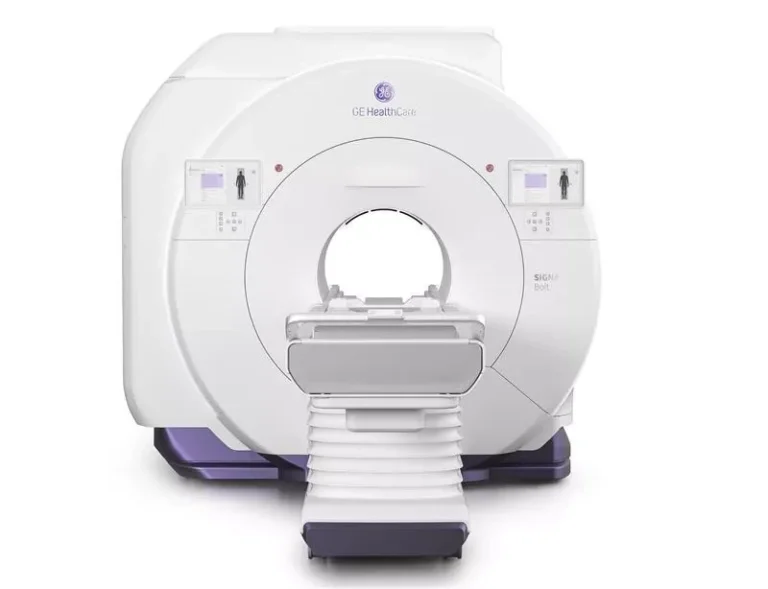
A premium MRI system is more than the large magnet visible to a patient. It is also the software, reconstruction methods and workflow through which a clinical team turns a question into interpretable images. GE HealthCare’s SIGNA Bolt offers a current example of how manufacturers are bringing those elements together.
Graymedy is featuring the 3-tesla scanner as an editorial product spotlight. The aim is to explain its positioning and the questions a healthcare organisation should ask, rather than repeat a manufacturer’s promise as an independently proven result.
What the system is designed to do
GE HealthCare describes SIGNA Bolt as a wide-bore 3T MRI platform serving clinical imaging and advanced research. Its product materials highlight gradient performance, deep-learning reconstruction and SIGNA One workflow tools. These are different layers of the imaging process, from acquiring signals to organising the examination.
The company announced US FDA 510(k) clearance for SIGNA Bolt in February 2026. Its published materials state that regional availability is limited and that the system is not CE marked. Buyers should verify the current local regulatory position and the exact configuration offered, rather than assume a US clearance permits use everywhere.
Why the workflow deserves attention
In its clearance announcement, the company positions the new platform around efficiency and consistency as well as imaging performance. The accompanying SIGNA One ecosystem addresses stages of the examination rather than presenting the scanner as an isolated piece of hardware.
That is a useful area for an editorial product feature. A radiology department’s experience includes patient preparation, positioning, protocol selection, scanning, reconstruction and reporting. A faster step can be valuable, but the effect on the full appointment depends on how it connects with the other steps.
Graymedy’s interpretation is that a meaningful demonstration should follow a realistic case through that pathway. A polished image gallery can show possibilities; a supervised workflow demonstration can reveal the staff time, adjustments and training those possibilities require.
Reading the performance claims carefully
The product page associates AIR Recon DL with image sharpness and Sonic DL with accelerated acquisition. It provides numerical performance claims with specified comparators, including fully sampled datasets and previous-generation systems. Such figures should remain attached to their conditions; they are not universal reductions in every patient’s visit time.
For a service evaluating the system, the relevant questions are concrete. Which sequences and anatomies were assessed? Are the comparisons matched for image quality? What happens with motion or challenging cases? Which functions are included, optional or dependent on another product? These are evaluation questions, not findings from a Graymedy equipment test.
They also help distinguish a technical endpoint from a patient outcome. A clearer reconstruction or shorter acquisition can support a clinical task, while diagnostic performance, repeat examinations and downstream decisions require their own evidence.
The patient experience remains clinical
The US National Institute of Biomedical Imaging and Bioengineering explains that MRI uses magnetic fields and radiofrequency signals to produce detailed images without the ionising radiation used in X-ray imaging. That physical principle is shared across MRI systems; it is not unique to this product.
Its educational guidance also identifies concerns including magnetic-field hazards, noise and tolerance of the examination. Screening and appropriate clinical protocols remain essential. An advanced platform does not remove the need to assess implants, prepare a patient or decide whether MRI answers the clinical question.
Patients should therefore understand a scanner’s model name as one part of a service. The radiologist’s expertise, the technologist’s work, the examination protocol and the quality of communication are also important. A premium system is not automatically the right examination for every person.
What makes it worth watching
SIGNA Bolt is interesting because it places acquisition hardware, AI-assisted processing and workflow within one product story. For healthcare organisations, that creates an opportunity to examine the complete imaging process rather than purchase on a headline specification alone.
A responsible assessment should include installation requirements, service support, staff training, interoperability and the costs of the proposed configuration. Availability and pricing should be obtained from the manufacturer for the relevant market. Graymedy has not verified a purchase price, conducted a head-to-head comparison or established superiority over competing scanners.
The product’s value will ultimately be judged through the examinations a team can perform reliably and the clinical decisions those examinations support. That is the standard against which its promising features deserve to be evaluated.
Sources: GE HealthCare: SIGNA Bolt product information; GE HealthCare clearance announcement (19 February 2026); NIBIB: MRI explained.
Editorial review: 21 October 2026. Independently written from public sources; general information, not personal medical advice. Graymedy editorial spotlight, not paid sponsorship, an affiliate offer or an endorsement by the featured organisation. No independent product test or hospital inspection was conducted.
Image credit: Product image: GE HealthCare RSNA press kit, supplied for editorial media coverage.



Health Technology
View more
A prescription medicine increasingly arrives with a digital companion: a reminder, a symptom tracker or software linked to a delivery device. The FDA’s October 2026 final guidance gives drug companies a clearer route for deciding how those tools should be described and reviewed. The framework focuses on software distributed by, or on behalf of, a drug sponsor. It asks whether the content belongs in required labeling or promotional material, when the software should appear in prescribing information, and what the sponsor should submit. A feature is not yet a clinical benefit Device-connected software, such as an app paired with an inhaler, generally should be described in the medicine’s prescribing information. For standalone tools, the agency distinguishes convenience from a function essential to safe and effective use or supported by meaningful clinical benefit. That distinction matters for pharma’s digital-health strategy. Downloads, daily engagement and polished interfaces can describe product use. They do not, by themselves, establish that an app improves a health outcome. The practical question for developers Teams need to define the app’s intended role early, align its claims with evidence, and make the patient-facing instructions consistent with the medicine’s labeling. The final guidance also provides a decision tree and examples to help sponsors assess their software. For clinicians and patients, a reference on a drug label should still be read in context. Different functions serve different purposes; a reminder and a device-linked dosing tool do not carry the same responsibilities. The opportunity is better support around treatment, backed by a clear account of what has actually been demonstrated. FDA final guidance

Can a smartwatch flag high blood pressure before you know it?
Trial recruitment software faces a harder test: does it help people enrol?
After a stroke, wrist sensors could reveal recovery between clinic visits
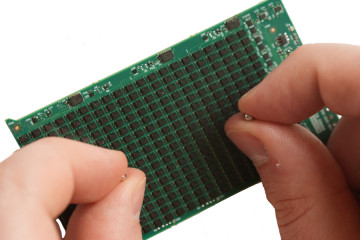
Controlling an artificial limb begins before the limb moves. A device must work out what its wearer wants to do, using signals that remain dependable as muscles contract, skin moves and activity changes. Researchers are now exploring whether a pair of tiny magnets can make that conversation clearer. A study published in Nature Sensors on 29 October describes an external sensor array that tracks magnetic beads inside human muscle. Led by Christopher Shallal and Cameron Taylor with senior author Hugh Herr, the work offers an early human test of an interface intended for future prosthetic control. Measuring movement beneath the skin The system, called MuSE, follows passive magnetic implants using sensors worn on the skin. The beads are about three millimetres across. Tracking their separation makes it possible to estimate how a muscle changes length and how quickly that change occurs. That is a mechanical measurement. Electromyography, the familiar alternative, records electrical activity associated with muscle activation. The two kinds of information are related, but they are not interchangeable. A control system benefits when the signal it receives closely represents the movement it needs to produce. The attraction is a wireless connection across the skin without a battery inside each bead. The experiment therefore concerns the quality of the interface as much as the sophistication of a robotic foot. An excellent motor cannot compensate reliably for an ambiguous instruction. Three participants, a carefully defined task The human study involved three people with below-knee amputations. All had undergone an agonist-antagonist myoneural interface procedure, which reconnects opposing muscles so they can retain a dynamic relationship. This specific surgical background matters when considering who the findings might eventually apply to. Participants also had implanted electrodes, enabling comparisons with both implanted and surface electrical measurements. In the reported experiments they used muscle signals to direct a cursor toward screen targets. They were not demonstrating improved walking with a prosthesis during those tests. MIT's account reports more accurate and stable control with the magnetic approach in that virtual task. It also says a larger study is evaluating actual prosthetic-limb control. The distinction prevents a promising measurement result from becoming an unsupported claim about fewer falls or better daily mobility. The researchers are extending an earlier idea Herr's group has investigated magnet-based muscle measurements for several years. Its earlier animal work established the possibility of tracking muscle length with implanted magnets. The new paper moves the question into human sensing with long-term implants, rather than introducing magnets to prosthetics for the first time. That progression is worth following because it makes the next question concrete. A laboratory demonstration must develop into a system that works while someone gets dressed, walks outside or changes position. Those are examples of future evaluation needs, not activities this small study has already validated. What a convincing next study would show Graymedy's interpretation is that future evidence should connect signal quality with outcomes that matter to users. Useful measures could include task success, effort, comfort and reliability across repeated sessions. A comparison should also specify which existing interface it seeks to improve upon. Safety needs equally explicit attention. Implanting an interface creates a different commitment from attaching a removable surface sensor. Longer follow-up and larger groups are needed to evaluate uncommon problems and practical maintenance. The small number of participants cannot answer every question about suitability. Generalisability is another issue. Results in people with this particular amputation procedure should not automatically be extended to every residual limb or to upper-limb use. Different anatomy, rehabilitation histories and goals could change what an effective interface requires. Readers can also ask how much calibration a future device would need and who would support it when circumstances change. These practical details belong in the evidence alongside laboratory accuracy, because an interface must remain useful between scheduled research visits. A useful advance without a finished product For people considering prosthetic options now, this paper is research to discuss, rather than evidence that a new commercial system is ready for routine use. Clinical choices still depend on the person's circumstances and the options their specialist team can actually provide. The wider significance is a change in what an artificial limb might listen to. Electrical activation indicates one part of muscle behaviour; direct mechanical tracking may supply another. Combining good engineering with careful clinical testing could make that extra information useful. The next milestone is showing that it improves life beyond the screen. Sources: Shallal and colleagues, Nature Sensors; Anne Trafton / MIT News, 29 October 2026; MIT's earlier magnet research. Photo: Courtesy of the researchers / MIT News, CC BY-NC-ND 3.0. Reviewed 5 November 2026. Independently written from public sources; no interview was conducted. General information, not individual medical advice.
A pacemaker designed to disappear after the heart recovers
Cochlear implants: the technology is only one part of hearing care
A new imaging AI study makes its answers easier to inspect
The promise of earlier warnings A hospital monitoring system may detect a subtle change in vital signs before it becomes obvious to a busy clinical team. Artificial intelligence can bring several measurements together, highlight patterns and suggest which patients deserve closer attention. Yet an alert is not a diagnosis. Its usefulness depends on whether the right person receives it, understands the evidence and can respond. The central question for digital health is not simply how accurately a model predicts deterioration, but how its output changes care. Prediction is not clinical certainty A risk score is usually based on information available at a particular moment: laboratory results, observations, medical history or notes. Some information may be delayed or missing. Patients also differ from those included in the training data. A model that performs well in one hospital could behave differently in another, especially when workflows, patient populations and equipment change. Clinicians therefore need to know what the system predicts, over what period, and which uncertainty remains. A warning about possible deterioration should support assessment rather than replace it. The cost of too many alerts A tool that sends repeated warnings can create fatigue, even if each individual notification seems defensible. Staff must weigh alerts against examinations, medicine rounds and competing emergencies. If a system flags too many patients who do not deteriorate, confidence can fade. If it sets its threshold too high, important cases may be missed. Healthcare organizations should evaluate both false alarms and missed events, alongside how often teams have enough time and resources to act on a meaningful warning. Designing a workable response A useful deployment defines responsibility in advance. Who receives an alert first? Is there an escalation pathway? What happens at night or when the assigned clinician is unavailable? Can staff review the trend and record why they accepted or dismissed the recommendation? Without clear answers, a sophisticated algorithm may add noise rather than improve outcomes. Human factors such as screen design, timing and the availability of a rapid-response team deserve the same attention as statistical performance. Fairness and changing conditions Age, disability, access to testing and differences in medical documentation can influence the data a model sees. Evaluations should examine whether errors concentrate in particular patient groups rather than rely only on a single overall accuracy figure. Systems also require monitoring after launch. Changes in clinical practice, disease patterns or electronic records can alter their performance. An AI model is not a device that can be installed once and assumed to remain dependable indefinitely. What evidence should buyers request? Before purchasing an alert platform, a hospital can ask whether it has been tested prospectively in comparable settings and whether the evaluation measured patient-relevant outcomes. Measures such as alert counts and prediction accuracy matter, but so do response time, avoidable harm, workload and unintended consequences. Procurement teams should request information about data privacy, cybersecurity, updates, clinician training and the process for reporting failures. External validation is particularly valuable when marketing claims are based on a single institution. Keeping patients in the conversation Patients may reasonably want to know whether software influences their care and how clinicians interpret its suggestions. Transparent communication need not involve a technical explanation of every model feature. It can describe the technology's supporting role, the continuing responsibility of the medical team and the safeguards available when recommendations are questioned. Meaningful oversight also includes a mechanism for patients and staff to report concerns about an automated decision. The measure of success The most promising clinical AI products will not necessarily generate the greatest number of predictions. They will help teams recognize actionable problems while preserving judgment, accountability and trust. Responsible adoption means starting with a clear clinical need, testing in real workflows, auditing performance and adjusting or retiring tools when evidence warrants it. In medicine, a timely warning is valuable only when it leads to a safer, more informed response. Questions for implementation teams Successful implementation also requires an agreed process for pausing a system when performance becomes concerning. Hospitals can decide in advance which indicators trigger review, how overrides are documented and which multidisciplinary committee owns oversight. Clinicians should have a straightforward way to flag a misleading notification without fearing that questioning software will be treated as noncompliance. Staff training is most useful when it includes realistic examples of false alarms, uncertain predictions and patient circumstances the model may not recognize. These operational details can appear mundane beside the excitement around algorithms, but they determine whether technology earns a durable place in patient care.
A speech clock explores links between ageing and dementia
A second look at sleep-study heart signals could reveal longer-term risk