Professionals
- Home
- Professionals
Professionals
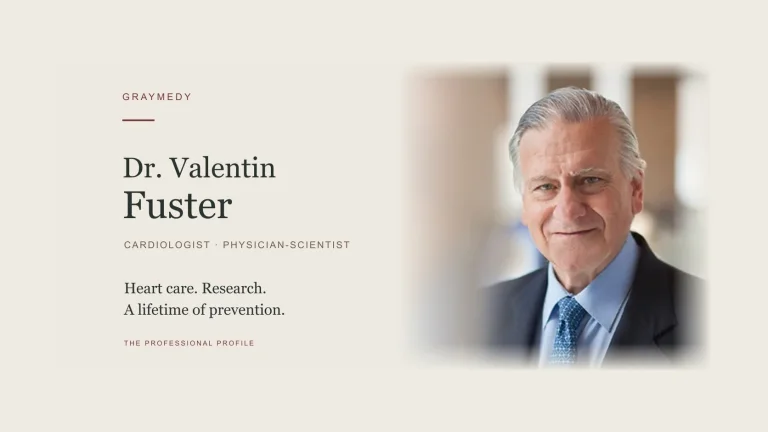
For Dr. Valentin Fuster, caring for the heart extends beyond the hospital. His career has brought together treatment, research and education, with a particular interest in helping people build healthier habits before cardiovascular disease interrupts their lives. That combination makes his work relevant to patients as well as the professionals who care for them. Fuster is a cardiologist and physician-scientist. Mount Sinai lists him as President of Mount Sinai Fuster Heart Hospital and Physician-in-Chief of The Mount Sinai Hospital in New York. His professional story connects specialist medicine with a wider question: how can knowledge about heart disease become useful in everyday life? From medical training to cardiovascular research Fuster completed his medical degree at the University of Barcelona and his doctorate at the University of Edinburgh. His career subsequently included Mayo Medical School, Mount Sinai and Massachusetts General Hospital, where he served as Chief of Cardiology while holding a professorship at Harvard Medical School. He returned to Mount Sinai in 1994 to lead its Cardiovascular Institute. The institution’s account of his career describes contributions to understanding the causes, prevention and treatment of cardiovascular disease. His research into the origins of cardiovascular events received the Prince of Asturias Award for Technical and Scientific Research in 1996. Those achievements reflect work across clinical practice and investigation. They also point to a feature of cardiovascular medicine: understanding how disease develops can inform both treatment after an event and efforts to prevent the next one. Why prevention starts early One distinctive part of Fuster’s work takes place in schools. Mount Sinai identifies him as principal investigator of the CHILDREN’S Project, which studies cardiovascular health among elementary-school children in New York City. Its approach builds on earlier programmes in Colombia, Spain and Harlem. The project combines health assessments with school-based education. It also considers social and environmental influences, including the circumstances in which children live and learn. That matters because a recommendation to eat well or be active is easier to follow when families have the time, resources and surroundings to support it. This is research into health promotion, not a guarantee that a classroom lesson prevents a future heart attack. Its value lies in asking when healthy habits can be taught, how they can be supported and what happens as children grow. From his story to everyday heart care Fuster’s emphasis on prevention offers a practical starting point for readers. The American Heart Association’s Life’s Essential 8 framework includes food, physical activity, nicotine avoidance, sleep, weight, cholesterol, blood sugar and blood pressure. These recommendations are general heart-health guidance, rather than a personalised plan from Dr. Fuster. HabitSimple actionMoveBuild regular activity suited to your health and abilityEat wellInclude vegetables, fruit, whole foods and suitable protein sourcesSleepMost adults should aim for seven to nine hours nightlyKnow your numbersDiscuss blood pressure, cholesterol and blood sugar with your clinician Start with a change that fits your routine, then review progress. If you have a heart condition, symptoms or uncertainty about exercise, ask your healthcare team what is appropriate. Continue prescribed medicines and discuss difficulties rather than changing treatment yourself. Making room for the patient A useful heart-care appointment begins with your own concerns. Explain symptoms, family history and the activities you want to return to. Bring a medicine list and ask what each proposed test or treatment is intended to change. If an explanation is unclear, ask for it in simpler language. Fuster’s career shows how a specialist’s influence can reach from the consultation room to research and public education. For readers, the practical lesson is to make prevention a continuing conversation, with advice that reflects their individual needs. Editorial note: This independent profile is based on public sources; Graymedy did not interview Dr. Fuster. No endorsement is implied. Sources: Mount Sinai professional biography; career and appointment announcement; CHILDREN’S Project; American Heart Association: Life’s Essential 8. Watch: Dr. Fuster on heart health In this archival 2013 Mount Sinai interview, Fuster discusses exercise, heart rate and health awareness. The video provides historical context; current personal advice should come from your clinician. Watch the interview on Mount Sinai’s YouTube channel. Portrait: CNIC, published in CNIC Pulse 19. Graymedy editorial layout: photograph cropped and resized, with a softened background. Dr. Fuster’s face is unchanged; no AI-generated portrait.
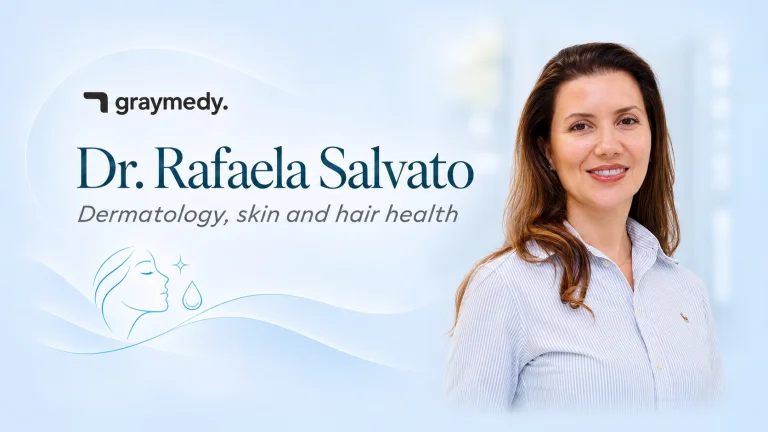
For Dr. Rafaela Salvato, dermatology brings several kinds of care together. The Brazilian dermatologist works with skin, hair and nail concerns in a field that can include medical diagnosis, procedures and conversations about appearance. Her public education also gives patients a way to hear about skin health outside the consultation room. Based in Florianópolis, Salvato leads a dermatology practice whose work spans clinical, surgical and aesthetic care. Her professional biography describes an interest in individualized assessment: understanding a person’s concern and health history before deciding what treatment, if any, is appropriate. Training across clinical and aesthetic dermatology Salvato’s published biography says she studied medicine at the Federal University of Santa Catarina and trained in dermatology at Hospital Ipiranga in São Paulo. It also describes additional study in hair and scalp disorders in Bologna and cosmetic dermatology in San Diego, as well as further training associated with Harvard Medical School. Her clinic identifies her as a member of the Brazilian Society of Dermatology and the American Academy of Dermatology. Her work includes trichology, the study and care of hair and scalp conditions, alongside general and aesthetic dermatology. These areas can overlap, but they do not mean the same thing. A dermatologist is a medical specialist trained to assess and treat diseases of the skin, hair and nails. Cosmetic dermatology is part of medical practice for some dermatologists and may include procedures intended to change appearance. Cosmetology generally refers to beauty services, with training and permitted activities depending on the practitioner and location. Explaining skin concerns to the public Salvato has discussed dermatology in Brazilian media. In a Portuguese-language television interview, linked at the end of this article, she talks about skin pigmentation. Pigmentation can have many causes, and a dark patch or changing mark should not automatically be treated as a cosmetic problem. A dermatologist can examine a concern, consider its history and recommend whether further testing or treatment is needed. Online information is useful for preparing questions, but it cannot establish a diagnosis for an individual. People considering an aesthetic treatment can ask who will perform it, what training that person has, what benefits are realistic and what complications may occur. It is reasonable to ask about alternatives, recovery time and total cost before deciding. Different procedures carry different risks, and no single approach is right for everyone. Everyday care: begin with the basics A routine does not need to be complicated to be useful. The American Academy of Dermatology recommends gentle skin care and sun protection. A mild cleanser and a moisturizer chosen for your skin can provide a practical foundation. If a product causes persistent irritation, stop using it and ask a qualified clinician for advice. HabitSimple actionCleanseUse a gentle cleanser that suits your skinMoisturizeChoose a moisturizer that feels comfortableProtectUse broad-spectrum, water-resistant sunscreen with SPF 30 or higherCheckAsk a dermatologist about a changing or persistent concern When outdoors, reapply sunscreen about every two hours and after swimming or sweating, following the product directions. Shade and protective clothing add protection. Sun exposure and pigmentation affect people differently, so ask your clinician what is appropriate for your skin and circumstances. Making room for the patient Skin conditions can affect comfort and confidence as well as appearance. A helpful appointment begins with the patient’s priorities: what has changed, how long it has been happening and how it affects daily life. Bring a list of medicines, supplements and skin products, including anything you have already tried. Seek medical advice for a persistent rash, painful or scarring acne, unexplained hair loss, or a spot that is new, changing or concerning. A qualified clinician can explain the diagnosis, treatment options and follow-up. Avoid relying on a photograph or product recommendation alone to settle a medical question. Salvato’s profile shows how dermatology can bring clinical and aesthetic questions into the same conversation. The aim of that conversation is a plan grounded in the person’s needs, informed choices and appropriate care. Sources: Dr. Salvato’s credentials and biography; professional profile; American Academy of Dermatology: sunscreen; Indian Journal of Dermatology: cosmetic dermatology and cosmetology. Watch: Dr. Rafaela Salvato on skin pigmentation Dr. Salvato discusses skin pigmentation in an interview with TV Bandeirantes. The video is in Portuguese. Watch the interview on YouTube.
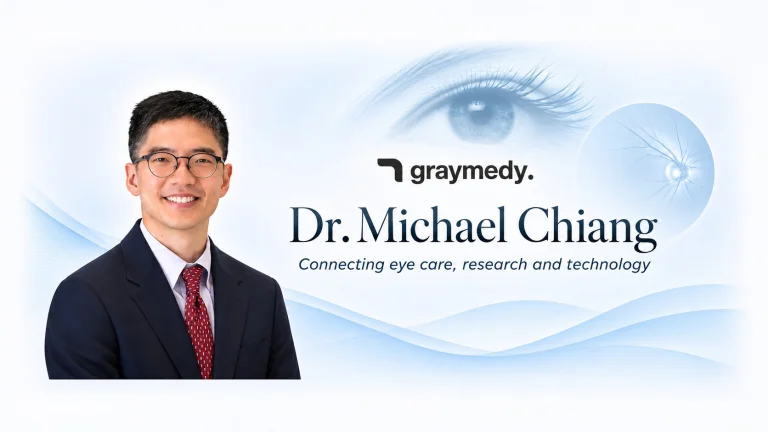
Dr. Michael Chiang’s route to eye care began with a question about how technology could help people. As a student of electrical engineering, he worked with medical imaging and saw how a device could support a patient’s care. That curiosity eventually led him to medicine, ophthalmology and a career connecting vision science with information technology. Today, Chiang is a pediatric ophthalmologist and director of the US National Eye Institute (NEI), part of the National Institutes of Health. His work has included research on retinopathy of prematurity, telehealth, artificial intelligence and the use of clinical data. His story shows how a doctor’s work can extend from an individual examination to the systems that help people receive care. From engineering to the eye Chiang studied electrical engineering and biology at Stanford University, earned his medical degree through Harvard Medical School and the Harvard–MIT health sciences and technology program, and later received a master’s degree in biomedical informatics from Columbia University. He completed ophthalmology residency and pediatric ophthalmology fellowship training at Johns Hopkins’ Wilmer Eye Institute. In a conversation with the OIS Podcast, Chiang described growing up in a family of engineers and becoming interested in medicine after working with cardiac ultrasound technology. During medical school, research involving the retina drew him toward vision science. The retina’s role in receiving and processing visual information became a bridge between his interests in medicine and computation. He later worked at Columbia University and Oregon Health & Science University before joining NEI in November 2020. According to his NEI biography, he is board-certified in ophthalmology and clinical informatics and was elected to the National Academy of Medicine in 2023. Helping vulnerable infants One focus of Chiang’s research is retinopathy of prematurity, an eye disease that can affect babies born prematurely. Abnormal blood vessel growth in the retina can lead to serious vision problems. Timely examinations and follow-up are essential for babies at risk, and treatment decisions depend on the findings of the specialist caring for the child. Chiang’s work has explored whether retinal imaging, telehealth and computer-assisted analysis can help clinicians evaluate the disease. NEI describes an assistive artificial intelligence system developed by his group that received FDA Breakthrough Device designation. That designation recognizes the potential of a technology and provides for prioritized interaction with the FDA; it does not itself establish that a device has been approved or authorized for routine use. For families, the practical lesson is to understand the screening plan before a baby leaves the hospital. Ask when the next eye examination is due, who will arrange it and whom to contact if an appointment must change. An infant’s care team can explain the schedule and what any findings mean. A wider view of eye care As NEI director, Chiang leads an organization that supports vision research and training. In the podcast interview below, he discusses the institute’s research priorities and his transition from academic medicine to a role helping the wider research community succeed. His interests also illustrate why innovation is more than a new algorithm. A useful system must fit clinical practice, protect sensitive information and connect people to appropriate follow-up. A promising result in research needs careful testing before patients and clinicians can understand where it helps and where its limits lie. For anyone seeking eye care, the fundamentals remain important. Ask an eye care professional how often you need an examination, especially if you have diabetes, a family history of eye disease or concerns about your vision. If you suddenly notice many new floaters, flashes of light or a shadow like a curtain over your vision, seek immediate eye or emergency care. These can be signs of retinal detachment. Chiang’s path from engineering to pediatric ophthalmology brings together a physician’s attention to individual patients and a researcher’s interest in reaching more people. It also offers a reminder that good eye care depends on questions, evidence and timely access to the next step. Sources: National Eye Institute biography; OIS Podcast episode 337; NEI: retinal detachment. Watch: Dr. Chiang on the OIS Podcast Dr. Chiang joins Dr. Sophia Pathai to discuss his career, vision research and the National Eye Institute’s priorities. Watch the podcast interview on YouTube.
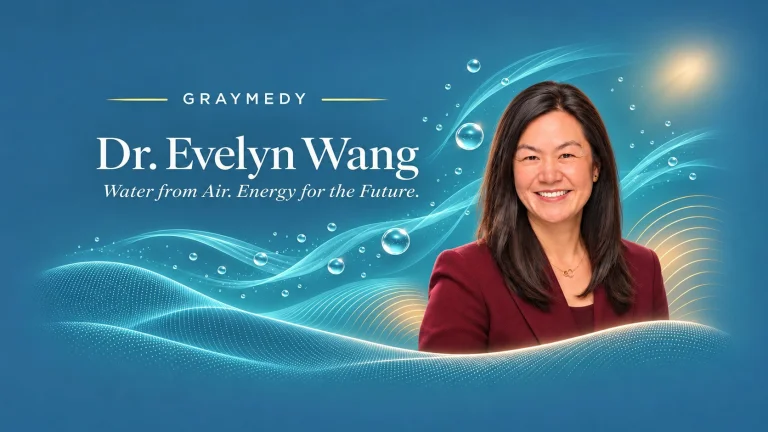
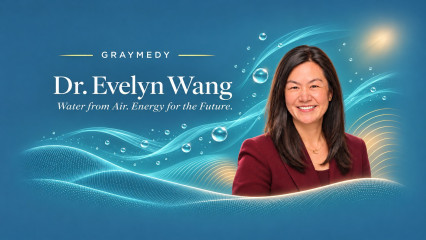
Dr. Evelyn Wang studies a resource that most people cannot see: the moisture in the air around them. As a mechanical engineer at the Massachusetts Institute of Technology, she has worked with collaborators on devices that draw water from air, including in dry environments where access to fresh water can be difficult. Her research connects water with another everyday challenge: how to move and use heat more effectively. From cooling and energy storage to water harvesting, Wang's work applies heat and mass transfer to practical problems. A path from engineering to research Wang earned her undergraduate degree in mechanical engineering at MIT and completed her master's degree and doctorate at Stanford University. After postdoctoral research at Bell Laboratories, she joined the MIT faculty in 2007. Her connection to MIT is also personal. Her parents met there as graduate students, and Wang later met her husband at the Institute. She went on to lead MIT's Department of Mechanical Engineering from 2018 to 2022, while building a research programme in energy and water technologies. Today, Wang is the Ford Professor of Engineering and MIT's Vice President for Energy and Climate. She previously directed the United States Department of Energy's Advanced Research Projects Agency-Energy from 2023 to 2025, supporting early-stage energy research and development. Finding water in dry air In 2017, Wang and colleagues at MIT and the University of California, Berkeley reported a device designed to harvest atmospheric water using heat. It used a porous material called a metal-organic framework, developed by Berkeley chemist Omar Yaghi and his team, to capture water vapour. Heat helped release the captured moisture, which could then condense on a cooler surface. In 2018, the team reported field tests of a small device in Arizona. The researchers demonstrated water collection in desert conditions using sunlight. The test was a proof of concept, producing small amounts of water; its projected output at larger scale was not a measurement from a household-sized system. Later work investigated a two-stage design that reused heat to improve water production. These studies show how a device can progress from an idea to experiments and field testing, while still requiring further work before wider use. Why heat matters Moving heat is part of producing water, cooling equipment and making energy useful. Wang's research examines these processes at small scales and uses materials and device design to improve how systems perform. Her work includes thermal management, energy conversion and storage, desalination and water conservation. Although the applications differ, each asks how a system can make better use of available heat or manage it more effectively. Research areaQuestion being exploredWater harvestingHow can moisture in the air be captured and collected?Thermal managementHow can heat be moved or controlled more effectively?Energy conversion and storageHow can energy be captured, stored and used more efficiently?Water purificationHow can engineering improve access to usable water? From research to real-world use A promising laboratory result is only one step towards a practical system. Water output depends on local conditions and device design, while materials, cost, maintenance and water quality also matter. A field test can establish that an approach works under particular conditions, but it does not establish that every community can use it at scale. Wang has also spoken about the role of partnerships in moving climate and energy research forward. Universities, industry, government and communities can each contribute to the work of testing, adapting and putting new ideas into use. For Wang, the opportunity is to connect fundamental engineering with problems people encounter every day. Her work on water and heat shows how research into processes that often go unnoticed can open new possibilities for communities and future technologies. Editorial note: This independent profile is based on public sources. Graymedy did not interview Dr. Wang for this article. Sources: MIT faculty profile; MIT News: Evelyn Wang; MIT News: water from air; MIT News: desert field test; MIT News: two-stage system. Watch: Evelyn Wang on energy and water technologies In this research talk, Wang discusses energy and water technologies and the materials used to develop them. Watch the full talk on YouTube.
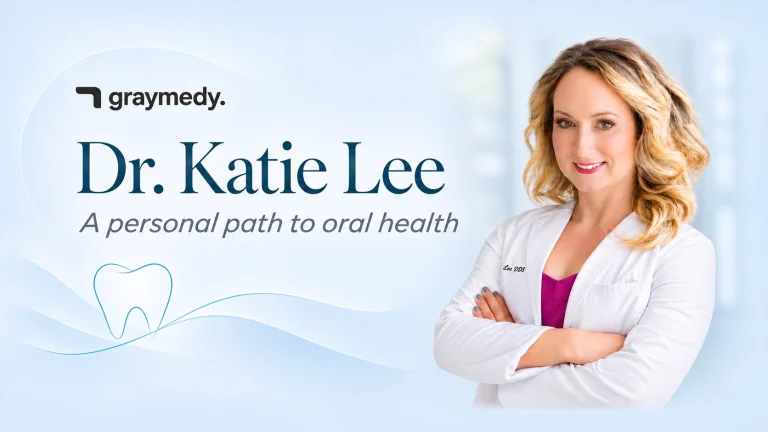
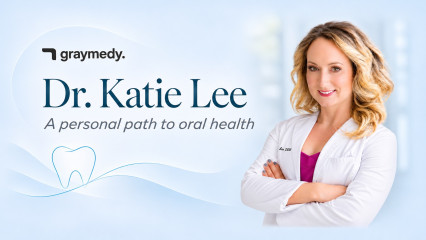
Dr. Katie Lee’s path to dentistry began long before dental school. At 14, an ATV accident caused severe injuries to her face and teeth. Years of treatment and reconstructive surgery followed. In her account of that experience, Lee describes how the care she received shaped her decision to become a dentist and help others facing difficult treatment. Today, Lee is a dentist, author, educator and coach whose work explores oral health and its relationship with the rest of the body. She also mentors dental professionals, an interest that takes her beyond the patients she can see individually. Her story brings together two sides of dentistry: the clinical work of restoring oral health and the human work of helping people feel understood. A patient’s experience becomes a purpose Lee has written about the long recovery after her accident, including the rebuilding of her jaw and treatment with dental implants. She also recalls the emotional difficulty of living through that recovery as a teenager. The experience gave her a personal view of what it means to need complex dental care—and of how much a patient’s confidence and daily life can be affected. She went on to graduate from the University of Illinois Chicago College of Dentistry in 2010. Her career has included practice leadership, education and consulting. She has also written Saved by the Mouth, a book intended to help patients and clinicians think about oral health in a wider context. For Lee, that educational work includes helping other dentists grow. On her own website, she describes mentoring as a way to reach more patients than she could treat alone. “I have two passions in this profession; dentistry itself, and making other dentists successful.” — Dr. Katie Lee, professional website Why the wider picture matters to her Lee’s interest in the relationship between the mouth and general health grew out of her own experience. In a 2024 episode of Dentistry Uncensored, she joins dentist and host Dr. Howard Farran for a discussion about oral-systemic health and empowering women in dentistry. The episode, included below, gives viewers a chance to hear about her work directly. The mouth is part of the body, and oral health can affect comfort, eating and quality of life. Researchers also study associations between gum disease and other health conditions. Those relationships can be complex: an association alone does not establish that one condition causes another, and dental treatment should not replace medical care. Patients can ask their dentist and physician how the evidence applies to them. From her story to everyday care Lee’s journey involved extensive treatment, but prevention remains a useful starting point for everyone. The American Dental Association (ADA) recommends brushing twice a day for two minutes with fluoride toothpaste and cleaning between teeth daily. Regular dental visits should be planned around a person’s individual needs. HabitSimple actionBrushTwice daily, two minutes, with fluoride toothpasteClean between teethOnce daily with floss or an interdental cleanerEat and drinkLimit sugar; choose waterDental visitsFollow your dentist’s recommended schedule Use a soft-bristled toothbrush and gentle strokes, reaching the outer, inner and chewing surfaces. If floss is difficult, ask your dental team about alternatives such as interdental brushes. The right routine is one that fits your mouth and that you can maintain. Making room for the patient Lee’s account of recovery underscores a point that can get lost in discussions of procedures: people arrive at a dental appointment with different histories, worries and resources. If you feel anxious, say so when booking. Ask the team to explain what will happen and agree on a signal if you need a break. Bring a list of medicines and questions. Before non-emergency treatment, ask for a clear explanation of the options, likely benefits, risks and costs. If your mouth often feels dry or you have concerns about a treatment, discuss them with your dentist rather than trying to diagnose the cause yourself. Contact a dentist promptly about persistent pain, bleeding gums, a broken tooth, swelling or a sore that does not heal. Swelling that makes breathing or swallowing difficult requires immediate emergency care. From her years as a patient to her work supporting other dentists, Lee’s story offers a personal perspective on why oral health deserves attention. Her message about education also invites a practical first step: ask questions, build a preventive routine and seek care suited to your own needs. Sources: Dr. Katie Lee’s biography; Dentistry Uncensored episode 1661; ADA home oral care; ADA interdental cleaning. Watch: Dr. Katie Lee on Dentistry Uncensored Dr. Lee discusses oral-systemic health and empowering women in dentistry with Dr. Howard Farran. Watch the full episode on YouTube.
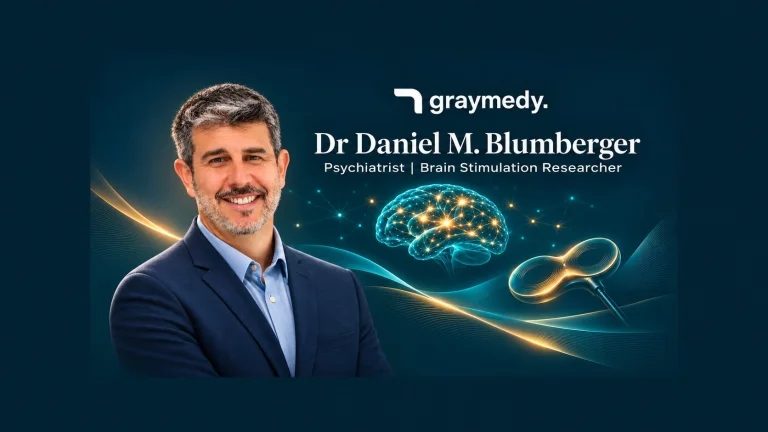
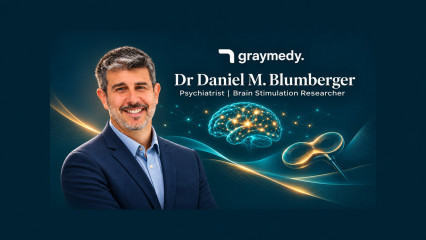
GRAYMEDY PROFESSIONAL PROFILE For people living with depression that has not improved after treatment, finding another option can be a long and uncertain process. Dr Daniel M. Blumberger’s work asks how brain stimulation might expand those options—and how researchers can make treatments more practical without losing sight of safety and evidence. Based in Toronto, Blumberger is scientific director of the Temerty Centre for Therapeutic Brain Intervention and a senior scientist at the Centre for Addiction and Mental Health (CAMH). He is also a professor of psychiatry at the University of Toronto and a subspecialist in geriatric psychiatry. His research includes clinical trials of brain stimulation treatments for depression and other psychiatric disorders. At a glance Profession: Psychiatrist, researcher and educator Location: Toronto, Ontario, Canada Institutions: Centre for Addiction and Mental Health and University of Toronto Areas of work: Treatment-resistant depression, brain stimulation and geriatric psychiatry Profile basis: Public institutional information and peer-reviewed research A focus on depression that is difficult to treat Depression does not respond to the same approach for everyone. Some people improve with psychotherapy, medication or a combination of treatments; others continue to experience symptoms despite trying several options. Blumberger’s research focuses on interventions for psychiatric conditions that have proved difficult to treat, with particular attention to depression across the lifespan. His work includes repetitive transcranial magnetic stimulation, or rTMS, alongside studies of other interventions. In rTMS, a device placed against the scalp delivers magnetic pulses to stimulate a targeted area of the brain. Treatment is non-invasive, and patients are generally awake during sessions. It is one option a clinician may consider for certain people with depression; suitability depends on an individual assessment. Testing a shorter TMS session A practical challenge with TMS is the time required to attend repeated appointments. In a 2018 trial known as THREE-D, Blumberger and colleagues compared a shorter form of stimulation, intermittent theta burst stimulation, with a conventional rTMS protocol for depression. The study randomly assigned 414 participants to treatment groups. The theta burst session took approximately three minutes, compared with 37.5 minutes for the conventional session. The researchers found that the shorter protocol was non-inferior on the study’s primary measure of depressive symptoms: its results met the trial’s prespecified standard for being sufficiently close to those of the longer protocol. That finding concerns the specific treatments and patients studied. A shorter session does not automatically mean every treatment course can be completed in fewer weeks, or that a given patient will respond. Treatment schedules and outcomes vary. Research beyond conventional TMS Blumberger has also investigated magnetic seizure therapy, or MST. Despite the similar terminology, MST is distinct from routine outpatient TMS: it is designed to induce a therapeutic seizure and is administered under anaesthesia. In a 2026 randomised trial, Blumberger and colleagues compared MST with a particular form of electroconvulsive therapy (ECT) for depression. Remission occurred in 22.5% of participants receiving MST and 27.8% receiving the ECT protocol. The trial met its prespecified non-inferiority criterion, and fewer participants in the MST group experienced worsening on the study’s measure of autobiographical memory. The findings add evidence about a possible treatment option, but they do not establish that MST and every form of ECT are interchangeable. The trial compared specific protocols, and its results should be considered alongside the uncertainty around the difference in remission rates. Bringing research into patient care The questions behind these studies are practical ones: can a treatment be made less burdensome, can side effects be reduced, and which patients are most likely to benefit? For someone considering TMS, those questions should be discussed with a qualified clinician. Headache and discomfort at the treatment site can occur, while seizures are rare. A clinical assessment also considers factors such as seizure history, medications and implanted devices. Research relationships also deserve transparency. In a 2024 publication, Blumberger disclosed research and equipment support involving brain-stimulation device manufacturers, among other funding and professional relationships. Such disclosures help readers assess the context of research; they do not, by themselves, determine its validity. Blumberger’s career illustrates how clinical psychiatry, research and education can come together around a difficult problem. Each treatment still needs to be judged on its own evidence—and each patient’s care on their own circumstances. Editorial note: This profile is based on public sources. Dr Blumberger was not interviewed for it. It is a professional profile, not a clinical endorsement. The accompanying AI-assisted illustration is based on a CAMH portrait; its background is conceptual. Sources CAMH: Dr Daniel M. Blumberger THREE-D randomised trial, The Lancet, 2018 CREST–MST randomised trial, The Lancet Psychiatry, 2026 NIMH: Brain stimulation therapies Consensus review of TMS for depression FOUR-D secondary analysis and disclosures
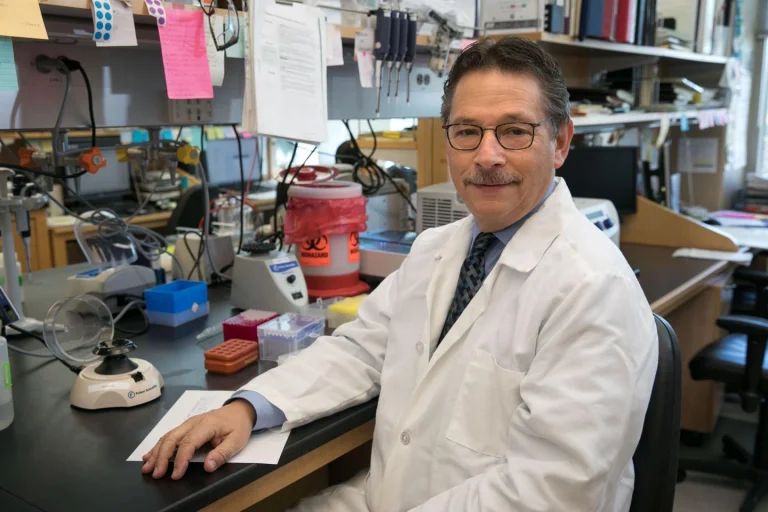
For children born with rare inherited immune disorders, a treatment developed from their own blood-forming stem cells can represent a new possibility. Bringing such an approach from a laboratory idea to a clinical trial takes years of research, collaboration and careful follow-up. UCLA physician-scientist Dr Donald Kohn has spent much of his career working across that path. In October 2026, UCLA announced Kohn’s election to the National Academy of Medicine. The recognition reflects work that has connected pediatric care, stem-cell biology and gene therapy for blood and immune diseases. A physician and a researcher Kohn is a distinguished professor at UCLA and a pediatric bone marrow transplant physician. His clinical work helped him see the challenges faced by children with serious immune disorders, including the difficulties of finding a well-matched donor for a transplant. His research has pursued another approach: modifying a patient’s own blood-forming stem cells so they can produce cells with a functional copy of a gene. These blood-forming, or hematopoietic, stem cells give rise to the different cells of the blood and immune system. In certain inherited conditions, an error in a gene disrupts that system. Gene therapy can be designed to add a working gene to collected cells before those cells are returned to the patient. That outline is simple; the process is not. Researchers must collect and prepare cells, deliver genetic material, assess the product and follow patients after treatment. The risks and potential benefits depend on the condition and the specific therapy. A successful result in one disease cannot automatically be assumed for another. Decades of work on ADA-SCID One of Kohn’s major research interests is adenosine deaminase-deficient severe combined immunodeficiency, known as ADA-SCID. The inherited condition affects immune function and leaves children vulnerable to serious infections. UCLA reports that Kohn and colleagues treated their first patient with gene therapy in 1993 and have spent more than three decades refining the approach. In this strategy, a functional copy of the ADA gene is added to a patient’s own blood-forming stem cells. Once returned to the patient, the modified cells can contribute to the development of immune cells. Using a patient’s own cells addresses the donor-matching problem, although it does not remove all treatment risks or the need for specialist care. UCLA reports that long-term results published in 2025 showed restored and maintained immune function in 59 of 62 children in the largest study of the therapy to date. Those results are encouraging, but the university says the team is still working to move this particular therapy toward US regulatory approval. Research findings and an approval decision are different milestones. From clinical trials to an approval Kohn also led UCLA’s participation in a multicentre trial of a gene therapy for severe leukocyte adhesion deficiency-I, another rare inherited immune disorder. UCLA reports that the US Food and Drug Administration approved the therapy, Kresladi, in March 2026. The ADA-SCID research and the treatment for severe LAD-I concern different diseases and have different regulatory histories. Keeping those distinctions clear is essential when reporting gene therapy: the platform may share scientific principles, but the evidence, product and authorised use belong to a specific treatment. Clinical trials provide a structured way to study whether a therapy works and what risks accompany it. For rare diseases, small patient populations can make evidence generation particularly demanding. Long-term monitoring matters because investigators need to understand whether benefits persist and whether adverse effects emerge later. Work beyond one disease According to UCLA, Kohn’s laboratory continues to investigate gene-based approaches for other blood and immune conditions, alongside newer gene-editing methods. His work on sickle cell disease has also contributed insights into delivery, conditioning and inflammation that may inform future research. Progress in this field depends on teams: clinicians, laboratory researchers, manufacturing specialists, trial staff, patients and families all play roles. Kohn has also served in leadership and mentorship positions across the cell and gene therapy community. UCLA credits him with supporting the next generation of physician-scientists as well as advancing experimental treatments. The longer view Kohn’s career illustrates how a scientific idea can move through many stages before it reaches the clinic. Early laboratory work must be translated into a reproducible treatment, tested responsibly and evaluated over time. Even after an approval, questions of access, cost and delivery remain important for the families who might benefit. The story is one of sustained research rather than a single moment of discovery. It also shows why careful language matters: a promising trial, a therapy being developed for approval and a product approved for a defined condition each represent different points on the journey. Source: UCLA Broad Stem Cell Research Center, “UCLA gene therapy pioneer Dr. Donald Kohn elected to National Academy of Medicine,” 19 October 2026.
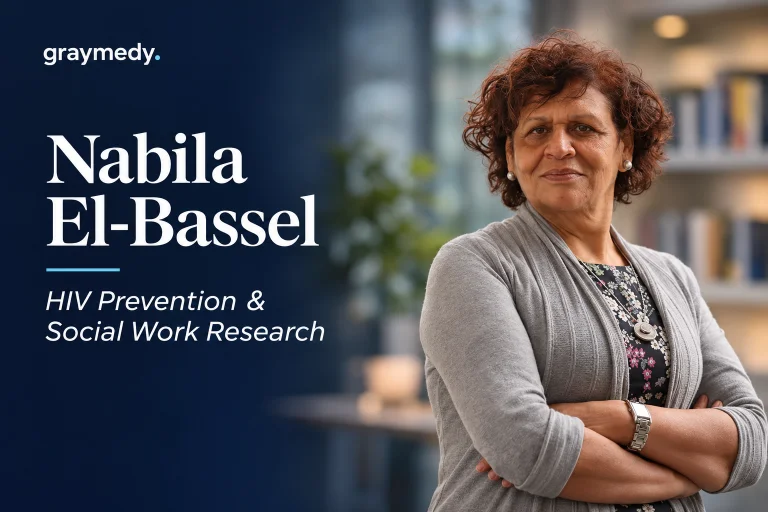
For social work researcher Nabila El-Bassel, access to health care depends on more than whether an effective treatment exists. Services must be reachable and responsive to the circumstances of the people who need them. Her research examines HIV prevention, substance use and the social conditions that can make care difficult to obtain. El-Bassel is a University Professor and the Willma and Albert Musher Professor of Social Work at Columbia University. Columbia identifies her as director of the Social Intervention Group and the Global Health Research Center of Central Asia. Her work has included designing and testing HIV and substance-use interventions in settings ranging from primary care and harm reduction programs to the criminal justice system. Taking services closer to people A recent example is HPTN 094, a randomized trial co-chaired by El-Bassel and Steven Shoptaw. The NIH-funded study enrolled 409 adults without HIV in Houston, Los Angeles, New York City, Philadelphia and Washington, D.C. Participants injected drugs, had opioid use disorder, were not receiving medication for that disorder at enrollment and were willing to consider it. Both groups received 26 weeks of peer navigation. In one group, participants could also obtain integrated HIV prevention, medication for opioid use disorder, and limited clinical and supportive services through a mobile medical unit. The comparison group received peer navigation linking them to available community services outside the mobile units. The design therefore tested an integrated delivery model against an active navigation approach, not against no help at all. The practical distinction matters. A referral can connect someone to a service, but it may still require another journey, appointment or interaction with a separate organization. A mobile unit brings several services into one setting. The trial asked whether that arrangement could improve outcomes for people who face barriers to sustained care. Reading the results carefully NIH reported 71% lower all-cause mortality in the mobile-services group. Mortality was a secondary outcome, however, and the investigators found no difference between groups in use of daily oral HIV pre-exposure prophylaxis, or PrEP, or medication for opioid use disorder. NIH said the mortality finding requires replication. Those results should be held together. The mortality signal is important and deserves further study, but it does not establish which component of the combined intervention caused the difference. Nor does it show that mobile units improved every outcome measured. The comparison involved a particular group in five cities and cannot automatically predict results in other communities. NIH also reported that verified oral PrEP use was low at 26 weeks. Fourteen percent of participants used medication for opioid use disorder at 26 and 52 weeks, a meaningful level in a population where none was receiving it at the start, although use did not differ between the groups. The researchers pointed to the need to investigate long-acting PrEP options in this population. Research across disciplines Columbia describes the Social Intervention Group as a multidisciplinary center that develops, tests and disseminates prevention and intervention approaches. El-Bassel’s work has addressed the intersection of HIV, substance use and gender-based violence, including interventions for women, men and couples. Columbia also describes her work mentoring HIV researchers and training scientists in intervention and prevention research. Her role at the Global Health Research Center of Central Asia extends that perspective across locations. Columbia describes a team working in New York and Central Asia on health and social issues through research, education, training, policy and dissemination. The details of a program must fit its local context, but the larger research question is shared: how can evidence-based services reach people who are often excluded from conventional pathways? HPTN 094 shows the value of asking that question in a controlled study. It also shows why a headline result needs its limits. Replication, attention to service uptake and understanding what participants actually need are necessary before a promising delivery model can be judged across different settings. Sources: Columbia School of Social Work profile; NIH trial announcement, November 4, 2026; Shoptaw, El-Bassel and colleagues, JAMA Psychiatry. Image: AI-assisted Graymedy editorial graphic based on a 2019 portrait of Nabila El-Bassel by Bruce Gilbert, published by Columbia University (https://president.columbia.edu/news/el-bassel-university-professor). The background is conceptual. This independent profile is based on public sources; no interview is implied.
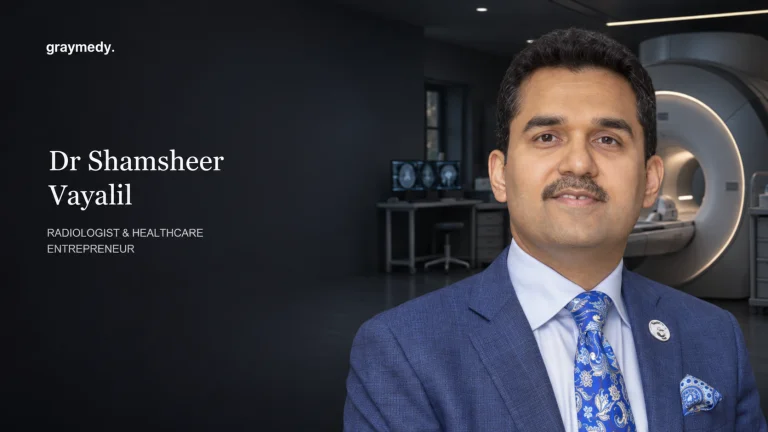
GRAYMEDY PROFESSIONAL PROFILE For Dr Shamsheer Vayalil, healthcare extends beyond the encounter between a doctor and a patient to the organisations that make treatment possible. His work spans hospitals, emergency medical services and investment in healthcare. Together, they raise a practical question: how can different parts of care be connected around the people who need them? Vayalil is the founder, chairman and chief executive officer of Burjeel Holdings, a healthcare group based in the United Arab Emirates. Trained in medicine and radiology, he began his career as a physician before establishing a hospital in Abu Dhabi in 2007 and developing a wider network of services. At a glance Profession: Physician, healthcare entrepreneur and investor Organisation: Burjeel Holdings, United Arab Emirates Areas of work: Hospital care, healthcare investment and emergency medical services Profile basis: Public company records and the professional’s published biography From radiology to building a hospital Vayalil’s medical education began in India, where he completed an MBBS and later specialised in radiology. His published biography describes work as a radiologist at Sheikh Khalifa Medical City in Abu Dhabi before he moved into healthcare entrepreneurship. In 2007, he opened LLH Hospital in Abu Dhabi. What began as a single hospital became the foundation for a broader healthcare group. Burjeel Holdings now describes a portfolio that includes hospitals, medical centres, home care, occupational health and pharmacies. Moving from clinical work to leadership changes the scale of the questions a doctor must consider. Alongside individual clinical decisions are questions about staffing, facilities, coordination and the way people reach the right service. These are organisational responsibilities carried by teams, not the work of one individual alone. Connecting services around patients A patient’s journey may involve a first consultation, diagnostic tests, specialist care and support after leaving hospital. Each step can take place in a different setting, and important information must travel with the patient. A network of services can provide opportunities to make those transitions easier. Burjeel describes its operations as a multi-brand healthcare platform spanning different levels of care. For patients, the value of an integrated model depends on how it works in practice: whether appointments are accessible, records are communicated, costs are clear and care remains consistent across settings. The existence of a network does not by itself establish better outcomes or guarantee access for every patient. Those questions require evidence about quality, experience and affordability as well as the number of facilities. Care before the hospital Vayalil’s work also includes emergency and pre-hospital care. Response Plus Holding identifies him as a founder and board member. The company describes services including on-site medical support, ambulance and emergency response, and medical evacuation. That part of healthcare begins before a person reaches a hospital. The response may involve assessing a situation, coordinating transport and communicating with the receiving care team. Its effectiveness depends on trained professionals, appropriate equipment and systems that function together when time matters. These services are distinct from Burjeel’s hospital operations, even though Vayalil has leadership connections to both. They illustrate the wider set of organisations involved in a healthcare journey. Growth and the responsibilities that follow Burjeel Holdings listed on the Abu Dhabi Securities Exchange in 2022. Its 2025 annual report records that Vayalil assumed the chief executive role in addition to his responsibilities as chairman. His wider VPS Health platform also includes interests in pharmaceuticals and education. Expansion can create opportunities to develop specialist services and reach more communities. It also brings responsibilities: maintaining clinical standards across sites, supporting staff and explaining outcomes to patients and the public. Financial growth and the size of a network tell only part of that story. Vayalil’s companies have a commercial interest in the services they describe. Their published accounts are useful for understanding the organisations and his roles, but they do not independently establish that any particular service is the best choice for an individual patient. From clinical training to healthcare leadership Vayalil’s career shows one path a physician can take beyond a clinical specialty: building and leading institutions that bring together different kinds of healthcare work. His story also highlights the teams behind that work, from clinicians and emergency responders to the people who coordinate facilities and services. For a person choosing care, the questions remain specific: which service meets their needs, what will it cost, and how will their care be coordinated? A professional profile can introduce a leader’s work, but it cannot assess an individual service or promise a clinical result. Editorial note: This independent profile is based on public sources. Graymedy did not interview Dr Vayalil for this article. No endorsement or commercial relationship is implied. Sources and image Dr Shamsheer Vayalil biography; career background; Burjeel Holdings leadership; Burjeel Holdings 2025 annual report; Response Plus Holding profile; VPS Health ventures. Portrait: Kcmazin via Wikimedia Commons, CC0 1.0. AI-assisted Graymedy illustration based on the portrait, with an illustrative background. AI was used to refine the portrait edge and may have recreated details.
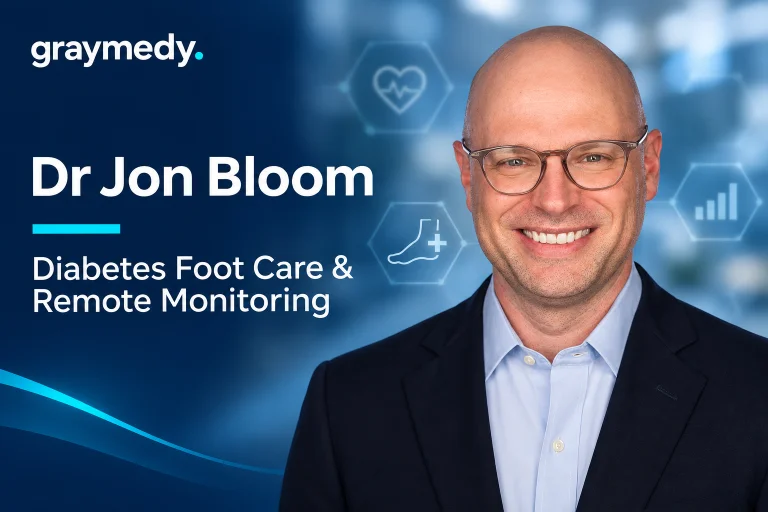
GRAYMEDY PROFESSIONAL PROFILE · November 15, 2026 A foot wound can begin quietly for someone with diabetes, especially when nerve damage makes an injury difficult to feel. Dr Jon Bloom, a physician and healthcare entrepreneur, has built his work around the question of how a care team might notice a warning earlier. Bloom is co-founder and chief executive of Podimetrics, according to the company’s leadership profile. It says he earned his medical degree at the University of Pittsburgh and completed residency at Massachusetts General Hospital. His work connects a clinical problem with remote monitoring and support for people living with complex diabetes. From a clinical problem to a company MIT’s Martin Trust Center traces Podimetrics to a Hacking Medicine event where Bloom and collaborators began developing an idea around diabetic foot ulcers. MIT reported that David Linders and Bloom worked together on a device intended to identify signs of foot problems. The company describes a service that combines home monitoring with a care team and existing providers. That combination matters because a measurement does not treat a wound. A useful alert needs to reach someone who can assess it, communicate with the patient and arrange appropriate care. Access to follow-up and the person’s ability to use a device are part of the practical question. What a temperature signal can—and cannot—show The company’s monitoring mat measures foot temperatures. A 2017 multicentre study evaluated remote temperature monitoring in people with diabetes who had previously healed a plantar ulcer. At one threshold, the system detected many subsequent ulcers but also produced false positives. The study investigated prediction in a selected high-risk group; it did not establish that an alert alone prevents amputation or that results apply equally to everyone with diabetes. Bloom’s company has a commercial interest in the technology. Its claims should be considered alongside the study design, potential harms, costs and independent evidence. A temperature difference can have causes other than an ulcer, and a reassuring reading is not a substitute for clinical assessment. Prevention is a care process NIDDK explains that diabetes can damage nerves and reduce blood flow, making foot injuries harder to notice and heal. Daily foot checks and regular professional examinations are important parts of care. A new sore, infection or other concerning change deserves prompt medical attention. Bloom’s professional story shows how entrepreneurship can begin with an overlooked clinical problem. The next test for any connected care service is whether it helps people obtain appropriate care in time, without adding unnecessary burden. Sources: Podimetrics leadership profile and original portrait; MIT Martin Trust Center; 2017 Diabetes Care study; NIDDK foot care. Independent profile; no interview or endorsement is implied. General information, not medical advice. Image: AI-assisted Graymedy editorial graphic based on a Podimetrics portrait; background is conceptual.
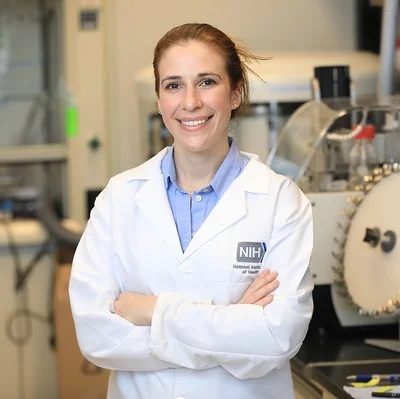
Repairing damaged tissue requires more than finding a material that fits. The body must decide how to respond to it. That meeting between an implant and the immune system is the focus of Dr. Kaitlyn Sadtler’s work at the National Institute of Biomedical Imaging and Bioengineering. The response around the material NIH identifies Sadtler as a senior investigator leading its Section on Immunoengineering. Her group studies how immune responses influence reconstruction after traumatic soft-tissue injury, including whether implanted scaffolds integrate with tissue or provoke harmful inflammation and fibrosis. Its approach combines biomaterials with studies of immune mechanisms. A scaffold can provide a structure for repair, but structure alone is not a complete biological explanation. Researchers also need to understand the cells and signals that arrive around it. This makes the work relevant to a practical engineering question: what should a material encourage the surrounding tissue to do? From mechanisms to useful questions Sadtler trained at Johns Hopkins and completed postdoctoral work at MIT before establishing her NIH laboratory. Her published research includes studies of immune-regulating dendritic cells after traumatic injury and of responses to biologic scaffold implantation. NIBIB highlighted her interdisciplinary work when she was named to the TIME100 Next list in 2024. Those dates matter. This is a professional profile selected for today’s edition, not an announcement of a new award or an approved regenerative treatment. A laboratory mechanism can suggest a direction for development without establishing that a particular implant improves recovery in patients. What makes the work worth following Graymedy’s interest is in the connection between engineering and healing. The most useful next questions concern durable tissue function, safety and reproducibility, rather than whether a material looks promising in isolation. A successful laboratory result still needs a clear route to clinical testing and evidence that matters to people living with injury. The photograph is an official NIH laboratory portrait of Dr. Kaitlyn Sadtler. Sources and image credit NIH investigator profile and selected publications; NIBIB profile, October 21, 2024. Editorial review: November 9, 2026. Independent profile based on public sources; no interview or endorsement is implied. Photo: NIH / NIBIB. Official investigator portrait and profile.
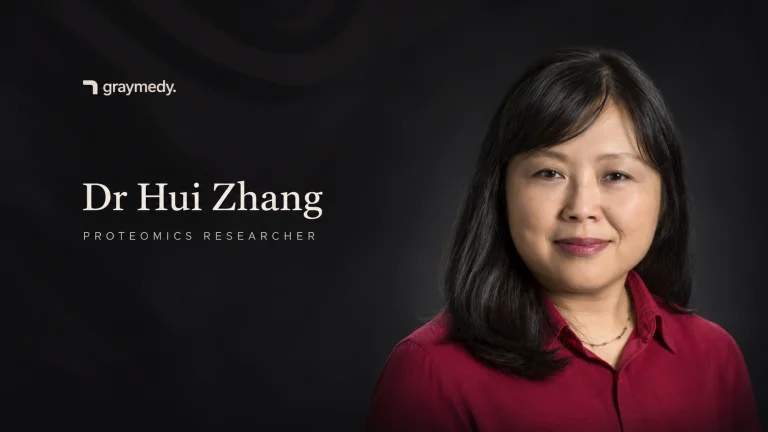
GRAYMEDY RESEARCH ANALYSIS · November 8, 2026 For Dr Hui Zhang, understanding cancer includes measuring what proteins are doing, not only which genes are present. A new paper on short drug exposures in tumour tissue provides a timely lens on that research programme—and on the distance between a molecular signal and a treatment decision. The researcher behind the methods Johns Hopkins identifies Zhang as a professor of pathology and director of the Mass Spectrometry Core Facility in its Center for Biomarker Discovery and Translation. Her work focuses on proteomics, including modifications that can alter protein function. This profile analyses published work; Zhang was not interviewed for this article. Proteomics examines proteins across a biological sample. Two important modifications are phosphorylation, the addition of phosphate groups, and glycosylation, the attachment of sugar structures. These measurements can reveal a layer of biological activity that is not captured by gene sequence alone. November’s paper: did the drug affect its intended pathway? T. Mamie Lih, Lijun Chen and Zhang published DExT for direct ex vivo drug testing in Communications Medicine on November 5, 2026. They exposed tissue from two clear-cell renal-cell-carcinoma patient-derived xenograft models to TAK-228, a dual mTOR-complex inhibitor, for up to 120 minutes. Mass-spectrometry analysis detected acute phosphorylation changes, including reduced phosphorylation at EIF4EBP1-S65, consistent with mTOR pathway inhibition. The important result is initial feasibility: the assay registered a molecular response directly in tumour-derived tissue material. It did not show that DExT predicts clinical response or selects the best treatment for a patient. The distinction is particularly important because patient-derived xenografts are experimental tumour models. A response measured outside the body over two hours is not the same endpoint as tumour control, tolerability or survival during treatment. The authors call for evaluation with more agents and clinical specimens. A second 2026 paper: whose signal is being measured? In February, Benjamin Miao, Tung-Shing Mamie Lih, Yingwei Hu and Zhang reported an integrative analysis of pancreatic cancer in Cancers. They combined transcriptomic, proteomic and single-cell information to distinguish tumour-cell features from signals arising in the surrounding tissue. The analysis identified 59 tumour-cell-associated molecular signatures and examined their biological and prognostic associations. This earlier study and November’s DExT paper address different problems. One asks which cells contribute a disease-associated signal; the other asks how a short drug exposure changes molecular activity. Neither is a clinical trial demonstrating that a protein-guided treatment strategy improves outcomes. The connecting idea—and its limits Graymedy’s interpretation is that the common thread is more specific measurement. Before calling a signal actionable, researchers need to establish its cellular origin, its biological meaning and whether changing it helps. A technically precise assay can still be clinically unhelpful if it measures an effect unrelated to outcomes that matter. For DExT, a compelling next test would relate a prespecified assay result to subsequent response in an independent clinical setting. For candidate pancreatic signatures, external validation and appropriate functional experiments would help separate correlation from a useful therapeutic opportunity. These are suggested evidence requirements, rather than results already demonstrated. A professional profile should credit the teams as well as the senior investigator. Lih and Chen performed the new study with Zhang; the pancreatic analysis was led in its reported analytical roles by Miao with contributions from the wider author group. The research programme is collaborative, and its clinical promise remains a question for further testing. Zhang’s recent work illustrates why methods research deserves attention before it becomes a product or a treatment headline. It can improve the questions clinicians and trial designers are able to ask, while leaving the answer about patient benefit appropriately open. Sources and publication dates Lih, Chen and Zhang, Communications Medicine, November 5, 2026; accepted article version Miao et al., Cancers, February 19, 2026 Johns Hopkins Medicine: Hui Zhang faculty profile Independent editorial analysis of published research; no interview or endorsement is implied. Image: AI-generated editorial portrait based on a photograph from Complete Omics. The AI process recreated parts of the portrait; no endorsement is implied. Original image source.
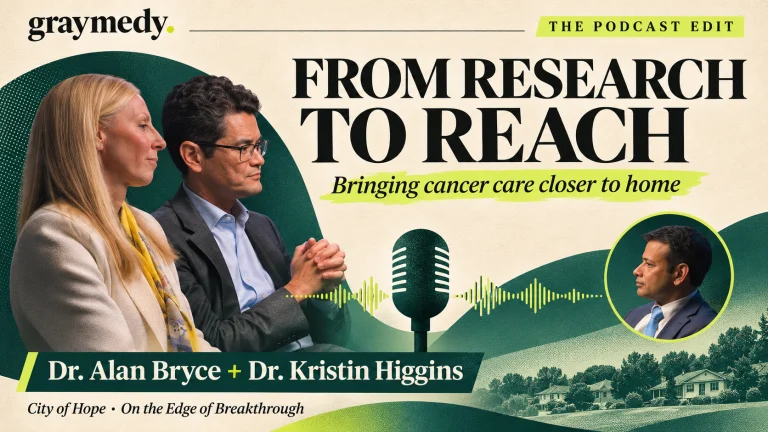
GRAYMEDY EXPLAINER · Reviewed November 7, 2026 A breakthrough treatment raises a practical question: where can patients receive it? Discovery attracts attention, but access depends on people building services, connecting teams and making research available beyond a single specialist centre. A recent doctor podcast explores that professional work through two different oncology careers. In City of Hope’s On the Edge of Breakthrough episode published October 27, 2026, Dr. Alan Bryce and Dr. Kristin Higgins discuss developing cancer care in Arizona and Atlanta. The conversation was recorded at ASCO 2026. Its timing matters: descriptions of services and open studies reflect that conversation, rather than a live announcement of availability. The key distinction: developing a treatment, making it available at a centre and showing that more patients benefit are separate achievements. Each needs its own evidence. About the conversation The video at the end of this article is City of Hope’s official upload, From Research to Reach: Opening Doors to Cancer Care, from season five of On the Edge of Breakthrough. The discussion covers clinical trials, transplantation, CAR T therapy and collaboration across centres. Graymedy did not conduct this interview. Original City of Hope video · Episode page and transcript. 1. Alan Bryce: connecting a specialist practice with research City of Hope’s institutional biography identifies Bryce as a medical oncologist and chief clinical officer at its Phoenix cancer centre, a role he began in 2023. His clinical focus is genitourinary cancer, particularly prostate and testicular cancers, alongside work in genomics, drug development and precision medicine. His training included medical school at the institution now known as Rosalind Franklin University’s Chicago Medical School, followed by internal-medicine residency and haematology-oncology fellowship training at Mayo. He also holds a molecular-medicine role at the Translational Genomics Research Institute, part of City of Hope. Those details help explain why research access is a professional concern rather than merely an administrative topic. A physician working on treatment development needs a setting where clinical questions can become organised studies. A specialist service, in turn, needs the expertise to interpret emerging evidence without treating every promising idea as established care. 2. Kristin Higgins: radiation oncology and the trial question Higgins is a radiation oncologist and chief clinical officer at City of Hope Atlanta. Her physician profile describes responsibility for clinical care and hospital operations, with an academic focus on lung cancer. Her career combines direct clinical expertise with the work of organising treatment programmes. She earned her medical degree at Tulane and completed an internship and radiation-oncology residency at Duke. Before joining City of Hope, she worked at Emory, where her programme included clinical trials investigating radiotherapy combinations. Her institutional profile also records leadership of NRG/Alliance LU005, studying immunotherapy alongside chemoradiation in lung cancer. A trial leadership role involves a different kind of contribution from an individual treatment consultation. The question must be defined, the study conducted consistently and the results interpreted in relation to what was tested. A professional profile becomes more informative when it connects those responsibilities rather than listing titles alone. 3. Bringing specialist services closer to patients In the podcast, the doctors describe growing specialist services and research opportunities through a connected cancer network. The discussion makes visible some of the work behind bringing complex treatment closer to patients: assembling expertise, coordinating programmes and linking centres with different capabilities. These are the speakers’ accounts of their institution’s development. Graymedy’s interpretation is that access should be examined as part of the treatment pathway. A medicine or procedure cannot be assessed only as an idea on paper when its delivery depends on a functioning service. The episode is valuable for exposing that practical question, while an institutional conversation cannot independently establish superior outcomes. 4. Clinical-trial access and clinical benefit are different questions The National Cancer Institute explains that clinical trials test how medical approaches work in people. Cancer studies can concern treatment, prevention, screening or management of symptoms and side effects. Their purpose is to produce evidence, with participation contributing to knowledge that may help future patients. That distinction belongs alongside any discussion of expanding trials. Access to a study is not a guarantee of access to a better treatment. Readers should ask what a particular study is investigating, what alternatives exist and how its requirements relate to their circumstances. A podcast cannot determine individual eligibility or replace the current study record. For the professional story, a useful next question is how a service demonstrates that expanded opportunities reach the intended patients. Recruitment totals, geography, patient experience and outcomes answer different questions. These are editorial considerations for evaluating access claims, rather than independently verified results from this interview. The doctors are worth following for the relationship between research and service building. Their conversation puts a human professional perspective on a wider challenge: turning specialist knowledge into care that patients can realistically reach, while retaining the evidence standards needed to judge what that care achieves. Questions to bring to the next access headline What changed? A service opening, trial participation or a measured patient outcome? Who can use it? Which population, location and eligibility criteria apply? When was it recorded? Programme descriptions in a podcast may precede its publication date. What is the evidence? Separate the institution’s account from independently assessed outcomes. Sources, attribution and image credit Sources: City of Hope podcast, October 27, 2026; official biographies of Bryce and Higgins; NCI clinical-trial guidance. Linked above. Video: City of Hope, On the Edge of Breakthrough, recorded at ASCO 2026. Featured graphic: AI-assisted Graymedy editorial design using portraits from the original City of Hope podcast still. Portraits have been composited; microphone and waveform elements are conceptual design, not evidence of a separate recording or a Graymedy interview. Reviewed November 7, 2026. Independently written from public sources. No Graymedy interview, institutional endorsement or individual treatment advice is implied. Watch the podcast
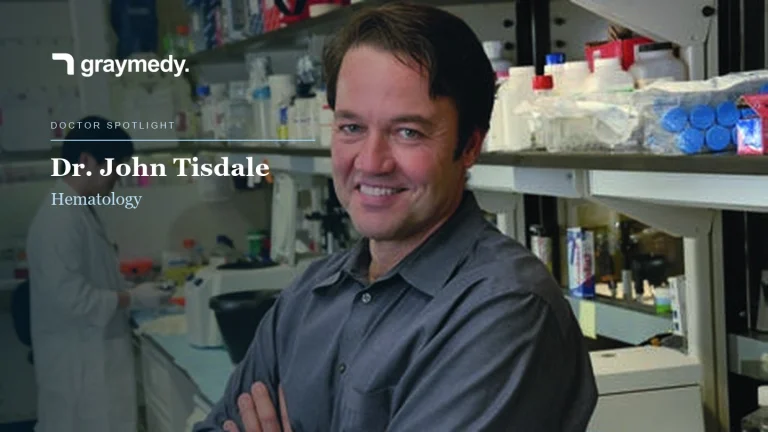
For Dr John Tisdale, a successful sickle-cell treatment is also an unfinished research problem. A therapy may transform a participant's life while remaining too demanding or difficult to deliver to many others. His work connects the biological possibility of a cure with the practical question of who can receive it. NIH's investigator profile, updated in October 2026, identifies Tisdale as a senior investigator and chief of the Cellular and Molecular Therapeutics Branch at the National Heart, Lung, and Blood Institute. His programme studies replacing or modifying the blood-forming stem cells that produce sickled red blood cells. A physician shaped by difficult repairs An NIH Catalyst profile traced his interest in medicine to a serious childhood knee injury and the doctor who helped restore his ability to walk. It also described a parallel life in music, including playing bass guitar in NIH ensembles. Those details offer a human view of the researcher without substituting personality for evidence. Tisdale earned his medical degree at the Medical University of South Carolina and trained in internal medicine at Vanderbilt. He came to NIH as a haematology fellow in 1994. The encounter with sickle cell disease during clinical training gave his scientific career a sustained focus. That path illustrates a particular role for the physician-scientist: the problem seen in the clinic becomes a question that can be investigated in the laboratory, then tested again with patients. Neither setting alone supplies the whole answer. Changing the cells that make blood Sickle cell disease arises from altered haemoglobin, the oxygen-carrying protein in red blood cells. The resulting cells can become rigid and obstruct circulation. Tisdale's programme focuses upstream, on the stem cells responsible for continually producing the blood supply. One route replaces them with cells from a donor. Another collects a person's own cells, modifies them outside the body and returns them. NIH's account describes work on gentler transplant approaches, immune tolerance and more effective gene delivery. These are related strategies with different requirements and risks. The contribution is not simply finding a way to add a gene. It also involves obtaining enough useful cells, preserving their function and making the treatment compatible with a patient's health. A technically impressive intervention still has to work within a clinical pathway. An approved therapy and an important boundary NHLBI credits Tisdale as principal investigator on the lovo-cel programme that led to a 2023 FDA approval. The product, Lyfgenia, is indicated for patients aged twelve and older with sickle cell disease and a history of vaso-occlusive events. That is an established regulatory milestone. It also carries a boxed warning about haematologic malignancy. FDA information calls for lifelong monitoring. The treatment involves preparation and specialist care, rather than a simple injection followed by immediate return to ordinary life. A profile celebrating the science should include those burdens. Approval of this product does not establish approval of every gene-delivery method being explored in Tisdale's laboratory. Keeping those stages separate is essential when reading about researchers whose programmes span both available therapies and experimental ideas. The next ambition is simpler delivery A 2025 NIH Catalyst report described Tisdale's interest in delivering genetic treatment inside the body. Researchers are investigating ways to direct vectors or lipid nanoparticles toward the bone marrow. The proposed advantage is avoiding parts of the complicated process of collecting and modifying cells outside the body. That is a development objective, not an announcement that an accessible in-body sickle-cell cure has arrived. Targeting, effectiveness, safety and durability all require evidence. The idea matters because it addresses an obstacle left standing after an earlier scientific success. The same report discusses efforts to make viral-vector production more efficient. Manufacturing is part of the research story: a treatment that cannot be produced and delivered reliably will have limited reach, regardless of how compelling its underlying biology appears. A researcher worth following for the remaining questions Graymedy's interpretation is that Tisdale's career is most interesting where it resists a finished-breakthrough narrative. His programme connects transplantation, gene addition and future delivery approaches, while colleagues and patients contribute to a much larger effort. For readers, the next useful update will specify which method was tested, in whom, for how long and with what harms. For patients, treatment decisions belong with a specialist team considering individual circumstances. Tisdale's continuing question remains both scientific and practical: how can potentially curative care become less burdensome and reach more of the people who need it? Sources: NIH investigator profile, updated October 2026; Caroline Duncombe / NIH Catalyst, historical profile; NHLBI research programme; NIH Catalyst: delivery research, 2025; FDA: Lyfgenia; Prescribing information and safety warning. Photo: NHLBI / NIH MedlinePlus Magazine, 2011. Reviewed 5 November 2026. Independently written from public sources; no interview was conducted. General information, not individual medical advice.
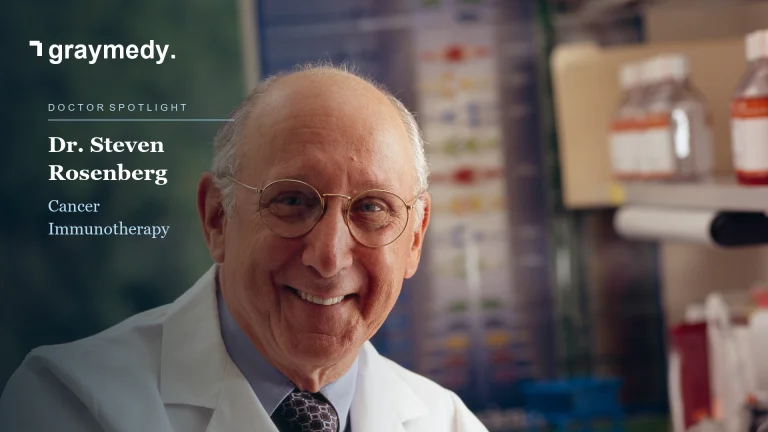
Dr Steven Rosenberg is pursuing a difficult extension of cancer immunotherapy: making a person’s own immune cells effective against more of the common cancers that form solid tumours. The ambition reaches beyond celebrating an earlier breakthrough. It concerns patients whose cancers have continued to grow despite several treatments and whose next options remain limited. At the U.S. National Cancer Institute, Rosenberg’s programme brings laboratory selection of immune cells into clinical trials. Its most interesting feature is the effort to make personalisation experimentally useful: identify cells that recognise an individual tumour, increase their numbers, and test whether they can produce a meaningful response. A long pursuit with a current obstacle NCI’s current profile lists Rosenberg as chief of its Surgery Branch. His work helped establish that manipulating the immune system can cause cancer regression. An NIH historical account describes the early investigation of interleukin-2 and the development of approaches using tumour-infiltrating lymphocytes, usually called TILs. These are immune cells already found within a tumour. Their presence creates an opportunity, but does not establish that every cell collected will attack cancer effectively. NCI’s patient guidance explains that researchers can test and select lymphocytes that recognise tumour cells, then expand them in the laboratory before infusion. This is the research problem behind the personalised label. The task involves identifying useful activity and preserving it through a demanding treatment process. Simply giving more cells is not the same as giving cells with the right recognition capabilities. Selecting the cells that matter In April 2025, Rosenberg and colleagues reported a phase 2 study involving 91 people with metastatic gastrointestinal cancers. Participants had previously received a median of four treatment regimens. The programme examined successive approaches, including unselected TILs, selected TILs, and selected TILs combined with pembrolizumab. NCI reported no objective responses among 18 recipients of unselected cells. Responses occurred in three of 39 people receiving selected TILs and eight of 34 receiving selected TILs plus pembrolizumab. The combination result was 23.5%, a signal worth investigating in cancers that had proved difficult to treat. The groups were sequential parts of a developing programme, rather than a simple randomised comparison establishing the contribution of each change. Tumour shrinkage also differs from a demonstrated survival advantage. These limits belong beside the result, particularly in a profile of a researcher associated with major advances. The next breakthrough is more specific The team’s stated next direction includes improving identification of cells that recognise several tumour-specific neoantigens. These are targets associated with a cancer’s mutations. The aim is to increase the proportion of patients who respond, rather than assuming that the existing approach already works broadly. A separate NCI report from July 2024 described another route: transferring personalised, tumour-reactive T-cell receptors into a patient’s blood-derived immune cells. In a small colorectal-cancer study, three of seven patients responded. The result supplied proof of possibility and a reason for refinement, not a universal solid-tumour treatment. These approaches share a question about recognition. Can researchers identify the molecular features that make a particular cancer vulnerable, then create a cell product able to act on that information? The answer must come from reproducible clinical results across appropriately designed studies. Why the difficult parts matter Cell therapy is an intensive pathway involving collection, laboratory work, preparatory treatment and specialist monitoring. NCI’s guidance describes weeks of cell growth and treatment to reduce competing immune cells before infusion. This places manufacturing and patient fitness within the scientific challenge, rather than treating them as administrative details. Safety is equally central. The 2025 report describes serious side effects in 30% of patients treated with selected TILs. A stronger antitumour response would have to be considered alongside those harms and the experience of undergoing the full regimen. Existing approvals must also be kept separate from experimental extensions. Lifileucel has an approved role in advanced melanoma. That does not establish approval of the personalised gastrointestinal-cancer approaches described here. A familiar therapeutic family can contain both established treatments and early research programmes. A researcher to follow for the next question Graymedy’s reading of Rosenberg’s work is that the pursuit remains compelling because it keeps narrowing a large ambition into testable decisions: which target, which cells, which combination and which patients. Progress depends on improving those decisions together. The potential breakthrough would be a reliably effective, tolerable and deliverable personalised treatment for more solid cancers. Rosenberg and his collaborators have produced signals that justify continuing that search. Its unfinished nature is precisely what makes this a research story worth following. Sources: NCI: current investigator profile; NIH Catalyst: historical research profile; NCI: gastrointestinal-cancer TIL trial, April 2025; NCI: personalised TCR trial, July 2024; NCI: cell-transfer treatment context. Photo: Rhoda Baer / National Cancer Institute, 2008. Reviewed 4 November 2026. Independently written from public sources; no interview was conducted. General information, not individual medical advice.
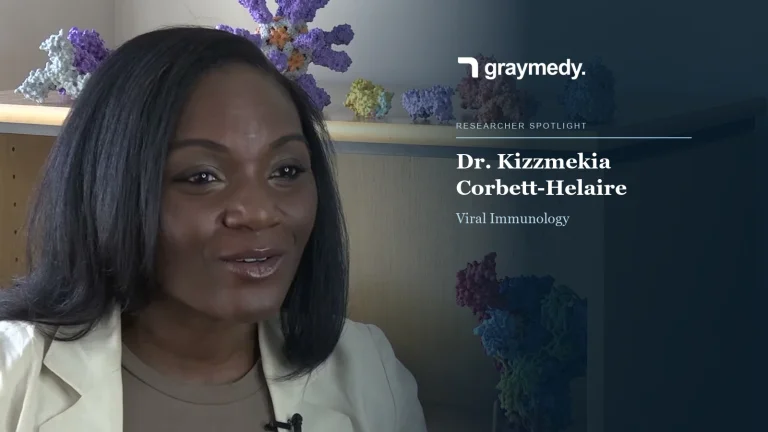
What would it take to begin designing a vaccine before the next dangerous virus is fully understood? For viral immunologist Kizzmekia Corbett-Helaire, that question connects the emergency research of 2020 with an ongoing programme in vaccine design. Her work examines the shapes viruses present to the immune system and how those shapes might be used to prepare broader protection. This is a researcher spotlight about building the scientific groundwork for a future response. Its central subject is a laboratory problem: identifying which parts of a virus can help train immunity, then testing how best to present those targets. The ambition is substantial, but each experimental result still needs to be judged on what it actually demonstrates. A scientist behind a rapid response Corbett-Helaire helped lead the coronavirus research team at the US National Institutes of Health’s Vaccine Research Center. When SARS-CoV-2 emerged, that group could draw on earlier coronavirus work and an established collaboration with Moderna. The resulting vaccine effort depended on a network of researchers, clinical investigators and manufacturing partners. A 2020 Nature paper, with Corbett among its equal-contributing lead authors, described vaccine design enabled by prototype-pathogen preparedness. The approach used knowledge about related viruses to accelerate development of an mRNA vaccine encoding a stabilised spike protein. The speed came from accumulated knowledge and established tools, alongside the work triggered by the new viral sequence. That distinction matters when breakthrough research is described as an overnight event. A rapid visible result can rest on years of less visible investigation. Understanding that history helps explain why work on a virus that is not causing a current emergency can still be valuable. The shape of a target matters Coronavirus spike proteins change shape as the virus enters a cell. Vaccine researchers can engineer a spike to retain its prefusion form, presenting the immune system with a useful target before that transition. The 2020 work brought protein design and an mRNA delivery platform into the same development pathway. These are distinct research tasks. Choosing the target, delivering instructions for making it and establishing safety and effectiveness require different evidence. A compelling molecular design cannot stand in for clinical testing. Equally, the record of an earlier vaccine does not automatically establish the performance of a new candidate. For Corbett-Helaire, the continuing scientific question reaches beyond recreating that earlier success. Can a vaccine be designed to generate useful responses across related viruses, including ones that may pose a future threat? Testing a broader view of coronavirus immunity A 2023 Nature Communications paper by Geoffrey Hutchinson, Olubukola Abiona and colleagues, with Corbett-Helaire as a corresponding author, examined protein nanoparticles displaying stabilised spikes from different coronaviruses. Some particles carried one type of spike; mosaic particles displayed different spikes together. The investigators measured antibody responses in mice and tested protection against a MERS coronavirus challenge. Their findings included responses extending across coronavirus groups and protection in the experimental challenge setting. They also identified antibody recognition outside the receptor-binding domain, expanding the targets considered for further vaccine research. These were preclinical findings. They did not establish that a universal coronavirus vaccine was ready for people, or that a particular candidate would protect humans against an unknown future virus. The study provided a way to investigate breadth, along with results that could guide subsequent design. A laboratory looking beyond one pathogen Harvard T.H. Chan School of Public Health currently lists Corbett-Helaire as the Melvin J. and Geraldine L. Glimcher Assistant Professor of Immunology and Infectious Diseases. Her laboratory describes research spanning viral immunology, protein engineering and therapeutic antibody discovery, with pandemic preparedness as a common purpose. Its stated projects include coronavirus vaccine antigens and nanoparticles, the immune landscape of viral surface proteins, and tools for examining individual virus particles. Those aims describe an active research programme rather than a catalogue of proven clinical products. They connect questions about how viruses enter cells with questions about how immunity might interrupt that process. What a breakthrough would need to show Graymedy’s interpretation is that the most interesting feature of this career is the attempt to make preparedness experimentally specific. Breadth of antibody recognition, protection in an animal model and benefit in people are different milestones. Keeping them separate makes progress easier to assess honestly. Corbett-Helaire’s work from 2020 onward shows how a scientist can move between an urgent public-health response and the slower task of asking what should be ready next. The promise lies in better preparation, tested step by step, rather than a prediction that the next outbreak has already been solved. Sources: Harvard: current faculty profile; Corbett Lab: research programme; Corbett and colleagues, Nature, 2020; Hutchinson and colleagues, Nature Communications, 2023; NIH: the collaborative vaccine effort. Image: NIAID / NIH interview, 2020, CC BY 2.0; frame with lettering. Reviewed 3 November 2026. Independently written from public sources; no interview or individual medical advice.
Childhood brain cancer demands expertise that crosses several boundaries: the biology of a developing nervous system, the behaviour of a tumour and the consequences of treatment for a child's future. Dr Michelle Monje works at that intersection. The Stanford physician-scientist is a pediatric neuro-oncologist whose research asks how the brain's own cells and signals can help cancer grow. Her work offers a distinctive doctor spotlight because it connects specialist practice with fundamental neuroscience. A paper appearing in the October 2026 issue of Nature Neuroscience adds a recent chapter, while also showing why a compelling laboratory discovery must remain separate from a proven treatment. A specialist with a documented clinical foundation Stanford Medicine Children's Health lists Monje as an MD, PhD and professor, with clinical interests including brain and spinal cord tumours, cancer immunotherapy and late effects of cancer treatment. Its directory records her medical education at Stanford, neurology residency at Harvard-affiliated hospitals and subsequent Stanford neuro-oncology fellowship. The directory also records neurology board certification in 2008 and neuro-oncology certification through the United Council for Neurologic Subspecialties in 2013. These are concrete professional credentials behind a research reputation. They help readers understand the specialist training involved without treating recognition or an academic title as a guarantee of any individual's outcome. Following the relationship between brain and tumour A familiar way to imagine cancer is as an isolated mass of abnormal cells. Monje's research broadens that picture by examining communication between cancer and its surroundings. The MacArthur Foundation's historical 2021 profile described her investigations of neuronal activity, glial cells and aggressive brain tumours. Glial cells support nervous-system function. Some become oligodendrocytes, which produce the insulating myelin around nerve fibres. Understanding how these cells develop can reveal biological programmes that a tumour might exploit. The scientific question therefore runs in two directions: what sustains a healthy developing brain, and what happens when related processes support malignant growth? This is a useful shift in perspective for readers. A tumour's environment is part of its biology. That does not mean ordinary thoughts, learning or a family's behaviour cause a child's cancer. Laboratory descriptions of neuronal signalling should never become a reason to blame patients or restrict normal life without clinical evidence. The recent research, with its limits intact The 2026 Nature Neuroscience paper, led by Yoon Seok Kim and colleagues with Monje as senior author, examined an interaction between neuroligin-3 and CSPG4. The investigators linked that interaction to the maintenance of an immature state in oligodendrocyte precursor cells and to glioma proliferation through mechanotransduction: the conversion of physical forces into cellular signals. The publication belongs to the journal's October issue, but it first appeared online on 6 August 2026. Keeping both dates visible avoids presenting an earlier online finding as a discovery made this week. The distinction matters in an area where families may encounter the same research repeatedly under fresh headlines. These are mechanistic findings from experimental research. They do not establish a newly approved medicine, a safe way to interrupt the pathway in children or an improvement in survival. Identifying a biological dependency is a starting point for further testing; turning it into a useful therapy requires additional evidence about delivery, selectivity and harm. Translation needs more than a promising mechanism Monje's current Stanford academic profile identifies her as Milan Gambhir Professor of Pediatric Neuro-Oncology. It also lists clinical research involving difficult brain tumours. A trial listing describes a structured investigation, rather than proof that the experimental approach works or an assurance that every patient can enrol. For families reading about emerging treatments, practical questions include which diagnosis and molecular features a study accepts, what its main purpose is, and what monitoring it requires. An early trial may primarily evaluate safety or dose. A specialist team can explain how those aims relate to the child's established treatment options. Keeping the child's future in view Stanford's clinical directory includes late effects of cancer therapy among Monje's areas of care. That concern makes the professional story broader than tumour control alone. Learning, development and everyday functioning also belong in discussions about what successful care should achieve. Graymedy's editorial reading is that Monje's contribution lies in connecting these questions across clinic and laboratory. Her career illustrates a demanding form of specialist medicine: investigating why a disease behaves as it does while keeping the person living with that disease at the centre of the work. Sources: Stanford Children's Health: clinical credentials; Stanford: current academic profile; Kim et al., Nature Neuroscience, 2026; MacArthur Foundation, 2021. Photo: © John D. and Catherine T. MacArthur Foundation–used with permission, 2021. Source. Reviewed 1 November 2026. Independently written from public sources; no interview or individual medical advice.
A discovery about a chicken tumour virus helped change how scientists understood human cancer. Dr. Harold Varmus's career connects that laboratory question with a much larger one: how should the institutions, funding systems and publications around science help useful knowledge reach people? His story offers a view of medicine in which discovery and the organisation of research continually influence each other. Following a question into the laboratory Varmus trained first in English literature, studying at Amherst and Harvard before earning his medical degree at Columbia. After clinical training, he worked with Ira Pastan at NIH and then joined J. Michael Bishop's laboratory at the University of California, San Francisco in 1970. The National Library of Medicine's historical account describes a collaboration built around the biology of tumour viruses. That route matters because it resists a tidy picture of a research career proceeding along one fixed track. Clinical training, laboratory experience and an earlier engagement with language became parts of the same professional life. For readers considering a career in health research, the example invites attention to the questions and training opportunities that connect apparently different interests. A cancer gene with a cellular origin Bishop and Varmus shared the 1989 Nobel Prize in Physiology or Medicine. The Nobel Assembly recognised their discovery that the cancer-causing gene carried by a retrovirus originated in normal cells. Their work helped establish the importance of normal cellular genes that can become involved in cancer when altered. The distinction was profound. Cancer biology could be investigated through the normal machinery controlling cell growth, alongside the ways that machinery becomes disturbed. It opened questions about mechanisms shared across tumours while leaving much work to explain the differences between individual cancers. A foundational finding provides a direction for research; it does not instantly produce a treatment for every patient. The Nobel account dates the pivotal published conclusion to 1976. That interval also offers perspective on how discovery becomes recognised. A scientific advance accumulates meaning through experiments, interpretation and work by many groups. The award marks an achievement, while the larger scientific history includes the people and methods that made further investigation possible. From research group to research institutions NIH's historical record places Varmus's directorship from November 1993 to December 1999. He subsequently led Memorial Sloan Kettering Cancer Center and later served as director of the National Cancer Institute from 2010 until March 2015. These are past appointments, included here as historical milestones rather than a claim about a current leadership role. At that scale, scientific leadership involves choices about the conditions in which others work. Supporting investigators, connecting laboratory and clinical programmes and deciding which questions deserve attention can influence what a research community is able to discover. The professional contribution extends beyond the papers carrying one person's name. Cold Spring Harbor Laboratory's account highlights Varmus's expansion of basic research and educational programmes at Memorial Sloan Kettering and the development of collaborations with neighbouring institutions. Such connections are useful to consider alongside major buildings and appointments: they describe the relationships through which research can draw on different kinds of expertise. Making findings easier to reach The National Library of Medicine also documents Varmus's role in advocating open access to research. His E-Biomed proposal contributed to the development of PubMed Central, and he helped found the Public Library of Science. The underlying concern is familiar to anyone who has followed a medical headline and then encountered a barrier to reading the research behind it. Access alone does not make a paper simple to interpret. Readers still need the methods, limitations and wider evidence placed in context. Yet being able to inspect the original work makes scrutiny and informed discussion more possible. For a health publication, that connection between availability and interpretation is a continuing editorial responsibility. A professional legacy that invites scrutiny Graymedy's interpretation of this career is that medical progress depends on both strong questions and systems that allow those questions to be pursued. Varmus's laboratory work, institutional leadership and publishing advocacy illustrate different ways a physician-scientist can contribute. They should be assessed through their documented work, without turning a prominent name into a guarantee that every proposal or policy is correct. For patients and clinicians, the relevance is a broader understanding of where new ideas come from. Behind a future test or treatment may be years of basic investigation and collective effort. A careful profile makes those connections visible while keeping the distinction between a scientific contribution and an individual care decision clear. Sources: Nobel Assembly, 1989; NIH historical biography; National Library of Medicine; Cold Spring Harbor Laboratory. Photo: Matthew Septimus / NCI via Wikimedia Commons, 2009. Editorial review: 29 October 2026. Historical profile from published sources; no interview was conducted.
A person can survive a severe limb injury and still face a demanding question: how to regain the strength needed for an ordinary day. Walking to work, climbing steps or returning to a valued sport involves more than a healed wound. That practical gap is where physical therapist Johnny Owens has built much of his professional story. Owens is a U.S. physiotherapy professional, known in American practice as a physical therapist. His work connects rehabilitation after military trauma with the wider development of blood flow restriction training. The interesting thread is the clinical problem behind the equipment: helping people train when conventional heavy loading is difficult. A career grounded in rehabilitation Owens Recovery Science identifies him as its founder, chief executive and director of clinical education. Its biography records a master's degree in physical therapy from the University of Texas Medical Branch and an earlier role leading Human Performance Optimization at the Center for the Intrepid in San Antonio. Those are distinct chapters. The military rehabilitation role provides historical context; his present company supplies education and sells medical devices. Readers should keep that commercial interest in view when considering descriptions of a treatment associated with his name. A professional achievement and a product claim need different kinds of scrutiny. The brace was one part of the pathway A U.S. Army report from August 2011 described Owens tailoring rehabilitation for injured service members using the Intrepid Dynamic Exoskeletal Orthosis, or IDEO. The device supported damaged lower limbs, but it was paired with an extensive rehabilitation programme. The story placed the brace within a process of rebuilding movement. That distinction remains useful. A device may change what becomes physically possible, while a therapist helps determine how someone learns to use that possibility. Assessment, progression and the person's own goals connect an engineering solution with daily function. A photograph of equipment cannot show all that work. The Army's account concerned a particular programme and population. It should not be read as a promise that another person with a different injury will achieve the same result. Its value in this profile is showing how Owens approached rehabilitation as a combination of tools and individual planning. Finding another way to load muscle In a 2014 military hospital report, Owens described using blood flow restriction, often shortened to BFR, with wounded service members. The approach combines controlled pressure around a limb with exercise using lighter resistance. His stated motivation was to help patients build strength when damaged limbs could not tolerate heavy weights. Early institutional coverage included enthusiastic patient accounts and large improvements in selected cases. Those reports explain why the approach attracted attention; they do not establish the average benefit, comparative effectiveness or safety for every diagnosis. A profile should preserve that difference instead of turning an individual recovery into a universal forecast. The judgement matters as much as the cuff The Australian Institute of Sport's BFR guidance emphasises screening, education, individualised pressure and appropriate supervision. It also describes limitations in the safety evidence and conditions requiring medical review. The pressure needed to restrict blood flow varies with the person and the equipment, so a simple fixed setting cannot represent a complete clinical plan. For a reader considering rehabilitation, the useful questions concern suitability and purpose. What problem is the technique intended to address? What alternatives are available? How will progress and unwanted effects be assessed? These questions support a conversation with a qualified clinician; this feature does not provide instructions for applying a cuff or choosing a training pressure. What makes the professional story worth following Owens's career illustrates a form of healthcare innovation that begins with a constraint encountered during rehabilitation. The contribution is not simply introducing a technique. It involves translating an idea into education, investigation and practice, while remaining accountable for the evidence supporting it. Graymedy's reading of this career is that physiotherapy deserves attention as skilled clinical work in its own right. The therapist connects an intervention with the task a person hopes to recover, then keeps asking whether the plan is helping. That question is more durable than enthusiasm for any single device. For Owens, the continuing test is whether wider adoption is accompanied by careful patient selection, transparent research and meaningful functional outcomes. For readers, his story offers a clear example of a health professional working beyond the physician role, with movement and participation at the centre of care. Sources: Owens Recovery Science: biography; U.S. Army: rehabilitation pathway, 2011; Military hospital report, 2014; Australian Institute of Sport: BFR guidance. Editorial review: 27 October 2026. Independently written from published sources; no interview was conducted. For general information, not personal medical advice. Photo: Linda Hosek / U.S. Department of Defense, 2011.
A school nurse's conversation with a family and a hospital team's brief safety huddle might seem far removed from national health leadership. For Duncan Burton, those are precisely the places where that leadership has to mean something. England's Chief Nursing Officer is a registered nurse whose current work connects the profession's everyday judgement with decisions about standards, staffing and the future of care. This October, a visit to Middlesbrough put that connection in view. Harrogate and District NHS Foundation Trust reported on 13 October 2026 that Burton had met its Healthier Together 0–11 team. The focus was on health visitors and school nurses supporting children and families, alongside the partnerships that connect health services with education and wider care. A national role with a nursing foundation Burton became Chief Nursing Officer for England in July 2024. His current government biography identifies responsibilities spanning professional leadership, policy, standards, safety and people's experience of care. It also lists his national responsibility for infection prevention and control. This is a working nursing leadership role, with influence over the conditions in which other nurses practise. His route began in respiratory medicine and neurology at the Royal United Hospital in Bath after training at the University of Wales. Later roles at University College London Hospitals included acute admissions, emergency services and nursing management. He went on to lead nursing and patient experience at Kingston Hospital, before regional and national appointments. That progression gives the profile a practical thread: moving from individual clinical encounters towards responsibility for how services support many encounters. A national title can obscure that professional identity. Nurses do more than carry out a treatment plan. They assess changing needs, coordinate care and notice when a patient's understanding or circumstances make an otherwise sensible plan difficult to follow. Bringing that perspective into policy is one reason nursing leadership matters beyond the ward. Meeting care where families live The Middlesbrough visit offers a contemporary example. According to the trust's account, Burton heard about early intervention and support extending from the earliest years into adolescence. The emphasis was on the contribution of community public health nursing, rather than a single new device or treatment. It placed familiar relationships and local knowledge at the centre of the story. The visit also included the final face-to-face session of the Bridge to Nursing Programme at Teesside University. The programme brings together university, charity and NHS partners to provide mentoring and support for young people considering nursing. Burton's published comments highlighted widening the backgrounds from which future nurses enter training. The immediate subject was opportunity: helping someone see a realistic route into a profession that may otherwise feel distant. The small meeting with a larger purpose Earlier this year, Burton visited Royal Stoke University Hospital. University Hospitals of North Midlands reported that his 1 May visit included a cardiothoracic ward improvement huddle, alongside discussions about staff development, recruitment, retention and learning from patients. He also heard about THRIVE, the trust's approach to supporting sustainable improvements led by teams. A huddle is an unglamorous feature detail, but a revealing one. It brings leadership back to a question that matters during a shift: can staff identify a problem together and do something useful about it? The trust's report describes a visit and its priorities; it does not establish that the visit itself improved outcomes. Keeping that distinction clear allows the work to be examined without turning a professional profile into a promotional claim. For anyone following nursing careers, these settings also show how varied the work can become. Community services, ward improvement and support for future colleagues belong to the same professional story, even when they happen in different buildings. What makes this a professional worth watching Taken together, these recent accounts show Burton working across two scales: the local team and the national profession. The useful tension lies between them. Policies about careers and standards have to reach the person answering a family's questions, while what staff and patients experience has to find a route back into decisions made further away. For readers, that is the feature's central interest. Burton represents a health career in which clinical experience can develop into public leadership while retaining a nursing lens. The next test is practical: whether attention to staff voice, access to training and everyday improvement translates into stronger support for the people delivering care. His current work provides a living example of a health professional shaping that conversation. Sources: GOV.UK: current role and biography; NHS England: appointment and nursing career; HDFT: Middlesbrough visit, October 2026; UHNM: Royal Stoke visit, May 2026. Editorial review: 26 October 2026. A feature based on published institutional accounts; no interview was conducted. Photo: Crown copyright / GOV.UK, Open Government Licence v3.0.
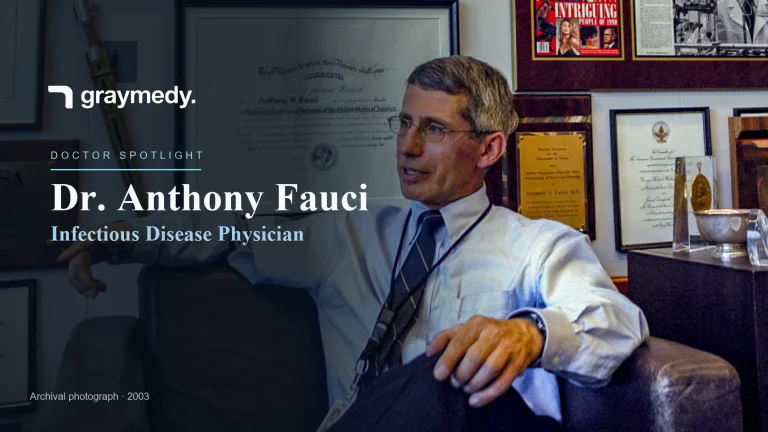
A doctor’s influence can extend beyond the patients seen in a consulting room. Some physicians also shape the questions laboratories investigate, the systems that support research and the way scientific uncertainty is explained. Dr. Anthony Fauci’s career provides an example of those overlapping responsibilities in infectious disease. This profile looks at his documented clinical and research career, his long role at the US National Institutes of Health and his subsequent university work. It is a professional portrait based on institutional sources, rather than an account of a new interview or a claim that one person alone produced the advances associated with a large research community. A physician before an institutional leader NIH’s Office of AIDS Research records that Fauci received his medical degree from Cornell University Medical College and completed internship and residency training at the institution now associated with New York–Presbyterian and Weill Cornell. He joined NIH as a clinical associate in the National Institute of Allergy and Infectious Diseases. His subsequent positions included leading clinical physiology work and the Laboratory of Immunoregulation. Those roles place his public career in a medical context: the study of how immune responses work and how they can be understood through investigation involving patients. The connection is worth keeping in view when a familiar public figure becomes a shorthand for an entire field. A physician-scientist’s work includes formulating questions, evaluating evidence and connecting observations to experiments. Institutional leadership adds responsibility for helping other investigators do that work well. Research as a sustained responsibility Fauci directed NIAID from 1984 until his retirement from NIH in December 2022. The institute’s portfolio extended across HIV/AIDS, respiratory infections, tuberculosis, malaria and emerging infections including Ebola and Zika. NIH also records his service as the first director of the Office of AIDS Research after its establishment in 1988. A portfolio of that breadth is not a list of personal discoveries. It reflects the work of investigators, clinical teams, participants, partner institutions and public funding. Understanding that distinction makes a professional profile more useful: leadership can influence priorities and coordination without erasing the people who generate and test the evidence. For readers following medical breakthroughs, this is a reminder that progress often depends on continuity. Laboratories and clinical networks need to remain capable of asking the next question after immediate public attention moves elsewhere. A single headline rarely captures that infrastructure. Communication is part of medical work In a 2023 NIH MedlinePlus Magazine interview, Fauci discussed the need to understand the audience and communicate clearly. The interview is an institutional conversation published at the time, not reporting conducted by Graymedy. Its relevance here is the practical challenge it identifies: information has limited value if its intended audience cannot understand it. Clear communication should explain what is known, what remains uncertain and what a finding changes for the person listening. Those are separate tasks. A technically accurate answer can still leave a patient unsure what to do next, while a confident answer can conceal uncertainty that matters. Graymedy’s interpretation is that infectious-disease communication is strongest when it treats understanding as an outcome to work toward. That means making the basis of advice visible and explaining the conditions under which conclusions might change. It also means recognising that explanation and evidence appraisal are responsibilities shared across the profession. From public service into teaching Georgetown University lists Fauci as a Distinguished University Professor in its School of Medicine, with an additional appointment in the McCourt School of Public Policy. The setting brings medicine and public policy into the same professional frame. A Georgetown account of a July 2024 conversation about his memoir describes his interest in interacting with students and reflecting on a career spanning successive health crises. Teaching offers another route by which accumulated clinical and institutional experience can be examined, questioned and passed on. For students, the useful lesson is not that every medical career should follow the same path. It is that clinical knowledge can support several forms of contribution, from direct care and investigation to education and the organisation of research. How to read a career like this A professional profile should make roles and dates clear, distinguish individual contributions from collective work and avoid substituting celebrity for evidence. Fauci’s documented career is substantial enough to examine through those ordinary standards. His trajectory shows how a physician can work across patients, laboratories, institutions and classrooms. For readers interested in the people behind medical progress, the enduring question is how those different responsibilities connect—and how each can help useful knowledge reach the people who need it. Sources and editorial note NIH Office of AIDS Research: career and training · NIH MedlinePlus Magazine interview, 2023 · Georgetown: academic appointment · Georgetown account of July 2024 conversation Reviewed 22 October 2026 by Graymedy Editorial. An independently written evidence review; no interview or individual medical advice is implied. Photo: Michael Geissinger / Library of Congress, 2003.