- Home
- Professionals
- Dr. Anthony Fauci: connecting infectious-disease research with public understanding
Dr. Anthony Fauci: connecting infectious-disease research with public understanding
A physician’s career across clinical investigation, institution building and teaching offers a lens on how medical knowledge reaches the public.
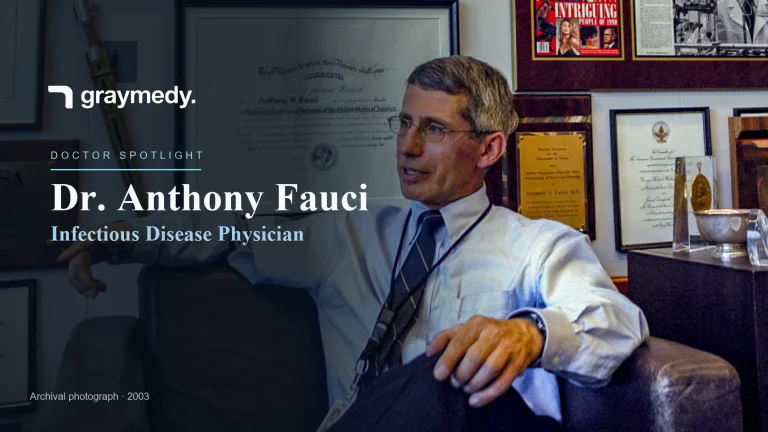
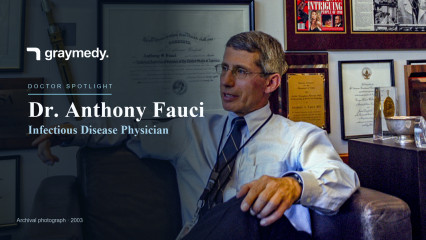
A doctor’s influence can extend beyond the patients seen in a consulting room. Some physicians also shape the questions laboratories investigate, the systems that support research and the way scientific uncertainty is explained. Dr. Anthony Fauci’s career provides an example of those overlapping responsibilities in infectious disease.
This profile looks at his documented clinical and research career, his long role at the US National Institutes of Health and his subsequent university work. It is a professional portrait based on institutional sources, rather than an account of a new interview or a claim that one person alone produced the advances associated with a large research community.
A physician before an institutional leader
NIH’s Office of AIDS Research records that Fauci received his medical degree from Cornell University Medical College and completed internship and residency training at the institution now associated with New York–Presbyterian and Weill Cornell. He joined NIH as a clinical associate in the National Institute of Allergy and Infectious Diseases.
His subsequent positions included leading clinical physiology work and the Laboratory of Immunoregulation. Those roles place his public career in a medical context: the study of how immune responses work and how they can be understood through investigation involving patients.
The connection is worth keeping in view when a familiar public figure becomes a shorthand for an entire field. A physician-scientist’s work includes formulating questions, evaluating evidence and connecting observations to experiments. Institutional leadership adds responsibility for helping other investigators do that work well.
Research as a sustained responsibility
Fauci directed NIAID from 1984 until his retirement from NIH in December 2022. The institute’s portfolio extended across HIV/AIDS, respiratory infections, tuberculosis, malaria and emerging infections including Ebola and Zika. NIH also records his service as the first director of the Office of AIDS Research after its establishment in 1988.
A portfolio of that breadth is not a list of personal discoveries. It reflects the work of investigators, clinical teams, participants, partner institutions and public funding. Understanding that distinction makes a professional profile more useful: leadership can influence priorities and coordination without erasing the people who generate and test the evidence.
For readers following medical breakthroughs, this is a reminder that progress often depends on continuity. Laboratories and clinical networks need to remain capable of asking the next question after immediate public attention moves elsewhere. A single headline rarely captures that infrastructure.
Communication is part of medical work
In a 2023 NIH MedlinePlus Magazine interview, Fauci discussed the need to understand the audience and communicate clearly. The interview is an institutional conversation published at the time, not reporting conducted by Graymedy. Its relevance here is the practical challenge it identifies: information has limited value if its intended audience cannot understand it.
Clear communication should explain what is known, what remains uncertain and what a finding changes for the person listening. Those are separate tasks. A technically accurate answer can still leave a patient unsure what to do next, while a confident answer can conceal uncertainty that matters.
Graymedy’s interpretation is that infectious-disease communication is strongest when it treats understanding as an outcome to work toward. That means making the basis of advice visible and explaining the conditions under which conclusions might change. It also means recognising that explanation and evidence appraisal are responsibilities shared across the profession.
From public service into teaching
Georgetown University lists Fauci as a Distinguished University Professor in its School of Medicine, with an additional appointment in the McCourt School of Public Policy. The setting brings medicine and public policy into the same professional frame.
A Georgetown account of a July 2024 conversation about his memoir describes his interest in interacting with students and reflecting on a career spanning successive health crises. Teaching offers another route by which accumulated clinical and institutional experience can be examined, questioned and passed on.
For students, the useful lesson is not that every medical career should follow the same path. It is that clinical knowledge can support several forms of contribution, from direct care and investigation to education and the organisation of research.
How to read a career like this
A professional profile should make roles and dates clear, distinguish individual contributions from collective work and avoid substituting celebrity for evidence. Fauci’s documented career is substantial enough to examine through those ordinary standards.
His trajectory shows how a physician can work across patients, laboratories, institutions and classrooms. For readers interested in the people behind medical progress, the enduring question is how those different responsibilities connect—and how each can help useful knowledge reach the people who need it.
Sources and editorial note
NIH Office of AIDS Research: career and training · NIH MedlinePlus Magazine interview, 2023 · Georgetown: academic appointment · Georgetown account of July 2024 conversation
Reviewed 22 October 2026 by Graymedy Editorial. An independently written evidence review; no interview or individual medical advice is implied.
Photo: Michael Geissinger / Library of Congress, 2003.
Professionals
View more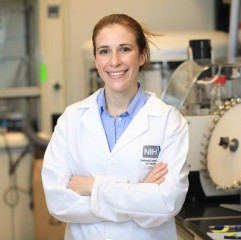
Repairing damaged tissue requires more than finding a material that fits. The body must decide how to respond to it. That meeting between an implant and the immune system is the focus of Dr. Kaitlyn Sadtler’s work at the National Institute of Biomedical Imaging and Bioengineering. The response around the material NIH identifies Sadtler as a senior investigator leading its Section on Immunoengineering. Her group studies how immune responses influence reconstruction after traumatic soft-tissue injury, including whether implanted scaffolds integrate with tissue or provoke harmful inflammation and fibrosis. Its approach combines biomaterials with studies of immune mechanisms. A scaffold can provide a structure for repair, but structure alone is not a complete biological explanation. Researchers also need to understand the cells and signals that arrive around it. This makes the work relevant to a practical engineering question: what should a material encourage the surrounding tissue to do? From mechanisms to useful questions Sadtler trained at Johns Hopkins and completed postdoctoral work at MIT before establishing her NIH laboratory. Her published research includes studies of immune-regulating dendritic cells after traumatic injury and of responses to biologic scaffold implantation. NIBIB highlighted her interdisciplinary work when she was named to the TIME100 Next list in 2024. Those dates matter. This is a professional profile selected for today’s edition, not an announcement of a new award or an approved regenerative treatment. A laboratory mechanism can suggest a direction for development without establishing that a particular implant improves recovery in patients. What makes the work worth following Graymedy’s interest is in the connection between engineering and healing. The most useful next questions concern durable tissue function, safety and reproducibility, rather than whether a material looks promising in isolation. A successful laboratory result still needs a clear route to clinical testing and evidence that matters to people living with injury. The photograph is an official NIH laboratory portrait of Dr. Kaitlyn Sadtler. Sources and image credit NIH investigator profile and selected publications; NIBIB profile, October 21, 2024. Editorial review: November 9, 2026. Independent profile based on public sources; no interview or endorsement is implied. Photo: NIH / NIBIB. Official investigator portrait and profile.
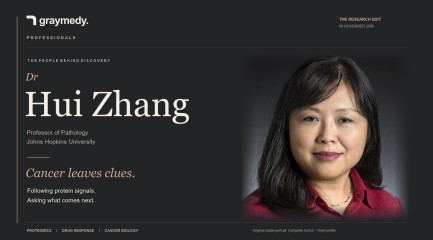
Dr Hui Zhang: reading cancer’s protein signals before claiming a clinical answer
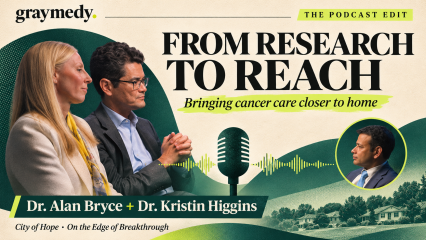
From research to reach: Dr. Alan Bryce and Dr. Kristin Higgins on cancer care closer to home
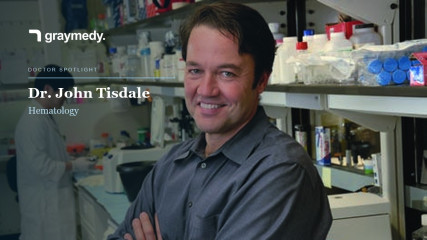
Dr John Tisdale: the next sickle-cell breakthrough must be easier to reach
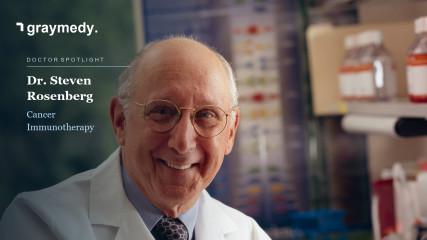
Dr Steven Rosenberg is pursuing a difficult extension of cancer immunotherapy: making a person’s own immune cells effective against more of the common cancers that form solid tumours. The ambition reaches beyond celebrating an earlier breakthrough. It concerns patients whose cancers have continued to grow despite several treatments and whose next options remain limited. At the U.S. National Cancer Institute, Rosenberg’s programme brings laboratory selection of immune cells into clinical trials. Its most interesting feature is the effort to make personalisation experimentally useful: identify cells that recognise an individual tumour, increase their numbers, and test whether they can produce a meaningful response. A long pursuit with a current obstacle NCI’s current profile lists Rosenberg as chief of its Surgery Branch. His work helped establish that manipulating the immune system can cause cancer regression. An NIH historical account describes the early investigation of interleukin-2 and the development of approaches using tumour-infiltrating lymphocytes, usually called TILs. These are immune cells already found within a tumour. Their presence creates an opportunity, but does not establish that every cell collected will attack cancer effectively. NCI’s patient guidance explains that researchers can test and select lymphocytes that recognise tumour cells, then expand them in the laboratory before infusion. This is the research problem behind the personalised label. The task involves identifying useful activity and preserving it through a demanding treatment process. Simply giving more cells is not the same as giving cells with the right recognition capabilities. Selecting the cells that matter In April 2025, Rosenberg and colleagues reported a phase 2 study involving 91 people with metastatic gastrointestinal cancers. Participants had previously received a median of four treatment regimens. The programme examined successive approaches, including unselected TILs, selected TILs, and selected TILs combined with pembrolizumab. NCI reported no objective responses among 18 recipients of unselected cells. Responses occurred in three of 39 people receiving selected TILs and eight of 34 receiving selected TILs plus pembrolizumab. The combination result was 23.5%, a signal worth investigating in cancers that had proved difficult to treat. The groups were sequential parts of a developing programme, rather than a simple randomised comparison establishing the contribution of each change. Tumour shrinkage also differs from a demonstrated survival advantage. These limits belong beside the result, particularly in a profile of a researcher associated with major advances. The next breakthrough is more specific The team’s stated next direction includes improving identification of cells that recognise several tumour-specific neoantigens. These are targets associated with a cancer’s mutations. The aim is to increase the proportion of patients who respond, rather than assuming that the existing approach already works broadly. A separate NCI report from July 2024 described another route: transferring personalised, tumour-reactive T-cell receptors into a patient’s blood-derived immune cells. In a small colorectal-cancer study, three of seven patients responded. The result supplied proof of possibility and a reason for refinement, not a universal solid-tumour treatment. These approaches share a question about recognition. Can researchers identify the molecular features that make a particular cancer vulnerable, then create a cell product able to act on that information? The answer must come from reproducible clinical results across appropriately designed studies. Why the difficult parts matter Cell therapy is an intensive pathway involving collection, laboratory work, preparatory treatment and specialist monitoring. NCI’s guidance describes weeks of cell growth and treatment to reduce competing immune cells before infusion. This places manufacturing and patient fitness within the scientific challenge, rather than treating them as administrative details. Safety is equally central. The 2025 report describes serious side effects in 30% of patients treated with selected TILs. A stronger antitumour response would have to be considered alongside those harms and the experience of undergoing the full regimen. Existing approvals must also be kept separate from experimental extensions. Lifileucel has an approved role in advanced melanoma. That does not establish approval of the personalised gastrointestinal-cancer approaches described here. A familiar therapeutic family can contain both established treatments and early research programmes. A researcher to follow for the next question Graymedy’s reading of Rosenberg’s work is that the pursuit remains compelling because it keeps narrowing a large ambition into testable decisions: which target, which cells, which combination and which patients. Progress depends on improving those decisions together. The potential breakthrough would be a reliably effective, tolerable and deliverable personalised treatment for more solid cancers. Rosenberg and his collaborators have produced signals that justify continuing that search. Its unfinished nature is precisely what makes this a research story worth following. Sources: NCI: current investigator profile; NIH Catalyst: historical research profile; NCI: gastrointestinal-cancer TIL trial, April 2025; NCI: personalised TCR trial, July 2024; NCI: cell-transfer treatment context. Photo: Rhoda Baer / National Cancer Institute, 2008. Reviewed 4 November 2026. Independently written from public sources; no interview was conducted. General information, not individual medical advice.
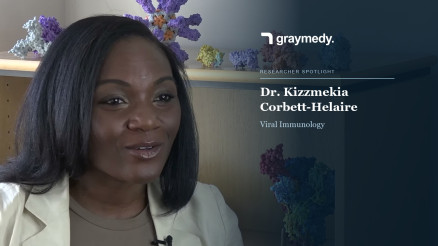
Kizzmekia Corbett-Helaire: designing vaccines before the next outbreak
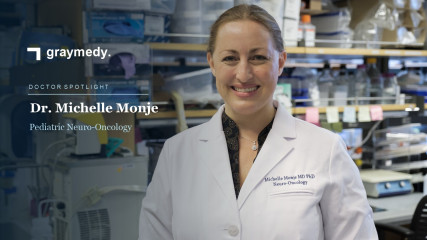
Dr Michelle Monje: decoding the conversation between brain and cancer
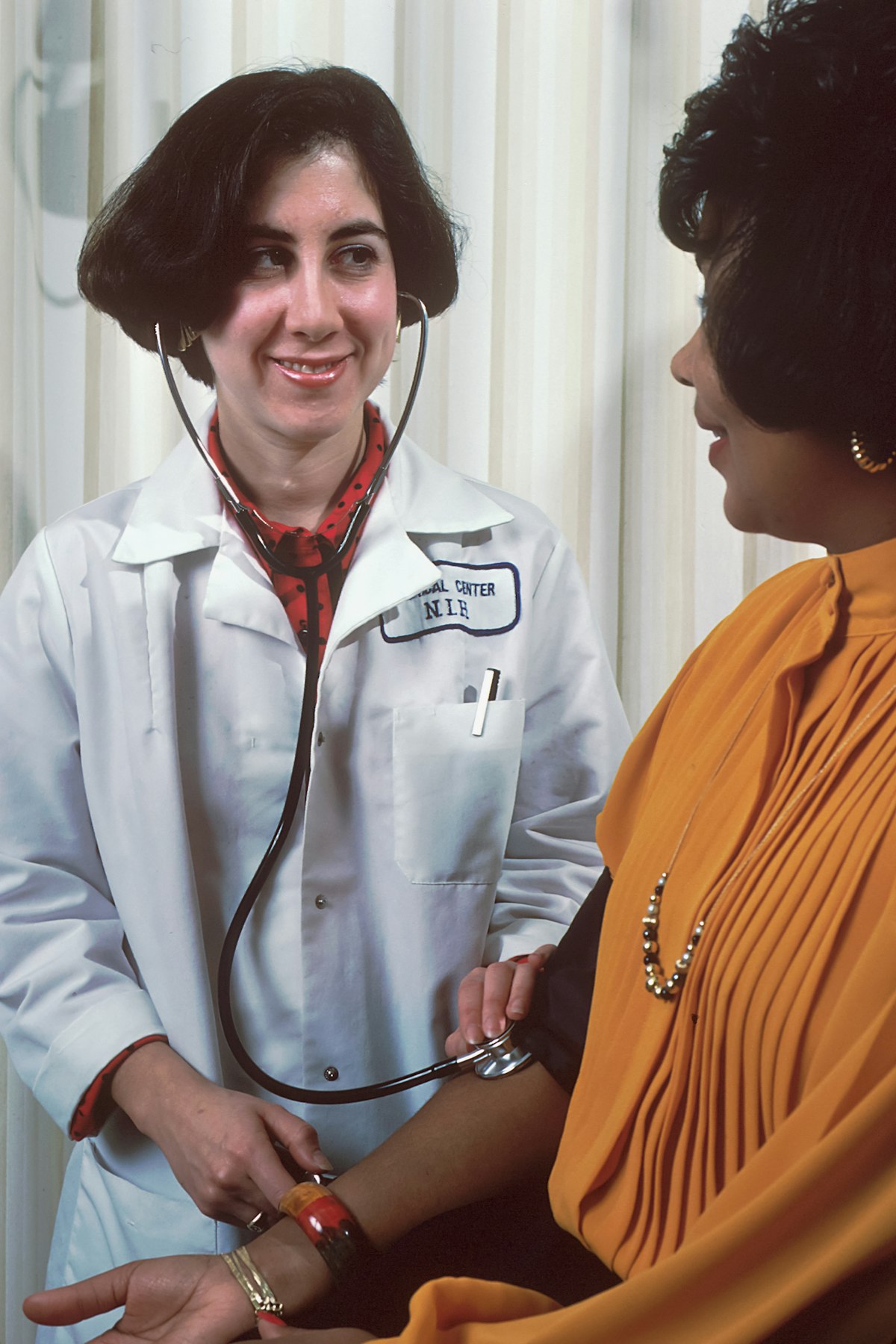
The Quiet Expertise Behind Safer Hospital Handoffs
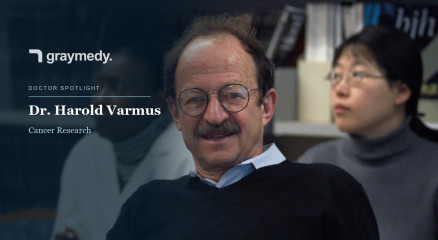
A discovery about a chicken tumour virus helped change how scientists understood human cancer. Dr. Harold Varmus's career connects that laboratory question with a much larger one: how should the institutions, funding systems and publications around science help useful knowledge reach people? His story offers a view of medicine in which discovery and the organisation of research continually influence each other. Following a question into the laboratory Varmus trained first in English literature, studying at Amherst and Harvard before earning his medical degree at Columbia. After clinical training, he worked with Ira Pastan at NIH and then joined J. Michael Bishop's laboratory at the University of California, San Francisco in 1970. The National Library of Medicine's historical account describes a collaboration built around the biology of tumour viruses. That route matters because it resists a tidy picture of a research career proceeding along one fixed track. Clinical training, laboratory experience and an earlier engagement with language became parts of the same professional life. For readers considering a career in health research, the example invites attention to the questions and training opportunities that connect apparently different interests. A cancer gene with a cellular origin Bishop and Varmus shared the 1989 Nobel Prize in Physiology or Medicine. The Nobel Assembly recognised their discovery that the cancer-causing gene carried by a retrovirus originated in normal cells. Their work helped establish the importance of normal cellular genes that can become involved in cancer when altered. The distinction was profound. Cancer biology could be investigated through the normal machinery controlling cell growth, alongside the ways that machinery becomes disturbed. It opened questions about mechanisms shared across tumours while leaving much work to explain the differences between individual cancers. A foundational finding provides a direction for research; it does not instantly produce a treatment for every patient. The Nobel account dates the pivotal published conclusion to 1976. That interval also offers perspective on how discovery becomes recognised. A scientific advance accumulates meaning through experiments, interpretation and work by many groups. The award marks an achievement, while the larger scientific history includes the people and methods that made further investigation possible. From research group to research institutions NIH's historical record places Varmus's directorship from November 1993 to December 1999. He subsequently led Memorial Sloan Kettering Cancer Center and later served as director of the National Cancer Institute from 2010 until March 2015. These are past appointments, included here as historical milestones rather than a claim about a current leadership role. At that scale, scientific leadership involves choices about the conditions in which others work. Supporting investigators, connecting laboratory and clinical programmes and deciding which questions deserve attention can influence what a research community is able to discover. The professional contribution extends beyond the papers carrying one person's name. Cold Spring Harbor Laboratory's account highlights Varmus's expansion of basic research and educational programmes at Memorial Sloan Kettering and the development of collaborations with neighbouring institutions. Such connections are useful to consider alongside major buildings and appointments: they describe the relationships through which research can draw on different kinds of expertise. Making findings easier to reach The National Library of Medicine also documents Varmus's role in advocating open access to research. His E-Biomed proposal contributed to the development of PubMed Central, and he helped found the Public Library of Science. The underlying concern is familiar to anyone who has followed a medical headline and then encountered a barrier to reading the research behind it. Access alone does not make a paper simple to interpret. Readers still need the methods, limitations and wider evidence placed in context. Yet being able to inspect the original work makes scrutiny and informed discussion more possible. For a health publication, that connection between availability and interpretation is a continuing editorial responsibility. A professional legacy that invites scrutiny Graymedy's interpretation of this career is that medical progress depends on both strong questions and systems that allow those questions to be pursued. Varmus's laboratory work, institutional leadership and publishing advocacy illustrate different ways a physician-scientist can contribute. They should be assessed through their documented work, without turning a prominent name into a guarantee that every proposal or policy is correct. For patients and clinicians, the relevance is a broader understanding of where new ideas come from. Behind a future test or treatment may be years of basic investigation and collective effort. A careful profile makes those connections visible while keeping the distinction between a scientific contribution and an individual care decision clear. Sources: Nobel Assembly, 1989; NIH historical biography; National Library of Medicine; Cold Spring Harbor Laboratory. Photo: Matthew Septimus / NCI via Wikimedia Commons, 2009. Editorial review: 29 October 2026. Historical profile from published sources; no interview was conducted.
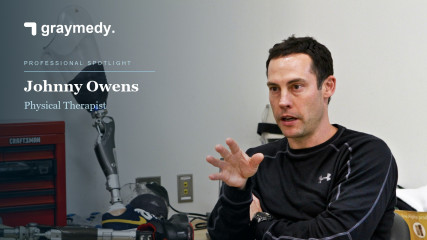
Johnny Owens: rebuilding strength around the life a patient wants back
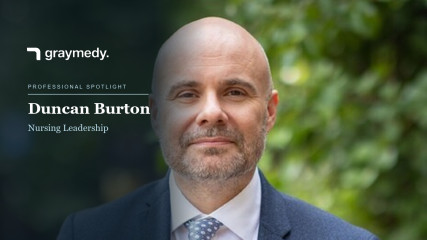
Duncan Burton: keeping everyday nursing in the national conversation