- Home
- Professionals
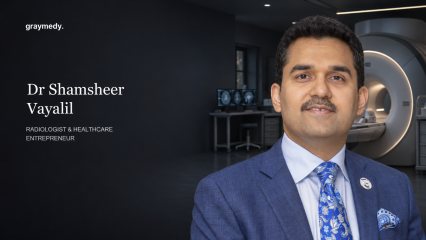
- Dr Shamsheer Vayalil: from radiology to building connected healthcare
Dr Shamsheer Vayalil: from radiology to building connected healthcare
The Professional Profile
GRAYMEDY PROFESSIONAL PROFILE
For Dr Shamsheer Vayalil, healthcare extends beyond the encounter between a doctor and a patient to the organisations that make treatment possible. His work spans hospitals, emergency medical services and investment in healthcare. Together, they raise a practical question: how can different parts of care be connected around the people who need them?
Vayalil is the founder, chairman and chief executive officer of Burjeel Holdings, a healthcare group based in the United Arab Emirates. Trained in medicine and radiology, he began his career as a physician before establishing a hospital in Abu Dhabi in 2007 and developing a wider network of services.
At a glance
Profession: Physician, healthcare entrepreneur and investor
Organisation: Burjeel Holdings, United Arab Emirates
Areas of work: Hospital care, healthcare investment and emergency medical services
Profile basis: Public company records and the professional’s published biography
From radiology to building a hospital
Vayalil’s medical education began in India, where he completed an MBBS and later specialised in radiology. His published biography describes work as a radiologist at Sheikh Khalifa Medical City in Abu Dhabi before he moved into healthcare entrepreneurship.
In 2007, he opened LLH Hospital in Abu Dhabi. What began as a single hospital became the foundation for a broader healthcare group. Burjeel Holdings now describes a portfolio that includes hospitals, medical centres, home care, occupational health and pharmacies.
Moving from clinical work to leadership changes the scale of the questions a doctor must consider. Alongside individual clinical decisions are questions about staffing, facilities, coordination and the way people reach the right service. These are organisational responsibilities carried by teams, not the work of one individual alone.
Connecting services around patients
A patient’s journey may involve a first consultation, diagnostic tests, specialist care and support after leaving hospital. Each step can take place in a different setting, and important information must travel with the patient. A network of services can provide opportunities to make those transitions easier.
Burjeel describes its operations as a multi-brand healthcare platform spanning different levels of care. For patients, the value of an integrated model depends on how it works in practice: whether appointments are accessible, records are communicated, costs are clear and care remains consistent across settings.
The existence of a network does not by itself establish better outcomes or guarantee access for every patient. Those questions require evidence about quality, experience and affordability as well as the number of facilities.
Care before the hospital
Vayalil’s work also includes emergency and pre-hospital care. Response Plus Holding identifies him as a founder and board member. The company describes services including on-site medical support, ambulance and emergency response, and medical evacuation.
That part of healthcare begins before a person reaches a hospital. The response may involve assessing a situation, coordinating transport and communicating with the receiving care team. Its effectiveness depends on trained professionals, appropriate equipment and systems that function together when time matters.
These services are distinct from Burjeel’s hospital operations, even though Vayalil has leadership connections to both. They illustrate the wider set of organisations involved in a healthcare journey.
Growth and the responsibilities that follow
Burjeel Holdings listed on the Abu Dhabi Securities Exchange in 2022. Its 2025 annual report records that Vayalil assumed the chief executive role in addition to his responsibilities as chairman. His wider VPS Health platform also includes interests in pharmaceuticals and education.
Expansion can create opportunities to develop specialist services and reach more communities. It also brings responsibilities: maintaining clinical standards across sites, supporting staff and explaining outcomes to patients and the public. Financial growth and the size of a network tell only part of that story.
Vayalil’s companies have a commercial interest in the services they describe. Their published accounts are useful for understanding the organisations and his roles, but they do not independently establish that any particular service is the best choice for an individual patient.
From clinical training to healthcare leadership
Vayalil’s career shows one path a physician can take beyond a clinical specialty: building and leading institutions that bring together different kinds of healthcare work. His story also highlights the teams behind that work, from clinicians and emergency responders to the people who coordinate facilities and services.
For a person choosing care, the questions remain specific: which service meets their needs, what will it cost, and how will their care be coordinated? A professional profile can introduce a leader’s work, but it cannot assess an individual service or promise a clinical result.
Editorial note: This independent profile is based on public sources. Graymedy did not interview Dr Vayalil for this article. No endorsement or commercial relationship is implied.
Sources and image
Dr Shamsheer Vayalil biography; career background; Burjeel Holdings leadership; Burjeel Holdings 2025 annual report; Response Plus Holding profile; VPS Health ventures.
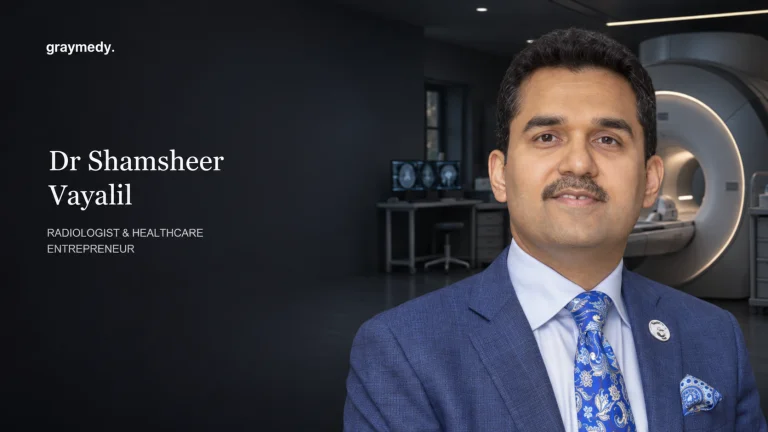
Portrait: Kcmazin via Wikimedia Commons, CC0 1.0. AI-assisted Graymedy illustration based on the portrait, with an illustrative background. AI was used to refine the portrait edge and may have recreated details.

Professionals
View more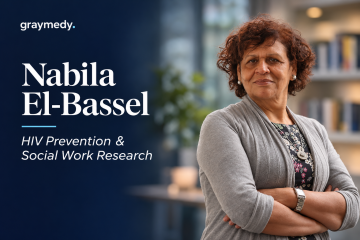
For social work researcher Nabila El-Bassel, access to health care depends on more than whether an effective treatment exists. Services must be reachable and responsive to the circumstances of the people who need them. Her research examines HIV prevention, substance use and the social conditions that can make care difficult to obtain. El-Bassel is a University Professor and the Willma and Albert Musher Professor of Social Work at Columbia University. Columbia identifies her as director of the Social Intervention Group and the Global Health Research Center of Central Asia. Her work has included designing and testing HIV and substance-use interventions in settings ranging from primary care and harm reduction programs to the criminal justice system. Taking services closer to people A recent example is HPTN 094, a randomized trial co-chaired by El-Bassel and Steven Shoptaw. The NIH-funded study enrolled 409 adults without HIV in Houston, Los Angeles, New York City, Philadelphia and Washington, D.C. Participants injected drugs, had opioid use disorder, were not receiving medication for that disorder at enrollment and were willing to consider it. Both groups received 26 weeks of peer navigation. In one group, participants could also obtain integrated HIV prevention, medication for opioid use disorder, and limited clinical and supportive services through a mobile medical unit. The comparison group received peer navigation linking them to available community services outside the mobile units. The design therefore tested an integrated delivery model against an active navigation approach, not against no help at all. The practical distinction matters. A referral can connect someone to a service, but it may still require another journey, appointment or interaction with a separate organization. A mobile unit brings several services into one setting. The trial asked whether that arrangement could improve outcomes for people who face barriers to sustained care. Reading the results carefully NIH reported 71% lower all-cause mortality in the mobile-services group. Mortality was a secondary outcome, however, and the investigators found no difference between groups in use of daily oral HIV pre-exposure prophylaxis, or PrEP, or medication for opioid use disorder. NIH said the mortality finding requires replication. Those results should be held together. The mortality signal is important and deserves further study, but it does not establish which component of the combined intervention caused the difference. Nor does it show that mobile units improved every outcome measured. The comparison involved a particular group in five cities and cannot automatically predict results in other communities. NIH also reported that verified oral PrEP use was low at 26 weeks. Fourteen percent of participants used medication for opioid use disorder at 26 and 52 weeks, a meaningful level in a population where none was receiving it at the start, although use did not differ between the groups. The researchers pointed to the need to investigate long-acting PrEP options in this population. Research across disciplines Columbia describes the Social Intervention Group as a multidisciplinary center that develops, tests and disseminates prevention and intervention approaches. El-Bassel’s work has addressed the intersection of HIV, substance use and gender-based violence, including interventions for women, men and couples. Columbia also describes her work mentoring HIV researchers and training scientists in intervention and prevention research. Her role at the Global Health Research Center of Central Asia extends that perspective across locations. Columbia describes a team working in New York and Central Asia on health and social issues through research, education, training, policy and dissemination. The details of a program must fit its local context, but the larger research question is shared: how can evidence-based services reach people who are often excluded from conventional pathways? HPTN 094 shows the value of asking that question in a controlled study. It also shows why a headline result needs its limits. Replication, attention to service uptake and understanding what participants actually need are necessary before a promising delivery model can be judged across different settings. Sources: Columbia School of Social Work profile; NIH trial announcement, November 4, 2026; Shoptaw, El-Bassel and colleagues, JAMA Psychiatry. Image: AI-assisted Graymedy editorial graphic based on a 2019 portrait of Nabila El-Bassel by Bruce Gilbert, published by Columbia University (https://president.columbia.edu/news/el-bassel-university-professor). The background is conceptual. This independent profile is based on public sources; no interview is implied.
Dr Shamsheer Vayalil: from radiology to building connected healthcare
Dr Jon Bloom: connecting diabetes foot care with technology and human support
Dr Aayush Gupta: connecting dermatology care with research into skin and healing
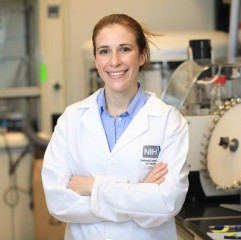
Repairing damaged tissue requires more than finding a material that fits. The body must decide how to respond to it. That meeting between an implant and the immune system is the focus of Dr. Kaitlyn Sadtler’s work at the National Institute of Biomedical Imaging and Bioengineering. The response around the material NIH identifies Sadtler as a senior investigator leading its Section on Immunoengineering. Her group studies how immune responses influence reconstruction after traumatic soft-tissue injury, including whether implanted scaffolds integrate with tissue or provoke harmful inflammation and fibrosis. Its approach combines biomaterials with studies of immune mechanisms. A scaffold can provide a structure for repair, but structure alone is not a complete biological explanation. Researchers also need to understand the cells and signals that arrive around it. This makes the work relevant to a practical engineering question: what should a material encourage the surrounding tissue to do? From mechanisms to useful questions Sadtler trained at Johns Hopkins and completed postdoctoral work at MIT before establishing her NIH laboratory. Her published research includes studies of immune-regulating dendritic cells after traumatic injury and of responses to biologic scaffold implantation. NIBIB highlighted her interdisciplinary work when she was named to the TIME100 Next list in 2024. Those dates matter. This is a professional profile selected for today’s edition, not an announcement of a new award or an approved regenerative treatment. A laboratory mechanism can suggest a direction for development without establishing that a particular implant improves recovery in patients. What makes the work worth following Graymedy’s interest is in the connection between engineering and healing. The most useful next questions concern durable tissue function, safety and reproducibility, rather than whether a material looks promising in isolation. A successful laboratory result still needs a clear route to clinical testing and evidence that matters to people living with injury. The photograph is an official NIH laboratory portrait of Dr. Kaitlyn Sadtler. Sources and image credit NIH investigator profile and selected publications; NIBIB profile, October 21, 2024. Editorial review: November 9, 2026. Independent profile based on public sources; no interview or endorsement is implied. Photo: NIH / NIBIB. Official investigator portrait and profile.
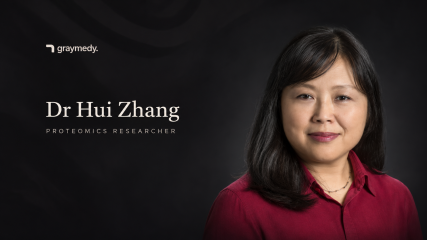
Dr Hui Zhang: reading cancer’s protein signals before claiming a clinical answer
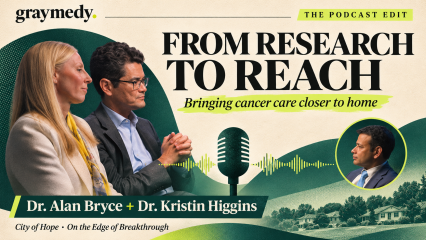
From research to reach: Dr. Alan Bryce and Dr. Kristin Higgins on cancer care closer to home
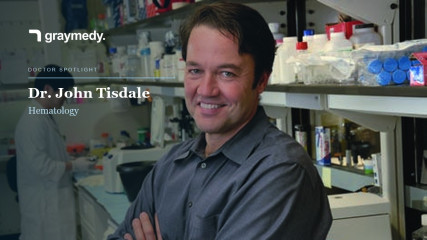
Dr John Tisdale: the next sickle-cell breakthrough must be easier to reach
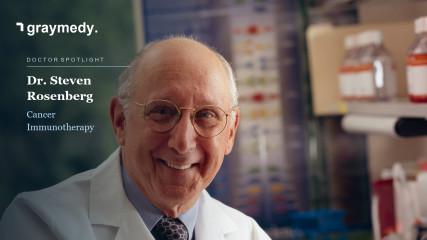
Dr Steven Rosenberg is pursuing a difficult extension of cancer immunotherapy: making a person’s own immune cells effective against more of the common cancers that form solid tumours. The ambition reaches beyond celebrating an earlier breakthrough. It concerns patients whose cancers have continued to grow despite several treatments and whose next options remain limited. At the U.S. National Cancer Institute, Rosenberg’s programme brings laboratory selection of immune cells into clinical trials. Its most interesting feature is the effort to make personalisation experimentally useful: identify cells that recognise an individual tumour, increase their numbers, and test whether they can produce a meaningful response. A long pursuit with a current obstacle NCI’s current profile lists Rosenberg as chief of its Surgery Branch. His work helped establish that manipulating the immune system can cause cancer regression. An NIH historical account describes the early investigation of interleukin-2 and the development of approaches using tumour-infiltrating lymphocytes, usually called TILs. These are immune cells already found within a tumour. Their presence creates an opportunity, but does not establish that every cell collected will attack cancer effectively. NCI’s patient guidance explains that researchers can test and select lymphocytes that recognise tumour cells, then expand them in the laboratory before infusion. This is the research problem behind the personalised label. The task involves identifying useful activity and preserving it through a demanding treatment process. Simply giving more cells is not the same as giving cells with the right recognition capabilities. Selecting the cells that matter In April 2025, Rosenberg and colleagues reported a phase 2 study involving 91 people with metastatic gastrointestinal cancers. Participants had previously received a median of four treatment regimens. The programme examined successive approaches, including unselected TILs, selected TILs, and selected TILs combined with pembrolizumab. NCI reported no objective responses among 18 recipients of unselected cells. Responses occurred in three of 39 people receiving selected TILs and eight of 34 receiving selected TILs plus pembrolizumab. The combination result was 23.5%, a signal worth investigating in cancers that had proved difficult to treat. The groups were sequential parts of a developing programme, rather than a simple randomised comparison establishing the contribution of each change. Tumour shrinkage also differs from a demonstrated survival advantage. These limits belong beside the result, particularly in a profile of a researcher associated with major advances. The next breakthrough is more specific The team’s stated next direction includes improving identification of cells that recognise several tumour-specific neoantigens. These are targets associated with a cancer’s mutations. The aim is to increase the proportion of patients who respond, rather than assuming that the existing approach already works broadly. A separate NCI report from July 2024 described another route: transferring personalised, tumour-reactive T-cell receptors into a patient’s blood-derived immune cells. In a small colorectal-cancer study, three of seven patients responded. The result supplied proof of possibility and a reason for refinement, not a universal solid-tumour treatment. These approaches share a question about recognition. Can researchers identify the molecular features that make a particular cancer vulnerable, then create a cell product able to act on that information? The answer must come from reproducible clinical results across appropriately designed studies. Why the difficult parts matter Cell therapy is an intensive pathway involving collection, laboratory work, preparatory treatment and specialist monitoring. NCI’s guidance describes weeks of cell growth and treatment to reduce competing immune cells before infusion. This places manufacturing and patient fitness within the scientific challenge, rather than treating them as administrative details. Safety is equally central. The 2025 report describes serious side effects in 30% of patients treated with selected TILs. A stronger antitumour response would have to be considered alongside those harms and the experience of undergoing the full regimen. Existing approvals must also be kept separate from experimental extensions. Lifileucel has an approved role in advanced melanoma. That does not establish approval of the personalised gastrointestinal-cancer approaches described here. A familiar therapeutic family can contain both established treatments and early research programmes. A researcher to follow for the next question Graymedy’s reading of Rosenberg’s work is that the pursuit remains compelling because it keeps narrowing a large ambition into testable decisions: which target, which cells, which combination and which patients. Progress depends on improving those decisions together. The potential breakthrough would be a reliably effective, tolerable and deliverable personalised treatment for more solid cancers. Rosenberg and his collaborators have produced signals that justify continuing that search. Its unfinished nature is precisely what makes this a research story worth following. Sources: NCI: current investigator profile; NIH Catalyst: historical research profile; NCI: gastrointestinal-cancer TIL trial, April 2025; NCI: personalised TCR trial, July 2024; NCI: cell-transfer treatment context. Photo: Rhoda Baer / National Cancer Institute, 2008. Reviewed 4 November 2026. Independently written from public sources; no interview was conducted. General information, not individual medical advice.
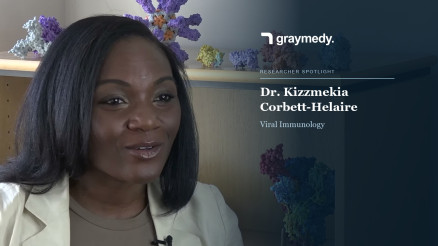
Kizzmekia Corbett-Helaire: designing vaccines before the next outbreak
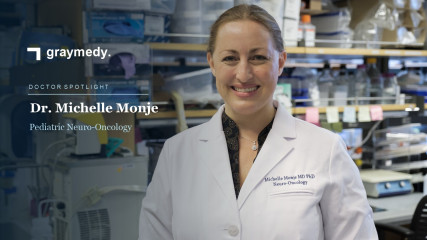
Dr Michelle Monje: decoding the conversation between brain and cancer