ophthalmologist
- Home
- Topic
ophthalmologist
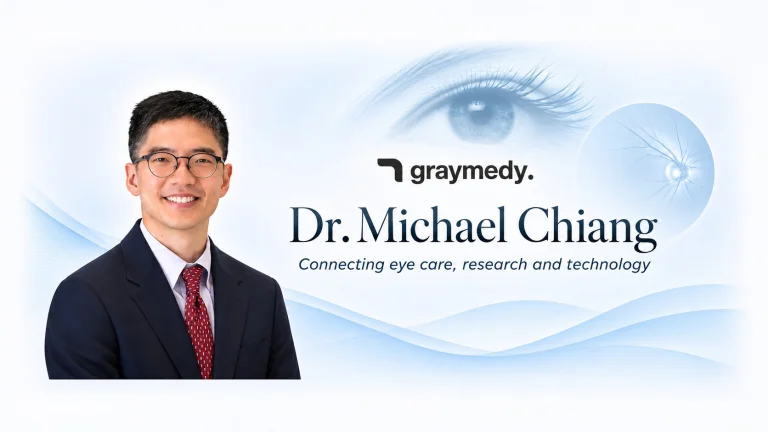
Dr. Michael Chiang’s route to eye care began with a question about how technology could help people. As a student of electrical engineering, he worked with medical imaging and saw how a device could support a patient’s care. That curiosity eventually led him to medicine, ophthalmology and a career connecting vision science with information technology. Today, Chiang is a pediatric ophthalmologist and director of the US National Eye Institute (NEI), part of the National Institutes of Health. His work has included research on retinopathy of prematurity, telehealth, artificial intelligence and the use of clinical data. His story shows how a doctor’s work can extend from an individual examination to the systems that help people receive care. From engineering to the eye Chiang studied electrical engineering and biology at Stanford University, earned his medical degree through Harvard Medical School and the Harvard–MIT health sciences and technology program, and later received a master’s degree in biomedical informatics from Columbia University. He completed ophthalmology residency and pediatric ophthalmology fellowship training at Johns Hopkins’ Wilmer Eye Institute. In a conversation with the OIS Podcast, Chiang described growing up in a family of engineers and becoming interested in medicine after working with cardiac ultrasound technology. During medical school, research involving the retina drew him toward vision science. The retina’s role in receiving and processing visual information became a bridge between his interests in medicine and computation. He later worked at Columbia University and Oregon Health & Science University before joining NEI in November 2020. According to his NEI biography, he is board-certified in ophthalmology and clinical informatics and was elected to the National Academy of Medicine in 2023. Helping vulnerable infants One focus of Chiang’s research is retinopathy of prematurity, an eye disease that can affect babies born prematurely. Abnormal blood vessel growth in the retina can lead to serious vision problems. Timely examinations and follow-up are essential for babies at risk, and treatment decisions depend on the findings of the specialist caring for the child. Chiang’s work has explored whether retinal imaging, telehealth and computer-assisted analysis can help clinicians evaluate the disease. NEI describes an assistive artificial intelligence system developed by his group that received FDA Breakthrough Device designation. That designation recognizes the potential of a technology and provides for prioritized interaction with the FDA; it does not itself establish that a device has been approved or authorized for routine use. For families, the practical lesson is to understand the screening plan before a baby leaves the hospital. Ask when the next eye examination is due, who will arrange it and whom to contact if an appointment must change. An infant’s care team can explain the schedule and what any findings mean. A wider view of eye care As NEI director, Chiang leads an organization that supports vision research and training. In the podcast interview below, he discusses the institute’s research priorities and his transition from academic medicine to a role helping the wider research community succeed. His interests also illustrate why innovation is more than a new algorithm. A useful system must fit clinical practice, protect sensitive information and connect people to appropriate follow-up. A promising result in research needs careful testing before patients and clinicians can understand where it helps and where its limits lie. For anyone seeking eye care, the fundamentals remain important. Ask an eye care professional how often you need an examination, especially if you have diabetes, a family history of eye disease or concerns about your vision. If you suddenly notice many new floaters, flashes of light or a shadow like a curtain over your vision, seek immediate eye or emergency care. These can be signs of retinal detachment. Chiang’s path from engineering to pediatric ophthalmology brings together a physician’s attention to individual patients and a researcher’s interest in reaching more people. It also offers a reminder that good eye care depends on questions, evidence and timely access to the next step. Sources: National Eye Institute biography; OIS Podcast episode 337; NEI: retinal detachment. Watch: Dr. Chiang on the OIS Podcast Dr. Chiang joins Dr. Sophia Pathai to discuss his career, vision research and the National Eye Institute’s priorities. Watch the podcast interview on YouTube.