prevention
- Home
- Topic
prevention
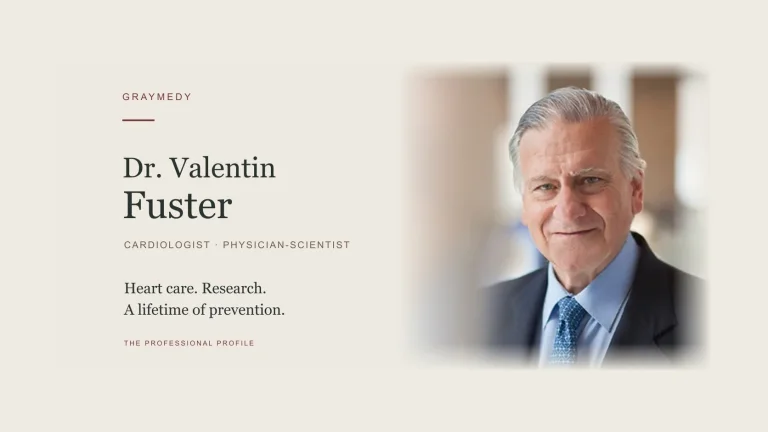
For Dr. Valentin Fuster, caring for the heart extends beyond the hospital. His career has brought together treatment, research and education, with a particular interest in helping people build healthier habits before cardiovascular disease interrupts their lives. That combination makes his work relevant to patients as well as the professionals who care for them. Fuster is a cardiologist and physician-scientist. Mount Sinai lists him as President of Mount Sinai Fuster Heart Hospital and Physician-in-Chief of The Mount Sinai Hospital in New York. His professional story connects specialist medicine with a wider question: how can knowledge about heart disease become useful in everyday life? From medical training to cardiovascular research Fuster completed his medical degree at the University of Barcelona and his doctorate at the University of Edinburgh. His career subsequently included Mayo Medical School, Mount Sinai and Massachusetts General Hospital, where he served as Chief of Cardiology while holding a professorship at Harvard Medical School. He returned to Mount Sinai in 1994 to lead its Cardiovascular Institute. The institution’s account of his career describes contributions to understanding the causes, prevention and treatment of cardiovascular disease. His research into the origins of cardiovascular events received the Prince of Asturias Award for Technical and Scientific Research in 1996. Those achievements reflect work across clinical practice and investigation. They also point to a feature of cardiovascular medicine: understanding how disease develops can inform both treatment after an event and efforts to prevent the next one. Why prevention starts early One distinctive part of Fuster’s work takes place in schools. Mount Sinai identifies him as principal investigator of the CHILDREN’S Project, which studies cardiovascular health among elementary-school children in New York City. Its approach builds on earlier programmes in Colombia, Spain and Harlem. The project combines health assessments with school-based education. It also considers social and environmental influences, including the circumstances in which children live and learn. That matters because a recommendation to eat well or be active is easier to follow when families have the time, resources and surroundings to support it. This is research into health promotion, not a guarantee that a classroom lesson prevents a future heart attack. Its value lies in asking when healthy habits can be taught, how they can be supported and what happens as children grow. From his story to everyday heart care Fuster’s emphasis on prevention offers a practical starting point for readers. The American Heart Association’s Life’s Essential 8 framework includes food, physical activity, nicotine avoidance, sleep, weight, cholesterol, blood sugar and blood pressure. These recommendations are general heart-health guidance, rather than a personalised plan from Dr. Fuster. HabitSimple actionMoveBuild regular activity suited to your health and abilityEat wellInclude vegetables, fruit, whole foods and suitable protein sourcesSleepMost adults should aim for seven to nine hours nightlyKnow your numbersDiscuss blood pressure, cholesterol and blood sugar with your clinician Start with a change that fits your routine, then review progress. If you have a heart condition, symptoms or uncertainty about exercise, ask your healthcare team what is appropriate. Continue prescribed medicines and discuss difficulties rather than changing treatment yourself. Making room for the patient A useful heart-care appointment begins with your own concerns. Explain symptoms, family history and the activities you want to return to. Bring a medicine list and ask what each proposed test or treatment is intended to change. If an explanation is unclear, ask for it in simpler language. Fuster’s career shows how a specialist’s influence can reach from the consultation room to research and public education. For readers, the practical lesson is to make prevention a continuing conversation, with advice that reflects their individual needs. Editorial note: This independent profile is based on public sources; Graymedy did not interview Dr. Fuster. No endorsement is implied. Sources: Mount Sinai professional biography; career and appointment announcement; CHILDREN’S Project; American Heart Association: Life’s Essential 8. Watch: Dr. Fuster on heart health In this archival 2013 Mount Sinai interview, Fuster discusses exercise, heart rate and health awareness. The video provides historical context; current personal advice should come from your clinician. Watch the interview on Mount Sinai’s YouTube channel. Portrait: CNIC, published in CNIC Pulse 19. Graymedy editorial layout: photograph cropped and resized, with a softened background. Dr. Fuster’s face is unchanged; no AI-generated portrait.