- Home
- Health Technology
- Brain Scan Measures Aging Rate
Brain Scan Measures Aging Rate
NIH NEWS IN HEALTH
NIH News in Health · Source article
Health Capsule
Biologically speaking, some people age faster than others. Your aging rate can affect your health and disease risks. If you knew this rate, you might be able to work with your doctor to slow the aging process. A research team developed a way to measure aging based on a single brain scan.
The team drew on their earlier studies, where they devised a way to measure biological aging using blood tests. They tracked the health of more than 1,000 people from birth to age 45 and measured 19 factors related to health. These included heart function, metabolism, disease-fighting molecules, and more. Using these, they developed a measurement called the Pace of Aging. It shows how health functions dwindle over time.
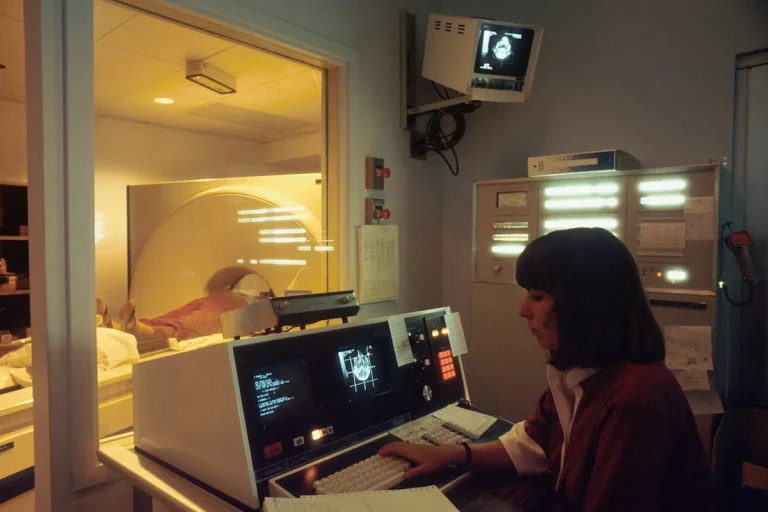
Most of the study participants also had an MRI scan at age 45. In the new study, the team combined the Pace of Aging scores with the MRI scan data. They developed a new aging measurement, called Dunedin-PACNI, based on the brain scans alone. They then tested the new tool with data collected on thousands of people from other studies.
DunedinPACNI accurately predicted how quickly a person’s ability to think and remember weakened with age. It also could predict a person’s risk of future disease and death.
“We’ve captured how fast people are aging using data collected in midlife. And it’s helping us predict diagnosis of dementia among people who are much older,” explains Dr. Ahmad Hariri of Duke University. “We really think of it as hopefully being a key new tool in forecasting and predicting risk for diseases.”
Further reading and research references
- A Well-Aged Mind: Maintaining Your Cognitive Health
- How To Assess Aging?
- Healthy Aging
- DunedinPACNI estimates the longitudinal Pace of Aging from a single brain image to track health and disease.
Illustrative archival photograph: National Cancer Institute / Unsplash, used under the Unsplash License. The people or equipment shown are not identified as participants in the research or interviews described here.



Health Technology
View more
A racing heartbeat can disappear before an appointment begins. Dizziness may come and go, and a brief flutter can be difficult to describe once it has passed. For clinicians investigating these symptoms, the challenge is sometimes capturing what the heart is doing at the relevant moment. Portable electrocardiogram monitoring extends that observation beyond a short recording in the clinic. An electrocardiogram, usually called an ECG or EKG, records electrical signals generated by the heart. Those signals help show its rate and rhythm. The technology is familiar, but different recording arrangements answer different questions. Understanding that difference can help patients prepare for testing and discuss what a result actually means. A short recording has a specific purpose A resting ECG uses electrodes placed on the body while a person lies still. It is usually quick and painless. The NHS explains that clinicians may request an ECG when investigating a suspected heart attack, coronary heart disease or an abnormal heart rhythm, or when monitoring certain conditions and medicines. A brief test samples a particular period. When symptoms are intermittent, a clinician may need a longer recording rather than simply repeating the same short test. The choice should follow the person's history, the frequency of symptoms and the reason for the investigation. Taking the recording into daily life The National Heart, Lung, and Blood Institute describes Holter and event monitors as portable devices that record heart electrical activity over longer periods during ordinary activities. Many use adhesive electrodes attached to the chest and connected to a small recorder. Device designs and recording durations vary. The aim is to provide information that helps a clinician investigate an arrhythmia or assess whether treatment is working. Patients should ask how their particular device records events, whether they need to press a button when symptoms occur, and what information the clinical team wants them to note. A simple symptom diary can make the conversation more precise. Record the time, what the sensation felt like and what you were doing. Ask the service how to match those notes with the recording. Follow its instructions rather than assuming every device has the same features. Practical details matter Before leaving the fitting appointment, ask about bathing, exercise, sleep and keeping the electrodes attached. Some equipment must remain dry. Instructions differ between devices, so general advice found online may not apply to the recorder supplied by your own clinic. Skin preparation helps electrodes make reliable contact. Tell staff about sensitive skin or a previous reaction to medical adhesives. If a patch loosens, a wire disconnects or the recorder shows an unfamiliar warning, use the contact instructions provided by the service. Do not change prescribed medicines merely to make symptoms appear during testing. The result needs clinical interpretation A recording is part of an assessment, not a complete explanation of every symptom. Ask whether the monitored period captured the episodes you were concerned about, whether a rhythm finding explains them and whether further investigation is needed. A useful report should lead to an understandable next step. Technology can improve the opportunity to observe an event, but an individual still needs a clinician to connect the recording with symptoms, examination findings and other information. Ask when the report will be reviewed, how results will reach you and whom to contact if that communication does not arrive. Keep an emergency plan separate A monitor is not a reason to delay urgent care. If symptoms suggest a heart attack, including chest discomfort with breathlessness, sweating or pain spreading to the arm or jaw, contact local emergency services immediately. Do not wait for a device alert, a scheduled report or a routine callback. Before returning the recorder, check that you understand the handover arrangements. Keep any symptom notes with the information requested by the clinic. If your usual symptoms did not happen, say so explicitly at follow-up. That detail helps distinguish an uneventful monitoring period from a clear explanation of the problem. The next decision should follow the whole assessment rather than a device label viewed in isolation. For a planned appointment, useful questions are straightforward: What question is this test trying to answer? What should I do during symptoms? Which activities are allowed? What happens if no episode occurs while I wear it? Those answers make the device a more useful part of care and help prevent false reassurance from a recording that needs further explanation. Sources www.nhlbi.nih.gov: heart tests www.nhs.uk: electrocardiogram www.medlineplus.gov: 003877.htm www.leedsth.nhs.uk: ambulatory monitoring
How AI Screening Looks for Diabetic Eye Disease
Dental X-rays: How Modern Imaging Helps Dentists Make Better Decisions
Skin Care and Technology: A Practical Guide for Every Skin Type

Countries across the World Health Organization’s European Region have agreed on a shared roadmap for artificial intelligence in health, setting out how governments can pursue the technology while addressing safety, data protection and unequal access. The 53 member states adopted the region’s first AI-in-health roadmap at the WHO Regional Committee meeting in late October 2026. Covering 2026 to 2033, the plan is intended to help health systems make responsible use of AI and strengthen their ability to evaluate it in everyday care. AI tools can identify patterns in medical information, support some clinical tasks and help manage administrative work. WHO says potential uses include earlier disease detection and alerts when a patient’s condition deteriorates. Such possibilities depend on whether individual tools work reliably in the settings and populations where they are used; the roadmap itself is a policy framework, not evidence that a particular product is safe or effective. Four areas for action WHO groups the plan into four connected priorities: governance and leadership; ethical, legal and regulatory frameworks; data and digital infrastructure; and the skills and practical support needed for implementation and learning. Governance means deciding who is responsible for choosing, overseeing and evaluating AI systems. The roadmap encourages countries to connect AI plans to their health priorities and to involve stakeholders in decisions. Sustainable investment matters too: a pilot project cannot improve care at scale if the people and infrastructure needed to maintain it are missing. Data are another foundation. The plan highlights data quality, interoperability, secure access and cybersecurity. A system trained or evaluated using incomplete or unrepresentative information may perform differently for another group or hospital. Protecting sensitive health information and monitoring performance after deployment are therefore as important as the technology’s initial promise. From a regional plan to local care The roadmap is accompanied by an implementation guide intended for countries at different stages of digital development. Its recommendations need to be translated into national policies, purchasing decisions, training and local evaluations; adoption of a common vision does not mean every health service will introduce the same tools on the same timetable. That translation will be consequential for patients and staff. A useful system should fit the clinical workflow, present information that people can understand and support appropriate human oversight. Health workers also need to know what a tool is designed to do, where it may fail and how to raise concerns when its output appears wrong. Equity is part of the challenge. The resources available to hospitals, primary-care teams and communities differ widely. A technology that works well in a well-connected institution may be less useful in a setting with limited connectivity, staff or high-quality data. Evaluating outcomes across different groups can help reveal whether benefits and risks are shared fairly. WHO says the roadmap was informed by a 2025 regional assessment that received responses from 50 of the 53 member states. The plan aligns with wider regional digital-health work and is intended to support cooperation across borders. Member states also supported establishing a WHO office on AI to help provide evidence, technical assistance and training. What to watch The next test is implementation: whether health authorities can set clear responsibilities, invest in staff and infrastructure, and publish useful evidence about performance in real care. For patients, the most meaningful measure will be whether technology helps people receive safer, more accessible care while preserving privacy and trust. Source: WHO/Europe, 29 October 2026. Image: Nenad Stojković / Wikimedia Commons, CC BY 2.0, resized. The photograph is illustrative.
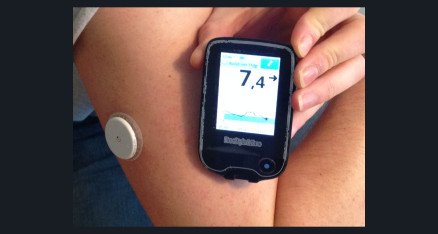
MiniMed Go: a smarter way to connect insulin doses and glucose readings

Flow headset: a closer look at at-home brain stimulation for depression
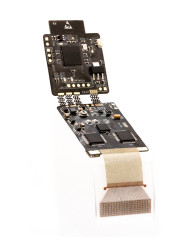
MIT team aims to develop wearable patch for heart failure and sepsis

A blood clot can block the very route that a medicine needs to reach it. When blood flow slows or stops at the blockage, a clot-dissolving drug may struggle to travel the final distance. Researchers at ETH Zurich are investigating whether tiny magnetically controlled robots could help solve that delivery problem. The approach is experimental. ETH reported laboratory and animal results on 9 November 2026; the microbots have not been tested in human patients, and the research paper was undergoing peer review when the institution announced the work. The last few millimetres A clot can obstruct blood flow to important organs. Depending on where it forms or travels, the consequences can include a stroke, heart attack or pulmonary embolism. Emergency treatment varies with the condition and patient and may include medicines that dissolve clots or procedures to remove them. Clot-dissolving medicines are known as thrombolytics. A clinician may use a catheter to bring a drug close to the obstruction, but an almost completely blocked vessel offers little flow to carry it onward. The medicine must then travel through the surrounding fluid, a process that can be slow. The ETH team, led by Professor Simone Schürle, focused on that delivery bottleneck. Rather than claiming a new drug, the researchers designed a way to move fluid around an existing medicine so that more of it can reach the clot. How the microbots move The experimental devices are made from a biocompatible gel containing magnetic iron oxide nanoparticles. ETH describes them as roughly eight micrometres long, comparable in size to red blood cells. A magnetic field generated outside the body causes the elongated particles to rotate. As they tumble along a vessel wall, the microbots push and pull the surrounding fluid. The small currents help transport the active substance towards a clot. The team envisages using a catheter to place both the medicine and the microbots close to the blockage before applying the external field. That distinction matters. The robots are not autonomous machines deciding where to go or independently treating a patient. They are research devices whose movement is controlled by an external system, intended to assist delivery of a clot-dissolving medicine. What the early experiments showed In a laboratory model with channels designed to represent blood vessels and clots made from pig blood, ETH reported that the medicine dissolved a clot six times faster with the moving microbots than without them. The comparison concerns that laboratory model; it is not a prediction of treatment speed in people. The researchers also worked with colleagues at Charité University Hospital in Berlin to test the method in live pigs. After 30 minutes, ETH reported that the area of vessel in which blood flow had been restored was twice as large as with the medicine alone. The laboratory and animal results used different measures and should not be combined as though they were the same outcome. Such models can help assess feasibility under more realistic conditions than a bench experiment alone. They still do not capture every feature of a human emergency or answer whether the approach improves survival or recovery after a stroke or heart attack. What remains to be tested Before a device reaches clinical practice, researchers must understand its safety, reproducibility and performance in the intended setting. ETH says the next work includes longer-term safety studies in animals and tests in models of particular conditions. Questions about how the material behaves over time and how the system would fit into an emergency procedure also need careful evaluation. Any future human trial would need a defined patient population, appropriate comparison and outcomes that matter to patients, as well as monitoring for adverse effects. Regulatory review would follow its own requirements. A promising experimental effect does not establish that a treatment is safe, approved or available. Why delivery is part of treatment Medicine development often asks whether an active ingredient can produce the desired effect. This work highlights a related question: can it reach the place where it is needed quickly enough and in a useful amount? Improving delivery could complement other approaches, provided subsequent studies demonstrate meaningful benefit and safety. For patients, established emergency care remains the appropriate route when symptoms suggest a stroke, heart attack or other acute event. The microbot findings are an early research development, not a reason to delay or change treatment. Source: ETH Zurich, “Dissolving blood clots with flow-generating microbots,” 9 November 2026. The research paper was undergoing peer review at the time of the announcement.

AI and mammograms: what a large screening study can—and cannot—tell us
Can wrist temperature help track the menstrual cycle?