- Home
- Health Technology
- AI and mammograms: what a large screening study can—and cannot—tell us
AI and mammograms: what a large screening study can—and cannot—tell us
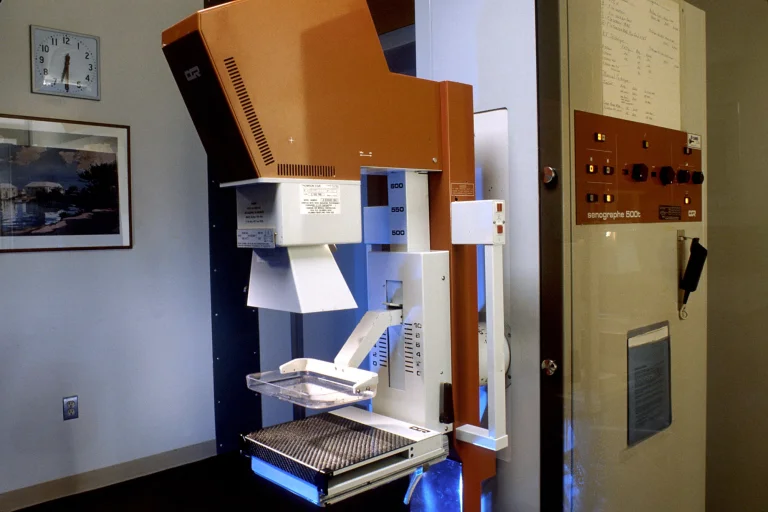
A mammogram can contain subtle patterns that are difficult to interpret. Artificial intelligence systems are being developed to flag suspicious areas and help radiologists review the images. A South Korean study offers a closer look at what that assistance might add to screening—and why the details of a study matter.
The AI-STREAM research, published in 2025 in Nature Communications, examined screening in a real-world, single-reader setting. Its preliminary analysis included 24,543 women in South Korea’s national breast cancer screening programme. Radiologists assessed mammograms with the aid of an AI-based computer-aided detection system and researchers compared detection with readings without that assistance.
What the researchers found
The study reported 140 screen-detected breast cancers with AI assistance, compared with 123 without it. That corresponded to detection rates of 5.70 and 5.01 cancers per 1,000 women, respectively—a relative increase of 13.8%. The researchers reported no statistically significant difference in recall rates, the proportion of people asked to return for further assessment.
Those two numbers matter together. Screening programmes want to detect cancers, but callbacks can also lead to anxiety, additional imaging and sometimes biopsies for findings that turn out not to be cancer. A technology that increases detection without a clear increase in recalls is therefore of interest. A callback, however, is not itself a cancer diagnosis.
Assistance is not a diagnosis
AI tools identify patterns in images; they do not understand a patient’s entire clinical situation. In this study, radiologists remained part of the screening process. The result should not be read as proof that a computer can replace every radiologist or that every AI product will achieve the same outcome.
Performance depends on the software, the population, the imaging equipment and the way a programme uses the tool. For example, a system used as a second reader in a double-reading programme is not necessarily equivalent to one used alongside a single reader. Different settings also have different thresholds for calling someone back.
Another large Australian retrospective study found that a simulated AI-and-radiologist approach reduced recall and reading volume but also had a slightly lower cancer detection rate than the existing programme. The authors called for prospective trials. Together, these findings illustrate why results from one design should not be treated as a universal forecast.
Questions that remain
The South Korean results were described as preliminary. Longer follow-up is needed to understand cancers that appear between scheduled screens, the effects on later outcomes and the performance of the approach across different groups. Researchers and services also need to evaluate safety, workflow, costs and how radiologists respond to the software’s suggestions.
Finding more cancers at screening is a meaningful measure, but it is not the same as demonstrating fewer deaths. Some cancers grow slowly, and screening can lead to diagnosis and treatment of disease that might never have caused harm. Those trade-offs require careful study and clear communication.
What this means for patients
People should continue to follow screening advice appropriate to their age, risk and local health system. If a service uses AI, a patient can ask how images are reviewed, how results are communicated and what happens after an abnormal finding. New technology is most valuable when it supports timely, understandable care as well as accurate interpretation.
Sources: AI-STREAM study, Nature Communications; BreastScreen population-based cohort study.
Photo: Bill Branson / National Cancer Institute, 1991. Archive image; not the equipment used in the study.

Health Technology
View more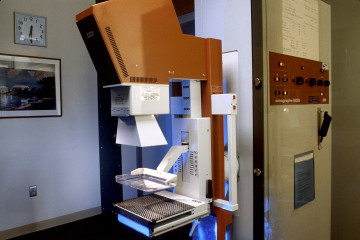
A mammogram can contain subtle patterns that are difficult to interpret. Artificial intelligence systems are being developed to flag suspicious areas and help radiologists review the images. A South Korean study offers a closer look at what that assistance might add to screening—and why the details of a study matter. The AI-STREAM research, published in 2025 in Nature Communications, examined screening in a real-world, single-reader setting. Its preliminary analysis included 24,543 women in South Korea’s national breast cancer screening programme. Radiologists assessed mammograms with the aid of an AI-based computer-aided detection system and researchers compared detection with readings without that assistance. What the researchers found The study reported 140 screen-detected breast cancers with AI assistance, compared with 123 without it. That corresponded to detection rates of 5.70 and 5.01 cancers per 1,000 women, respectively—a relative increase of 13.8%. The researchers reported no statistically significant difference in recall rates, the proportion of people asked to return for further assessment. Those two numbers matter together. Screening programmes want to detect cancers, but callbacks can also lead to anxiety, additional imaging and sometimes biopsies for findings that turn out not to be cancer. A technology that increases detection without a clear increase in recalls is therefore of interest. A callback, however, is not itself a cancer diagnosis. Assistance is not a diagnosis AI tools identify patterns in images; they do not understand a patient’s entire clinical situation. In this study, radiologists remained part of the screening process. The result should not be read as proof that a computer can replace every radiologist or that every AI product will achieve the same outcome. Performance depends on the software, the population, the imaging equipment and the way a programme uses the tool. For example, a system used as a second reader in a double-reading programme is not necessarily equivalent to one used alongside a single reader. Different settings also have different thresholds for calling someone back. Another large Australian retrospective study found that a simulated AI-and-radiologist approach reduced recall and reading volume but also had a slightly lower cancer detection rate than the existing programme. The authors called for prospective trials. Together, these findings illustrate why results from one design should not be treated as a universal forecast. Questions that remain The South Korean results were described as preliminary. Longer follow-up is needed to understand cancers that appear between scheduled screens, the effects on later outcomes and the performance of the approach across different groups. Researchers and services also need to evaluate safety, workflow, costs and how radiologists respond to the software’s suggestions. Finding more cancers at screening is a meaningful measure, but it is not the same as demonstrating fewer deaths. Some cancers grow slowly, and screening can lead to diagnosis and treatment of disease that might never have caused harm. Those trade-offs require careful study and clear communication. What this means for patients People should continue to follow screening advice appropriate to their age, risk and local health system. If a service uses AI, a patient can ask how images are reviewed, how results are communicated and what happens after an abnormal finding. New technology is most valuable when it supports timely, understandable care as well as accurate interpretation. Sources: AI-STREAM study, Nature Communications; BreastScreen population-based cohort study. Photo: Bill Branson / National Cancer Institute, 1991. Archive image; not the equipment used in the study.
Can wrist temperature help track the menstrual cycle?
Continuous glucose monitors: what the trend line can and cannot tell you
Can Your Smartwatch Explain Why You’re Always Tired?

A smartphone can photograph a patch of skin in seconds. Some apps promise to turn that image into an assessment, making it tempting to seek an instant answer before speaking to a clinician. But the quality of that answer depends on what the app was designed and tested to do. Different tools, different claims Some apps offer reminders to use sunscreen or track a routine. Others invite users to upload photographs or symptoms and suggest possible conditions. A reminder and a diagnostic assessment are very different tasks; a convenient interface does not establish clinical accuracy. The American Academy of Dermatology cautions that digital symptom checkers and skin-diagnosis apps can be inaccurate. Lighting, image quality, the condition being assessed and the range of skin tones represented in the data can affect performance. A reassuring result should not override a concerning change. Questions to ask before sharing a photo Look for evidence showing how the specific tool was tested, whom it was tested on, and what its stated purpose is. Check whether a qualified clinician reviews the image or whether feedback is automated. Regulatory status depends on the product and jurisdiction; a general claim that an app is “medical” is not proof that a particular diagnostic use has been authorised. Skin photographs can be personal. Read the privacy policy: what is collected, who can access it, whether it is shared or used for research, and how to delete it. If those answers are unclear, consider whether you are comfortable uploading an image. When an app should not be the final word For a new, changing, bleeding or otherwise concerning spot, or a persistent or painful rash, seek advice from a qualified healthcare professional. An app may help organise a question, but it should not delay an assessment when one is needed. Source: American Academy of Dermatology: Health and wellness apps. Photo: Sam Lion / Pexels. Illustrative photograph; it does not depict a skin-check app.
Prescription drug apps face a clearer test: what does the software add to care?
Can a smartwatch flag high blood pressure before you know it?
Trial recruitment software faces a harder test: does it help people enrol?
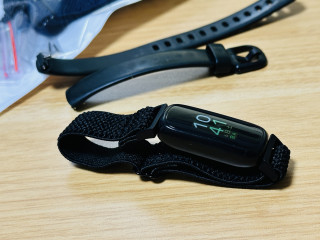
Recovery after a stroke unfolds beyond the examination room. A person may complete a movement during an assessment yet use that arm differently while dressing, preparing food or reaching for everyday objects. Measuring recovery therefore involves two related questions: what can someone do when asked, and what happens during ordinary life? A research tool called the digital arm performance scale, or DAPS, tries to connect those views. NIH highlighted the work on November 5, following publication in Science Translational Medicine on September 30, 2026. It is a measurement development, with potential implications for rehabilitation and treatment research. From wrist movement to a clinical measure The investigators combined recordings from wrist-worn accelerometers with established clinical assessments of arm function. Accelerometers measure movement; the research challenge was to turn those recordings into an interpretable estimate of performance. Machine learning linked patterns in everyday activity with the clinical measurements. The development data included 61 people within six months of a stroke and 75 healthy participants. A further group of 79 people, whose strokes had occurred more than six months earlier, provided another test of the approach. These groups matter because a measure developed in one stage of recovery needs scrutiny before being applied more broadly. According to NIH, DAPS followed improvements in arm movement and could identify differences between healthy participants and stroke survivors who received the highest clinical test scores. The finding suggests that a ceiling on a conventional score does not necessarily mean all movement differences have disappeared. Read NIH’s research account. A score is a carefully defined claim The original study record describes DAPS as a digital biomarker for upper-limb motor recovery. A biomarker is useful only in relation to a defined question. Here, that question concerns movement performance after stroke; it does not encompass every consequence of a stroke or every aspect of a person’s independence. Graymedy’s interpretation is that the most interesting feature is the bridge between settings. A clinic test gives a structured comparison. Everyday recordings add a different context. The value would lie in understanding what each measurement contributes, including occasions when they disagree, rather than treating one number as a complete account of recovery. Imagine someone who can perform an action during an appointment but rarely attempts it at home. That example illustrates a question for assessment; it is not a reported participant story. A clinician would still need to understand the person’s circumstances before deciding what the difference means. How this fits into rehabilitation NIH’s broader stroke rehabilitation overview explains that rehabilitation brings together exercises, therapies and strategies tailored to individual needs. Physical, occupational and speech-language professionals can address different difficulties. Recovery can involve relearning a skill or finding another way to manage an activity. That context keeps the role of a sensor in proportion. Recording movement is not the same intervention as practising a task with a therapist. A monitoring tool might help a team understand progress, but the consequences of using its information must be evaluated separately from its ability to produce a score. For patients, the useful question is therefore practical: would this measurement change a decision in my rehabilitation plan? An additional graph could be informative, but its relevance depends on what the treating team can do with it and whether the information is understandable to the person wearing the device. What a next-stage evaluation should ask Further evaluation should make clear which patients are represented, how often usable recordings are obtained and how results compare with meaningful changes in daily function. These are editorial assessment questions, rather than outcomes demonstrated by the announcement. A tool that works in a research dataset still needs a workable place in care. The burden of collecting and interpreting data also deserves attention. Who checks the result? How is uncertainty explained? What happens when a recording is incomplete? Those questions help distinguish a promising measurement from a dependable clinical service. They also give researchers concrete targets for subsequent testing. The immediate achievement is a more detailed way to investigate arm recovery. The remaining challenge is to show how that information can improve decisions, experiences or outcomes. For now, DAPS is a research development to follow alongside established rehabilitation, rather than a reason to replace a clinician’s assessment with a consumer tracker. Sources and image credit Sources: NIH Research Matters, November 5, 2026; Wang and colleagues, Science Translational Medicine, DOI 10.1126/scitranslmed.adw3644; NIH News in Health, May 2026. Linked above. Photo: Tatsuo Yamashita / Wikimedia Commons, CC BY 4.0. A consumer activity tracker illustrates wrist-worn technology; it is not the DAPS research device. Displayed with responsive sizing; no AI image generation. Reviewed November 7, 2026. Independently written research reporting with labelled editorial interpretation. Individual rehabilitation decisions belong with the treating team.
Tiny magnetic beads could give prosthetic limbs a clearer signal from muscle
A pacemaker designed to disappear after the heart recovers