- Home
- Weekly Journal
- Graymedy Weekly: kidney care, wearable research and the science of access
Graymedy Weekly: kidney care, wearable research and the science of access
Weekly Journal

From a new U.S. kidney disease indication to research on wearable sensors and mobile care, this week’s briefing puts recent health developments in context. The studies and regulatory decisions below address different populations and should not be read as personal treatment advice.
A kidney disease approval
The FDA has approved obinutuzumab for adults with primary membranous nephropathy at risk of progression, to induce remission of proteinuria. In a 142-person phase 3 study, complete remission at week 104 occurred in 36% of the obinutuzumab group and 6% of the tacrolimus group. The drug carries serious boxed warnings, including hepatitis B reactivation and progressive multifocal leukoencephalopathy. FDA details.
Bone health before a fracture
NIH’s November guidance explains how DXA bone density scans and clinical risk factors help inform fracture prevention. Osteoporosis can affect men and women; the right time to assess risk depends on the individual and applicable recommendations. NIH bone health guide.
Wearables and cycles
NIH describes research using wrist temperature to estimate cycle events. The study findings do not establish that every device is accurate or that an app alone is reliable contraception. NIH wearable technology overview.
Models and access
Researchers have grown human lung tissue models retaining immune cells to study antiviral responses. The laboratory findings are early research, not a vaccine. Separately, an NIH-funded trial of mobile HIV prevention and addiction services found lower mortality as a secondary outcome, while its primary service-use measures did not differ; replication is needed. Lung organoid research; mobile services trial.
What the kidney trial measured
The FDA’s approval concerns adults with primary membranous nephropathy who are at risk of progression. In this immune-mediated condition, damage to the kidney’s filters allows protein to enter the urine. The trial’s complete-remission endpoint combined a low urine protein-to-creatinine ratio with stable estimated kidney function and other study conditions. It was not simply a report that participants felt better.
The 36% and 6% figures are outcomes in the study groups, not individual predictions. MAJESTY was open-label and compared obinutuzumab with tacrolimus. People considering treatment can ask a kidney specialist how the trial relates to their situation and discuss the FDA’s safety warnings and monitoring requirements. Read the full medicines report.
Making sense of a bone-density result
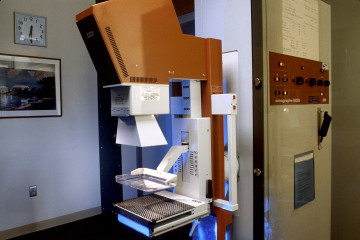
A DXA scan measures bone mineral density, but a clinician also considers factors such as age, prior fractures, medicines and falls. Osteopenia describes density below the normal range that is not low enough to meet the osteoporosis threshold. It can be a warning sign, but it does not mean every person will develop osteoporosis.
NIH notes that routine screening is recommended for women aged 65 and older, with earlier assessment for some people at increased risk. Local recommendations and individual circumstances differ. Weight-bearing activity, resistance exercise suited to the person, adequate nutrition and fall prevention are all part of the conversation. Read the clinical care guide.
A wearable estimate is not a certainty
NIH summarized a study of 262 women and girls who wore a smartwatch and recorded cycle information alongside urine hormone tests and waking temperature readings. The researchers examined retrospective estimates of ovulation and predictions of the next period. Those are separate tasks: an estimate made after an event should not be mistaken for a guaranteed advance prediction.
Results for a research group cannot guarantee accuracy for every person, cycle or device. People using cycle information for pregnancy planning or prevention can discuss appropriate methods with a healthcare professional. Read the technology report.
Two different kinds of research
The lung organoid work used human tissue in a laboratory to explore local immune responses. Its finding is a reason for further investigation, not evidence that a new vaccine is ready for patients. The mobile-services study, by contrast, was a randomized trial involving adults in five U.S. cities. It compared an integrated mobile model plus peer navigation with peer navigation to community services.
NIH reported lower mortality in the mobile group as a secondary outcome, but found no group difference in the measured use of oral PrEP or medication for opioid use disorder. The agency says replication is needed. The two studies illustrate why a laboratory result, a clinical trial outcome and a regulatory approval each need to be interpreted on their own terms. Read the science report and the profile of trial co-chair Nabila El-Bassel.
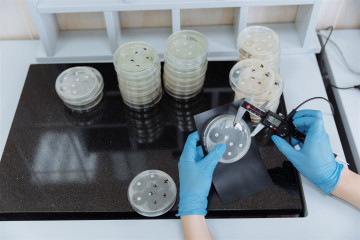
Featured image: laboratory blood sample, illustrative photograph by Pavel Danilyuk / Pexels; it does not depict the studies described.

Weekly Journal
View more
From a new U.S. kidney disease indication to research on wearable sensors and mobile care, this week’s briefing puts recent health developments in context. The studies and regulatory decisions below address different populations and should not be read as personal treatment advice. A kidney disease approval The FDA has approved obinutuzumab for adults with primary membranous nephropathy at risk of progression, to induce remission of proteinuria. In a 142-person phase 3 study, complete remission at week 104 occurred in 36% of the obinutuzumab group and 6% of the tacrolimus group. The drug carries serious boxed warnings, including hepatitis B reactivation and progressive multifocal leukoencephalopathy. FDA details. Bone health before a fracture NIH’s November guidance explains how DXA bone density scans and clinical risk factors help inform fracture prevention. Osteoporosis can affect men and women; the right time to assess risk depends on the individual and applicable recommendations. NIH bone health guide. Wearables and cycles NIH describes research using wrist temperature to estimate cycle events. The study findings do not establish that every device is accurate or that an app alone is reliable contraception. NIH wearable technology overview. Models and access Researchers have grown human lung tissue models retaining immune cells to study antiviral responses. The laboratory findings are early research, not a vaccine. Separately, an NIH-funded trial of mobile HIV prevention and addiction services found lower mortality as a secondary outcome, while its primary service-use measures did not differ; replication is needed. Lung organoid research; mobile services trial. What the kidney trial measured The FDA’s approval concerns adults with primary membranous nephropathy who are at risk of progression. In this immune-mediated condition, damage to the kidney’s filters allows protein to enter the urine. The trial’s complete-remission endpoint combined a low urine protein-to-creatinine ratio with stable estimated kidney function and other study conditions. It was not simply a report that participants felt better. The 36% and 6% figures are outcomes in the study groups, not individual predictions. MAJESTY was open-label and compared obinutuzumab with tacrolimus. People considering treatment can ask a kidney specialist how the trial relates to their situation and discuss the FDA’s safety warnings and monitoring requirements. Read the full medicines report. Making sense of a bone-density result A DXA scan measures bone mineral density, but a clinician also considers factors such as age, prior fractures, medicines and falls. Osteopenia describes density below the normal range that is not low enough to meet the osteoporosis threshold. It can be a warning sign, but it does not mean every person will develop osteoporosis. NIH notes that routine screening is recommended for women aged 65 and older, with earlier assessment for some people at increased risk. Local recommendations and individual circumstances differ. Weight-bearing activity, resistance exercise suited to the person, adequate nutrition and fall prevention are all part of the conversation. Read the clinical care guide. A wearable estimate is not a certainty NIH summarized a study of 262 women and girls who wore a smartwatch and recorded cycle information alongside urine hormone tests and waking temperature readings. The researchers examined retrospective estimates of ovulation and predictions of the next period. Those are separate tasks: an estimate made after an event should not be mistaken for a guaranteed advance prediction. Results for a research group cannot guarantee accuracy for every person, cycle or device. People using cycle information for pregnancy planning or prevention can discuss appropriate methods with a healthcare professional. Read the technology report. Two different kinds of research The lung organoid work used human tissue in a laboratory to explore local immune responses. Its finding is a reason for further investigation, not evidence that a new vaccine is ready for patients. The mobile-services study, by contrast, was a randomized trial involving adults in five U.S. cities. It compared an integrated mobile model plus peer navigation with peer navigation to community services. NIH reported lower mortality in the mobile group as a secondary outcome, but found no group difference in the measured use of oral PrEP or medication for opioid use disorder. The agency says replication is needed. The two studies illustrate why a laboratory result, a clinical trial outcome and a regulatory approval each need to be interpreted on their own terms. Read the science report and the profile of trial co-chair Nabila El-Bassel. Featured image: laboratory blood sample, illustrative photograph by Pavel Danilyuk / Pexels; it does not depict the studies described.