
Retinol, retinoids and acne: what’s the difference?
A guide to retinoids

Retinol appears on skincare shelves, while retinoids may be discussed in a dermatologist’s office. The names sound interchangeable, but they describe a family of related ingredients and medicines with different uses and formulations.
A family of ingredients
Retinoids are related to vitamin A. Retinol is one member of that family and appears in cosmetic skincare products. Other topical retinoids, including adapalene and tretinoin, are used in acne care. Availability and prescription requirements vary by product and country.
For acne, a topical retinoid can help keep pores clear and treat blackheads, whiteheads and some pimples. A clinician may recommend it as part of a broader treatment plan. A cosmetic serum should not be assumed to be equivalent to a prescribed medicine simply because both mention retinoids.
More is not always better
Dryness and irritation can occur, especially when a product is introduced or combined with other irritating ingredients. A dermatologist can help decide whether a retinoid is suitable, how to introduce it and whether a moisturiser might help. Follow the product or prescription directions and use sun protection.
People who are pregnant, planning pregnancy or breastfeeding should discuss retinoid products and treatment options with their clinician before use. Oral isotretinoin is a different prescription medicine with significant pregnancy-related precautions; it should not be confused with an ordinary skincare serum.
When to ask for help
Acne that is painful, leaves scars, or does not improve deserves professional attention. A dermatologist can assess the type of acne and consider options that fit the individual rather than relying on a crowded shelf of products.
Sources: American Academy of Dermatology: Retinoid or retinol? and Acne diagnosis and treatment.
Photo: Polina Kovaleva / Pexels. Illustrative skincare products; not identified as retinoid medicines.



Medicines
View more
Antibiotics have transformed the treatment of bacterial infections, but some bacteria are becoming harder to treat. Antimicrobial resistance occurs when microorganisms change and no longer respond to medicines that once worked against them. Antibiotic resistance concerns bacteria, not a person becoming resistant to a medicine. Resistant bacteria can spread between people and through animals, food and the environment. Infections caused by them may be more difficult to treat and can require different medicines or longer care. Antibiotics act against bacterial infections; they do not treat viruses such as those that cause colds and flu. A clinician can decide whether an antibiotic is appropriate, taking account of the illness and, when useful and available, diagnostic tests. Taking antibiotics when they are not needed contributes to the conditions in which resistance develops. Patients can help by taking antibiotics only when prescribed by a qualified health professional, following the prescribed instructions, and not sharing or saving medicines for another illness. If a treatment causes a problem or symptoms do not improve, contact the prescriber rather than changing it independently. Preventing infections through vaccination, hand hygiene and safe food and water also reduces the need for antimicrobials. World AMR Awareness Week runs from 18 to 24 November. The 2026 campaign calls for action across human, animal and environmental health because resistance does not respect those boundaries. Protecting effective medicines requires both access to appropriate treatment and responsible use. Sources: WHO antimicrobial resistance fact sheet and World AMR Awareness Week 2026.

Generic medicines: why a different-looking pill can do the same job

FDA approves obinutuzumab for adults with primary membranous nephropathy

Metformin and insulin: why diabetes medicines are not interchangeable

Your runny nose has improved, but now you can barely keep your eyes open. If you recently took an allergy medicine, the two experiences may be connected. Some antihistamines can cause drowsiness. The effect varies by medicine and by person, and it is worth understanding before you drive, work with machinery or assume your tiredness has another cause. Why can antihistamines make you drowsy? Antihistamines are used to relieve allergy symptoms by blocking the effects of histamine. Some are more likely than others to make people sleepy. Examples of antihistamines that generally cause less sleepiness include loratadine, fexofenadine and cetirizine. Less sleepy does not mean guaranteed to be non-drowsy: individuals can respond differently. Diphenhydramine is an antihistamine that can cause drowsiness. It is also found in some combination products, which makes checking the active ingredients useful when you take more than one cold or allergy medicine. What should you do if you feel sleepy? Check the product label and speak with a pharmacist or clinician about your symptoms and possible alternatives. Tell them about all the medicines and supplements you use, including products bought without a prescription. Avoid driving or operating machinery if you feel drowsy. Alcohol can add to the sedating effect of diphenhydramine. Do not stop or change a prescribed medicine without discussing it with the person who prescribed it. Could something else be responsible? Yes. Allergies, disrupted sleep, other medicines and unrelated health conditions may also contribute to tiredness. If the drowsiness persists, is severe or is affecting your daily life, seek medical advice rather than assuming the antihistamine is the only cause. The takeaway An allergy medicine can be effective and still cause an unwanted effect. A pharmacist can help you review the ingredients and discuss an option suited to your circumstances. Sources: MedlinePlus: Antihistamines for allergies; MedlinePlus: Diphenhydramine. Illustrative photograph: Polina Tankilevitch / Pexels. The tablets are not identified as antihistamines.

Retinol, retinoids and acne: what’s the difference?

Hibsago brings a finite-treatment option to hepatitis B, with close monitoring at its core
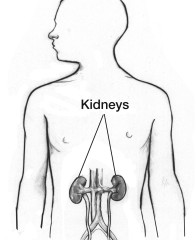
Ultomiris reaches IgA nephropathy—with a kidney-outcome question still open

GRAYMEDY RESEARCH ANALYSIS · November 8, 2026 A medicine can circulate in the bloodstream yet reach different parts of diseased tissue unevenly. An October tuberculosis study asks whether understanding that distribution can improve the design of shorter treatment regimens. The tissue-level question Jacqueline P. Ernest, Annamarie E. Bustion, Anu Patel and colleagues assembled lung-lesion distribution data for 24 drugs and drug candidates in rabbits with cavitary tuberculosis. Their Nature Communications paper, published October 14, 2026, combined these measurements with a lesion-penetration model validated using clinical data. The researchers linked local exposure with antibacterial activity and simulated coverage for shortened regimens examined in major phase 3 trials. They propose that combinations containing at least two drugs reaching bactericidal concentrations inside pulmonary cavities are more likely to meet clinical endpoints in people with cavitary disease. This is a translational modelling finding, not a newly approved treatment rule. Why blood concentration is an incomplete picture The paper focuses on a difficult location: the necrotic centre of a lung cavity. Measuring a drug in blood answers one question about exposure. Measuring whether it reaches a relevant tissue compartment answers another. A regimen can therefore look promising at one level of analysis while leaving important uncertainty at another. Graymedy’s interpretation is that regimen design should examine combinations in space as well as in time. The question becomes whether the medicines provide useful overlapping activity where bacteria persist, rather than simply whether several active agents appear on a prescription. That is a research design principle, not guidance to change an individual patient’s medicines. Prediction still needs prospective testing The study draws strength from connecting experimental distribution measurements, clinical validation and previous trial outcomes. But reproducing or explaining past outcomes differs from showing that a prospectively chosen new regimen improves future outcomes. That distinction matters whenever a model is proposed as a way to reduce uncertainty in expensive clinical development. Animal lesions cannot capture every feature of human disease. Patients also vary in disease extent, susceptibility patterns, concurrent illness and how medicines are absorbed and taken. A model may inform a trial without replacing the trial’s assessment of efficacy, safety and recurrence after treatment. What a useful next step would show A strong next test would specify a regimen using the modelling framework before knowing the clinical outcome, then evaluate it in an appropriate patient population. Researchers would need to define how cavitary disease is measured and whether predictions remain calibrated across relevant subgroups. The proposed two-drug cavity-coverage principle should likewise be treated as a hypothesis to examine across regimens and settings. More drugs, higher exposure and shorter duration are not automatically interchangeable. A promising distribution profile cannot by itself resolve toxicity or interactions. For patients, the immediate implication is understanding why treatment-shortening research remains demanding. A shorter course must still clear infection reliably and safely. This study offers a way to ask more precise questions before launching a trial; it does not authorize stopping or shortening prescribed treatment. The scientific contribution is a closer connection between pharmacology and the actual geography of disease. If that connection improves prospective prediction, it could help developers choose which combinations deserve the considerable effort of clinical testing. Sources and publication dates Ernest et al., Nature Communications, October 14, 2026; accepted article version Independent editorial analysis of published research; no interview or endorsement is implied. Image credit: Janice Carr / CDC, with Dr Ray Butler; PHIL 8438, 2006. Public domain. Original image source. GRAYMEDY RESEARCH ANALYSIS · November 8, 2026 A medicine can circulate in the bloodstream yet reach different parts of diseased tissue unevenly. An October tuberculosis study asks whether understanding that distribution can improve the design of shorter treatment regimens. The tissue-level question Jacqueline P. Ernest, Annamarie E. Bustion, Anu Patel and colleagues assembled lung-lesion distribution data for 24 drugs and drug candidates in rabbits with cavitary tuberculosis. Their Nature Communications paper, published October 14, 2026, combined these measurements with a lesion-penetration model validated using clinical data. The researchers linked local exposure with antibacterial activity and simulated coverage for shortened regimens examined in major phase 3 trials. They propose that combinations containing at least two drugs reaching bactericidal concentrations inside pulmonary cavities are more likely to meet clinical endpoints in people with cavitary disease. This is a translational modelling finding, not a newly approved treatment rule. Why blood concentration is an incomplete picture The paper focuses on a difficult location: the necrotic centre of a lung cavity. Measuring a drug in blood answers one question about exposure. Measuring whether it reaches a relevant tissue compartment answers another. A regimen can therefore look promising at one level of analysis while leaving important uncertainty at another. Graymedy’s interpretation is that regimen design should examine combinations in space as well as in time. The question becomes whether the medicines provide useful overlapping activity where bacteria persist, rather than simply whether several active agents appear on a prescription. That is a research design principle, not guidance to change an individual patient’s medicines. Prediction still needs prospective testing The study draws strength from connecting experimental distribution measurements, clinical validation and previous trial outcomes. But reproducing or explaining past outcomes differs from showing that a prospectively chosen new regimen improves future outcomes. That distinction matters whenever a model is proposed as a way to reduce uncertainty in expensive clinical development. Animal lesions cannot capture every feature of human disease. Patients also vary in disease extent, susceptibility patterns, concurrent illness and how medicines are absorbed and taken. A model may inform a trial without replacing the trial’s assessment of efficacy, safety and recurrence after treatment. What a useful next step would show A strong next test would specify a regimen using the modelling framework before knowing the clinical outcome, then evaluate it in an appropriate patient population. Researchers would need to define how cavitary disease is measured and whether predictions remain calibrated across relevant subgroups. The proposed two-drug cavity-coverage principle should likewise be treated as a hypothesis to examine across regimens and settings. More drugs, higher exposure and shorter duration are not automatically interchangeable. A promising distribution profile cannot by itself resolve toxicity or interactions. For patients, the immediate implication is understanding why treatment-shortening research remains demanding. A shorter course must still clear infection reliably and safely. This study offers a way to ask more precise questions before launching a trial; it does not authorize stopping or shortening prescribed treatment. The scientific contribution is a closer connection between pharmacology and the actual geography of disease. If that connection improves prospective prediction, it could help developers choose which combinations deserve the considerable effort of clinical testing. Sources and publication dates Ernest et al., Nature Communications, October 14, 2026; accepted article version Independent editorial analysis of published research; no interview or endorsement is implied. Featured graphic: original Graymedy evidence diagram, not a study image or patient photograph.
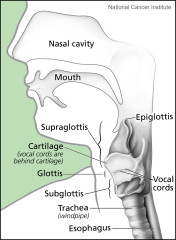
A new head-and-neck cancer approval brings an option—and an evidence question
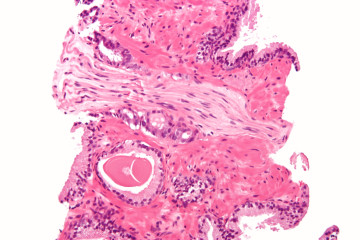
Talazoparib moves earlier in prostate cancer—with a genetic test at the centre